
Corporate gift fulfilment: an HR playbook for 2026
- sayheystudio
- 4 days ago
- 10 min read
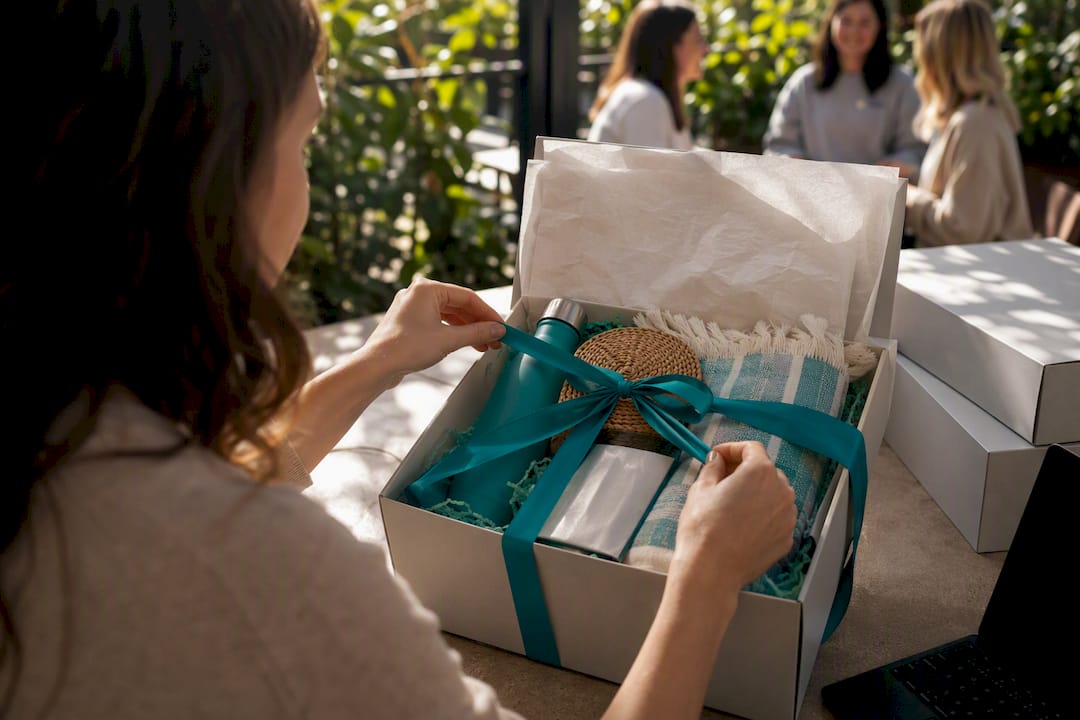
Corporate gift fulfilment means the gift boxes, hampers, letterbox gifts and branded presents your business orders, personalises and ships to employees or clients. Right now, your best move is simple: centralise the programme under one owner, set three value tiers, order a physical sample, then place the fulfilment order with an approved supplier. Companies with formal recognition programmes see roughly 31% lower turnover, according to Bersin research cited by Hiring People, which is exactly why ad hoc gifting no longer cuts it. A supplier like Sayhey Gifting exists to make that structure easy to execute.
Before you brief anyone, do these four things:
Appoint one programme owner so decisions on budget and occasions do not stall in committee.
Choose three gifting tiers (entry, mid, premium) instead of pricing each gift from scratch.
Request a physical sample before committing to any bulk order.
Lock your lead times now, especially if you are shipping around a holiday peak.
Key Takeaways
Centralising corporate gift fulfilment under one owner, three standard tiers, and a sample-first approval process is what turns ad hoc gifting into a programme that supports measurable retention.
Point | Details |
Centralise ownership | Appoint one owner and one approval workflow to remove inconsistency across departments. |
Standardise three tiers | Set entry, mid and premium values in advance so spend never depends on who is asking. |
Sample before bulk | Order and physically inspect a sample before committing to any volume order. |
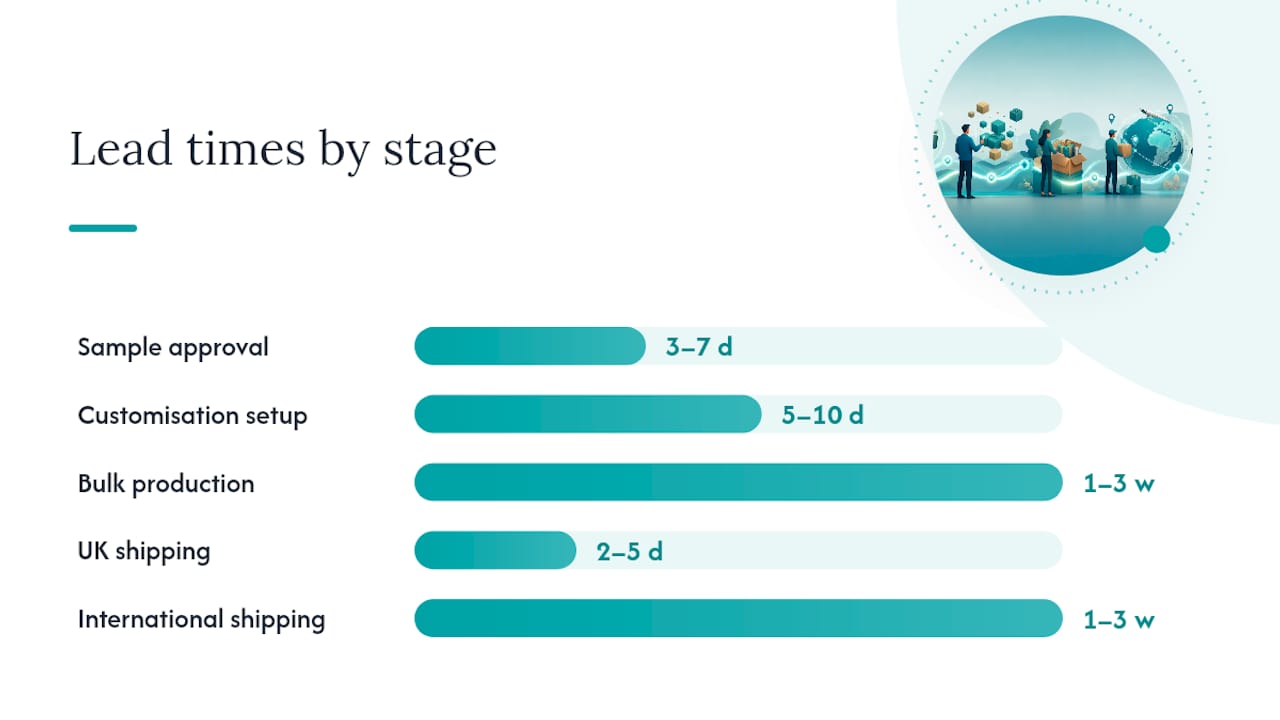
Plan lead times early | Allow 3–7 days for samples, 1–3 weeks for production, and longer for international shipping. |
Order through Sayhey Gifting | Use its corporate gifting range to move from tier design to a placed order with sampling built in. |
Table of Contents
What does corporate gift fulfilment actually cover?
For HR teams and business buyers, corporate gift fulfilment covers the gift boxes, hampers, letterbox gifts and custom branded presents an e-commerce supplier sells and delivers to your staff or clients. It is a product and service category, not a warehousing exercise. This article stays entirely in that lane: choosing, personalising and ordering physical gifts, not evaluating third-party logistics providers who handle someone else’s kitting and inventory.
The category includes curated ready-made boxes, build-your-own selections where recipients pick their own contents, branded inserts carrying your logo or a personal note, and both single-address and bulk multi-destination shipping direct to home or office.
It typically does not include warehouse pick-and-pack systems or inventory management software. That is a different discipline entirely, and conflating the two is where a lot of gifting guides go wrong.
Common use cases for HR buyers include:
Staff appreciation and seasonal recognition
Milestone moments: work anniversaries, promotions, retirements
Client retention gifts around renewal periods
New-starter onboarding kits and welcome boxes
Why should HR teams centralise their gifting programme?
Centralising gifting reduces bias, keeps recognition consistent, and directly supports staff retention. When every manager buys gifts independently, some teams get thoughtful hampers and others get nothing, and that inconsistency quietly erodes trust faster than any single missed occasion.
The retention link is not soft benefit talk. Bersin research, referenced in Hiring People’s analysis of corporate gifting, finds that companies running formal recognition programmes experience around 31% lower turnover than those without one. Gifting is not the whole programme, but it is often the most tangible, most photographed part of it.
Pro Tip: Give your gifting programme a named owner and a simple approval threshold, such as “any spend over £500 needs sign-off from a department head.” Without that, every festive season becomes a scramble of last-minute individual purchases nobody budgeted for.
A centralised programme lets HR report on outcomes stakeholders actually care about:
Fairness and consistency across departments and locations
Employer brand strength in reviews and referrals
Retention, particularly among recognised cohorts
Measurable engagement uplift tied to specific gifting moments
How do you set up a corporate gifting programme?
Follow this checklist to build a repeatable programme rather than reinventing gifting every quarter:
Appoint an owner. One person or a small committee holds the budget and makes final calls.
Define objectives. Decide whether the priority is retention, onboarding warmth, or client goodwill, because that shapes the tier structure.
Set a budget envelope. Agree an annual spend before you price individual gifts, not after.
Draft three value tiers. Standardise amounts so nobody negotiates a “special” gift outside the rules.
Build an approval workflow. Who signs off bulk orders, and at what spend does it escalate?
Order and approve samples. Never commit to volume before someone on your team has physically opened the box.
Onboard your supplier. Share your artwork, address list format and delivery preferences early.
Schedule review dates. Revisit tiers and occasions annually so the programme does not calcify.
A simple three-tier template avoids the perception that some employees matter more than others:
Entry tier: small letterbox gifts for broad recognition, such as birthdays or work anniversaries under three years.
Mid tier: curated boxes or custom gift boxes for team wins, promotions, or five-year milestones.
Premium tier: hampers or bespoke branded sets reserved for leadership departures, major client wins, or ten-year milestones.
Pro Tip: Always order a physical sample before approving a bulk run. Photos flatten colour and texture, and a sample is the only way to catch a packaging issue before it lands on fifty desks at once.
What should you check before placing a bulk or single order?
Follow this pre-order checklist to avoid surprise costs or a delivery that arrives after the moment it was meant for.
Confirm your audience list and addresses are current, especially for hybrid or remote staff.
Agree personalisation fields: names, initials, department, or a short message.
Finalise artwork specs with your supplier before production begins.
Choose packaging preferences, including any branded box requirements.
Collect dietary and allergy notes if the gift includes food or drink.
Flag international shipping needs early, including who handles customs.
Suppliers with strong reliability track records tend to be transparent about pricing, sampling and shipping timelines from the first conversation, which is a useful filter if you are comparing options.
Stage | Typical lead time |
Sample approval | 3–7 working days |
Customisation and branding setup | 5–10 working days |
Bulk production | 1–3 weeks, depending on volume |
Standard UK shipping | 2–5 working days |
International shipping | 1–3 weeks, depending on destination |
Missing an address at the last minute? Ask your supplier whether they can hold that unit back and ship separately rather than delaying the whole batch.
Sample delayed close to a deadline? Request expedited sampling or approve based on a smaller trial batch of the base product while branding is finalised.
How much personalisation and sustainability should you build in?
Thoughtful, values-aligned gifting outperforms generic branded merchandise almost every time, because recipients can tell the difference between a logo slapped on a mug and a gift chosen with them in mind. That shift is visible in broader corporate gifting trends, where buyers are moving away from bulk-branded items towards considered, personal choices.
Consider three levels of personalisation:
Basic branding: logo or company colours on packaging, low cost, low emotional impact.
Recipient choice: letting the person pick flavours, scents, or apparel size themselves.
Deep personalisation: handwritten notes, role-specific items, or milestone-specific inserts.
On sustainability, recyclable packaging, plastic-free inserts, local sourcing and charity add-ons all resonate, though some add modest cost. They tend to pay that back in stronger engagement and social sharing, particularly with younger workforces who notice packaging waste.
Pro Tip: Collect dietary and allergy preferences through a short, optional form at onboarding rather than asking around a team individually. It is more private for staff and saves you chasing details every single occasion.
How do you measure the success of a gifting programme?
Measure both operational KPIs and people KPIs. Operational metrics include on-time delivery rate, error rate, and cost per unit. People metrics include recognition uptake, sentiment, and turnover within recognised cohorts versus the wider business.
Track these primary metrics with lightweight tools you likely already run:
A short pulse survey after major gifting moments
Redemption or claim rates if gifts involve a choice or voucher element
Manager feedback collected informally during one-to-ones
Net sentiment from an internal engagement platform, where available
A mid-sized team that introduced tiered anniversary gifts alongside its existing engagement survey saw sentiment scores rise among recognised staff over the following quarter, alongside a modest dip in voluntary departures within that same group. It is a correlation worth reporting carefully, not proof of causation, since recognition programmes usually run alongside other retention efforts.
Report gifting activity as one input into retention, not the whole story. Stakeholders trust a one-page summary that shows delivery reliability, uptake, and directional sentiment far more than a single vanity statistic.
What goes wrong with corporate gift fulfilment, and how do you avoid it?
The most common failure is treating gifting as a one-off purchase rather than a programme, which means every occasion starts from zero with no agreed tiers, no approved supplier, and no lead-time buffer.
Address data decays fast. Remote and hybrid teams change address more often than HR systems get updated, and a bounced parcel two days before a milestone is a bad look. Build an address refresh into your annual calendar, not just your onboarding checklist.
Skipping the sample step causes the most expensive mistakes. A box that photographs well can still arrive crushed, or a “vegan” hamper can contain an oversight that only shows up once someone opens it. Insisting on a physical sample before any bulk commitment catches this early, when it costs nothing to fix.
Inconsistent tiers breed resentment. If one manager sends a £15 letterbox gift and another sends a £60 hamper for the same occasion, staff notice, and it undermines the fairness a centralised programme is meant to deliver.
Peak season bottlenecks catch teams out every year. December demand stretches production and courier networks, so orders placed in early December for a mid-December delivery are gambling with lead times. Lock your Christmas gifting brief by October if you can.
International shipping gets underestimated. Customs delays, duty charges, and address formats vary by country, and assuming your domestic supplier handles all of that smoothly is a frequent, costly mistake covered further below.
What should you budget for different gift tiers?
Budgeting properly means matching spend to occasion importance, not guessing a round number and hoping it stretches across every use case.
Entry-tier gifts, such as small letterbox boxes, typically suit broad recognition moments: birthdays, work anniversaries under three years, or thank-you gestures after a busy project. These are the volume play, low cost per head but sent often.
Mid-tier gifts, including curated boxes or build-your-own selections, fit promotions, team wins, and five-year milestones. This tier usually carries the bulk of your annual spend because it covers the widest range of meaningful occasions.
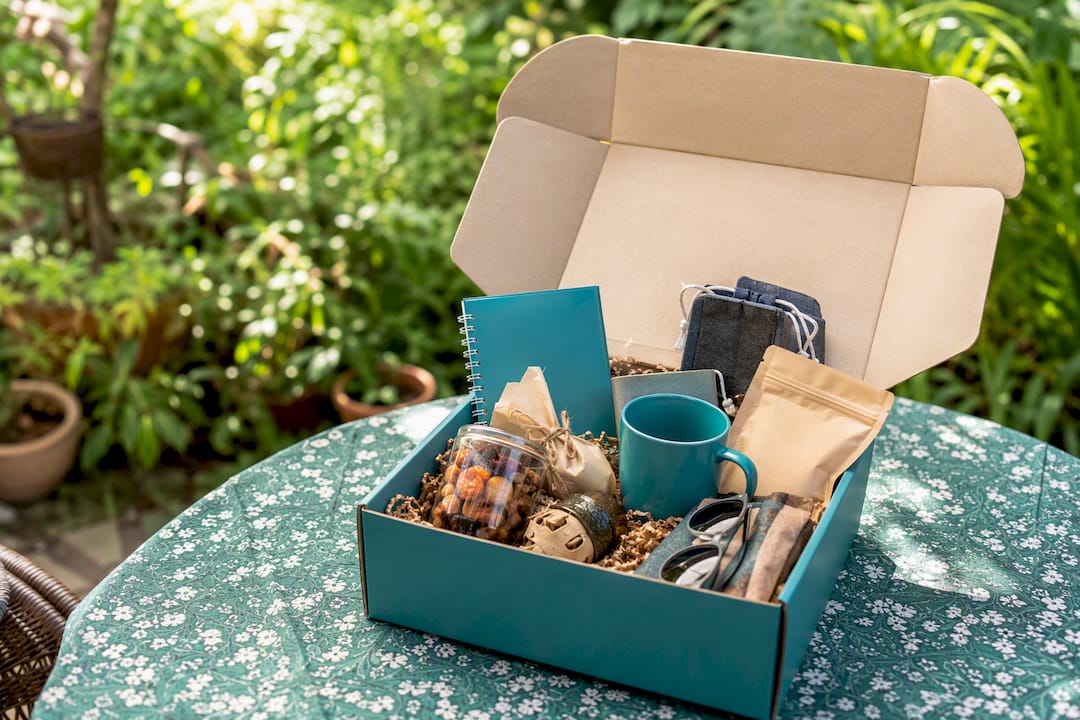
Premium-tier gifts, such as full hampers or bespoke branded sets, are reserved for senior departures, major client wins, or ten-year-plus milestones. Spend here is deliberately rarer, which is part of what makes it feel special.
Fulfilment services themselves add cost on top of the product: customisation, branded packaging, and multi-destination shipping all carry their own fees, and these vary significantly by supplier and by how much bespoke work is involved. Build a small contingency into your annual envelope for last-minute occasions, because they always come up, and a programme with no flexibility quickly gets bypassed by exactly the ad hoc spending it was designed to prevent.
If you are shipping to employees or clients across several countries, check early whether your supplier offers delivered duty paid (DDP) terms, so recipients are not hit with unexpected customs charges on a gift meant to delight them. Ask whether they provide multi-destination tracking and local returns handling too, since a damaged parcel overseas is far harder to resolve without local support.
How Sayhey Gifting supports your fulfilment programme
Sayhey Gifting handles the full range covered in this guide: curated and custom employee gift boxes, letterbox gifts and hampers, with fulfilment, personalisation and direct-to-home delivery built in from the start.
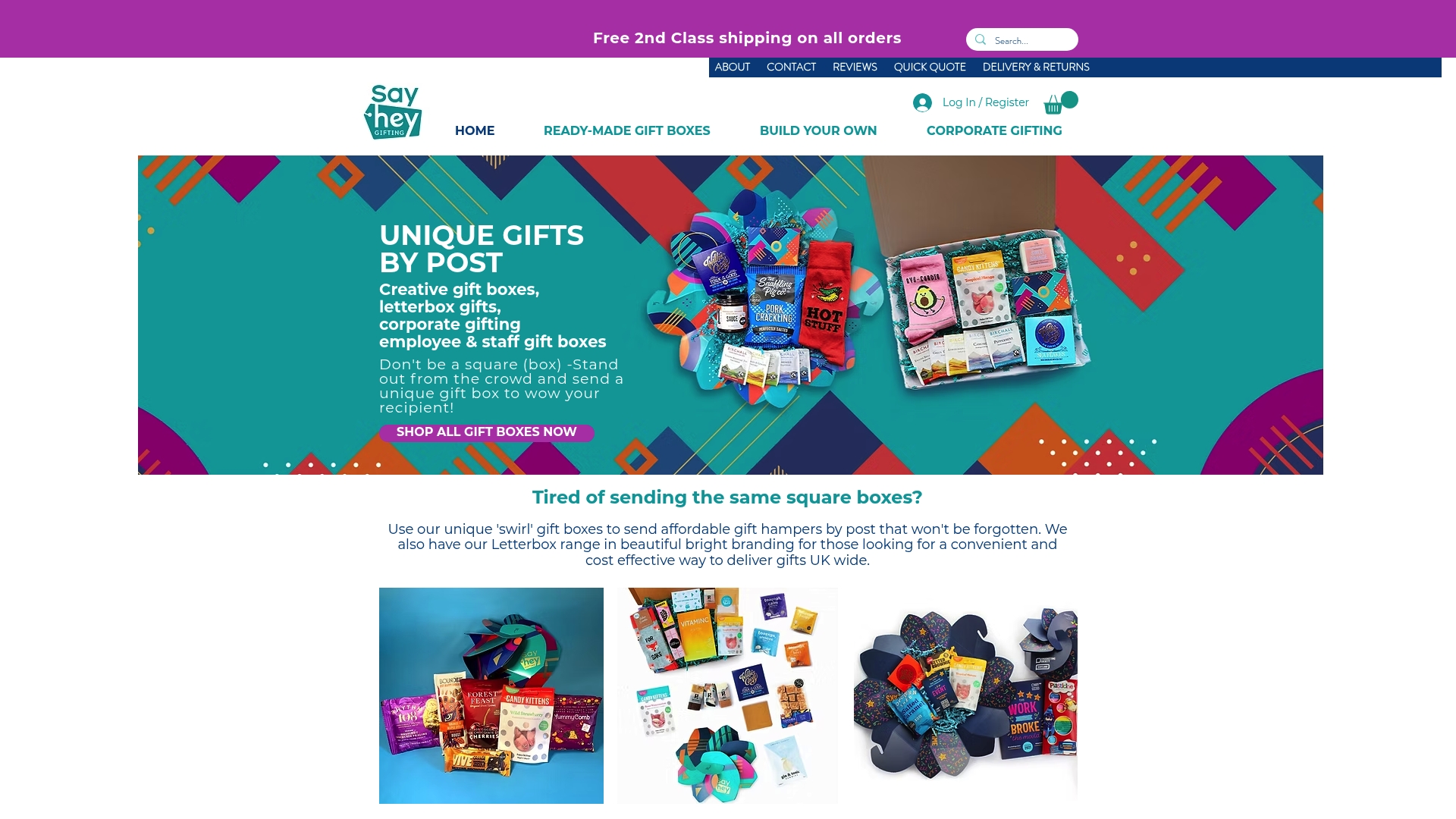
The service is built around exactly the checklist above. You can request a physical sample before committing to volume, choose from tiered pricing that maps neatly onto entry, mid and premium categories, and personalise with branded inserts, handwritten notes or recipient choice. Multi-destination shipping and sustainable packaging options are available for teams spread across several locations, and account support means you are not left managing artwork approvals and courier queries alone.
For a fast starting point, the employee gift box range covers most entry and mid-tier recognition moments, while the build your own gift box tool suits teams who want direct control over contents and per-unit cost. If your programme includes company merchandise, a partner like Tekton LA’s custom apparel guidance is worth a look for branded clothing that pairs well inside a gift box.
Ready to move from plan to order? Request a sample or ask for a customised quote through the employee gifts hub and get your first tier live before your next recognition moment.
A practitioner’s note on sampling
The lesson that saves the most money is small: order the physical sample before you approve the bulk run, every time. On one project, a box that looked perfect on screen arrived with a crushed corner because nobody had checked how it travelled in transit. Approval gates exist for exactly that reason, and skipping them once is usually all it takes to learn why they matter.
Sources
Why Corporate Gifts Are Becoming a Key Part of Employee Retention - Hiring People
FAQ
What is corporate gift fulfilment?
It is the process of ordering, personalising and shipping gift boxes, hampers, letterbox gifts and branded presents to employees or clients through a supplier such as Sayhey Gifting.
How much should a corporate gifting programme cost per person?
Cost depends on tier: entry-level letterbox gifts suit high-frequency, low-cost recognition, while mid and premium tiers carry higher spend for milestones and senior moments, so budgets should be set per tier rather than as one flat figure.
How far in advance should we order corporate gifts?
Allow 3–7 days for sample approval, 5–10 days for customisation setup, and 1–3 weeks for bulk production, with extra time built in for international shipping or peak seasons like December.
Does Sayhey Gifting handle international shipping?
Sayhey Gifting supports multi-destination shipping for corporate buyers; always confirm customs handling and delivered duty paid terms directly for the specific countries on your list.
How do we avoid bias in employee gifting?
Set standardised value tiers tied to clear occasions rather than letting individual managers choose amounts, and route all gifting decisions through one programme owner.
Recommended
Comments