
UK Lumpy Mail: 13 Letterbox Ideas With Postage Flags and CTAs
Lumpy mail is a direct mail piece that carries a physical object inside the envelope or parcel, and it earns attention simply by refusing to lie flat on the doormat. The best versions pair a compact, mail-safe item with one line of story and a single measurable call to action. If you remember nothing else, remember that: choose the item second, and the story and CTA first, with Sayhey Gifting as one straightforward way to source and fulfil it.
TL;DR:
Lumpy mail is most effective for high-value, targeted campaigns where the physical object encourages curiosity and stands out on a cluttered desk or mailbox.
Suitable items include sealed snacks, seed paper, mini samples, puzzles, USB drives, and small gadgets, with selection depending on audience and campaign goals.
Careful planning around postage, packaging, and tracking is essential, with under 25mm thickness ideal for letterbox format to minimize costs.
Pairing the physical item with a clear story and measurable call to action, such as QR codes or coupon codes, significantly boosts response rates.
Testing on small recipient groups first helps optimize cost-effectiveness before scaling a full campaign.
Table of Contents
What is lumpy mail, and why does the bump in the envelope matter?
The industry term for this is dimensional mail or lumpy mail, and both describe the same thing: a mailer with enough thickness or weight that the recipient feels curious before they even open it. Flat mail gets sorted, skimmed and binned. A parcel with a bump in it gets picked up first, because dimensional mail passes screening and physically sits on top of the rest of the post, which matters enormously when your target is a gatekeeper’s desk rather than a home letterbox.
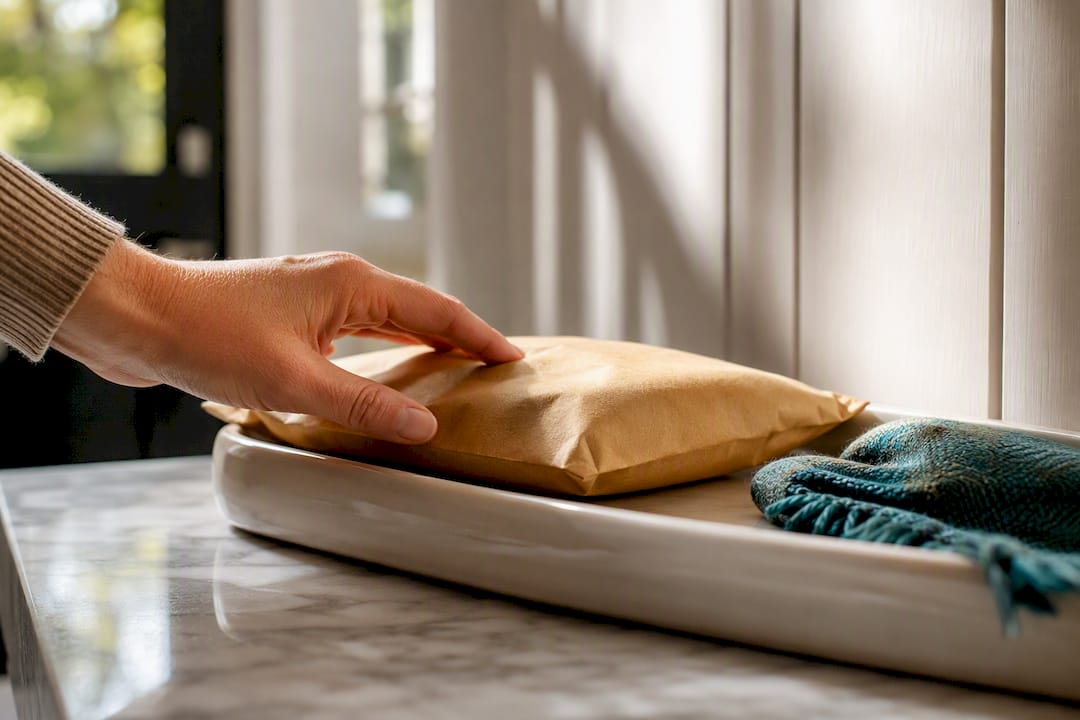
That physical curiosity is the entire mechanism. It works because touch and anticipation trigger engagement that a printed leaflet cannot. Some marketers assume lumpy mail is only for high-value account-based marketing, but the same principle scales down to a £3 letterbox item sent to hundreds of warm leads, provided the item, story and postage all line up.
1. High-impact lumpy mail ideas you can send this quarter
You do not need a warehouse of novelty items to run a strong campaign. The list below leans on formats that consistently show up in practitioner examples because they survive the post, fit through a standard letterbox and still feel like a genuine gift.
Branded letterbox snack (individually wrapped, non-perishable) — great for warm leads; letterbox-friendly; low cost. Flag allergens clearly on the packaging.
Seeded bookmark or seed paper card — grows into herbs or wildflowers; strong for eco-conscious brands; letterbox-friendly; low cost.
Mini sample packet of your actual product — best for product trials; letterbox-friendly; low to medium cost.
Puzzle piece invite — recipient needs a second piece (sent separately or collected) to unlock an offer; great for events; letterbox-friendly; medium cost.
Branded USB stick pre-loaded with content — suits B2B decision makers; small box; medium cost.
Small desk gadget (stress ball, phone stand, desk plant clip) — good for retention gifts; small box, fragile risk low; medium cost.
Scratch-off coupon card — instant gratification for retail or e-commerce; letterbox-friendly; low cost.
Mini care pack (mints, lip balm, hand sanitiser) — works well for wellness or HR-led campaigns; small box; low to medium cost.
Branded notepad or sticky note pad — safe, useful, cheap; letterbox-friendly; low cost.
Tiny plant or grow kit — memorable for sustainability messaging; small box, moderate fragility risk; medium cost.
Themed kit for an event (mini flags, confetti, an agenda card) — pairs well with conference invites; small box; medium cost.
QR-coded novelty item (keyring, coaster, magnet) linking to a landing page — versatile across goals; letterbox-friendly; low to medium cost.
Handwritten or personalised note alongside any item above — costs almost nothing and lifts every idea on this list.
Any food item carries allergen and spoilage risk, so stick to sealed, individually wrapped products and print allergen information on the pack. Where you are unsure, a non-food alternative such as a notepad or seeded card removes the liability entirely.
How to choose the right lumpy mail idea for your audience and goal
Match the item to who opens the envelope, not just what looks fun on a supplier catalogue. A senior decision maker responds to something that signals thought and restraint (a desk gadget, a handwritten note); a broad prospect list responds better to something instantly usable, like a sample or a scratch-off coupon.
Run this checklist before you commit to print or purchase:
Audience fit: is the recipient the decision maker, the influencer, or the end user, and what do they already respond to?
Goal alignment: are you booking demos, encouraging a product trial, driving event attendance, or rewarding existing customers for retention?
Budget and scale: what is your acceptable cost per lead, and does the per-item price plus postage stay under it at your intended volume?
Mailability: will it fit a standard letterbox, does it need a small box, and is there any fragility or allergen risk?
Personalisation: can you add a name, a note, or a relevant detail without adding significant cost or turnaround time?
Pro Tip: Test the idea on a small list of 200 to 500 recipients with a unique code or link before you commit budget to the full mailing. It is far cheaper to learn an item underperforms on a pilot than on your entire database.
Packaging, postage and fulfilment: getting your idea mail-ready
Weight and dimensions decide your postage tier before the item’s cost even enters the picture, so measure the packed item, not just the object itself. Suppliers advise keeping promotional mailers light, small and unbreakable wherever possible, because every gram over a postage threshold adds cost across the whole run.
Letterbox format: use for anything under roughly 25mm thick, such as cards, sachets, notepads and seeded paper. It is the cheapest tier and avoids “signed for” friction.
Small box mailer: reserve for desk gadgets, care packs or anything with corners, and add cushioning to stop rattling or crushing in transit.
Fragile or perishable items: use bubble wrap or moulded inserts, and seal food items individually to prevent leakage or spoilage during transit.
Fulfilment choice: small runs (under a few hundred) are manageable in-house; larger or recurring campaigns benefit from a print-and-post partner or a gifting supplier who packs and posts on your behalf.
Cost-saving: batch your mailing into consolidated drops rather than trickling items out daily, and ask your fulfilment partner about negotiated postage rates for volume.
Tracking matters here too. A courier tracking service gives you delivery confirmation for higher-value sends, which is worth the small extra cost when the item itself carries real production value.
Pairing the item, the story and the call to action
A gift with no story attached rarely performs. Practitioner case studies consistently show that a lumpy item works best when it is tied to a single, clear value proposition rather than left to speak for itself. The item earns the open; the story earns the response.
Four CTA formats do most of the work:
A QR code to a personalised landing page (PURL) built for that recipient or segment.
A unique coupon code printed on the card, redeemable online or in store.
A reply card for recipients who prefer a physical response over a digital one.
A direct meeting-booking link, ideal for account-based outreach to named decision makers.
A workable script reads: “We noticed [specific detail]. Here’s a small taster. Scan the code to book 15 minutes with our team.” Keep every send trackable with UTM parameters or a unique PURL per cohort, so you can isolate which item and message actually drove the click.
Statistic callout: Practitioners running dimensional mail alongside a QR or PURL consistently report the combination amplifying response versus sending the novelty item alone, because the code turns curiosity into a measurable action rather than a one-off moment of delight.
Measuring response and estimating your return
Track four numbers on every send: the engagement proxy (opens, unwraps, or social shares), QR or PURL clicks, conversion rate from click to action, and your cost per lead or cost per acquisition once postage and item cost are combined.
A simple worked example: if you mail 300 pieces at a combined cost (item, print and postage) of £4 each, that’s £1,200 spent. At £1,200 for five leads, that’s £240 per lead, which either justifies itself against your average deal value or tells you to test a cheaper item next round.
Test one variable at a time: item against item, message against message, or send-day against send-day.
Cost band per item | Typical use case | Expected engagement range |
Low (under £3) | Broad prospect lists, letterbox drops | Modest but scalable |
Medium (£3 to £8) | Warm leads, event invites | Noticeably higher than flat mail |
High (£8+) | Named accounts, VIP retention | Strongest, but only at low volume |
Practical examples using Sayhey Gifting’s format
Three implementation routes show how the ideas above translate into an actual send using Sayhey Gifting’s letterbox format:
Welcome kit: a build-your-own letterbox gift sent to new starters or new clients within their first week, paired with a short handwritten note.
Seasonal retention: a Christmas letterbox selection sent to top clients or long-serving staff, timed for late November dispatch.
Low-cost outreach: an affordable letterbox gift under £10 used for pilot cohorts before scaling a wider prospect campaign.
When lumpy mail earns its budget, and when it doesn’t
Lumpy mail performs best where the per-recipient value is high enough to justify the cost: account-based marketing to named decision makers, VIP client retention, and product sampling to warm leads who have already shown intent. In those settings, the physical object does something a follow-up email never can, because it sits on a desk for weeks rather than disappearing into an inbox.
It performs badly against broad, low-value cold lists, where postage and item cost outstrip any realistic conversion. It also fails when the item is perishable and the mailing run is large, because spoilage and allergen risk scale with volume far faster than most teams expect. My one accelerant tip: pick your CTA and tracking method before you pick the item, not after. Teams that choose the gadget first and bolt a tracking code on at the last minute almost always end up with a send they cannot measure properly.
— Craig
Ready to send your first lumpy mail campaign?
Reading a list of ideas is one thing; sourcing, packing and posting them without eating a week of your team’s time is another. Sayhey Gifting solves the execution gap between “good idea” and “package in the post” by offering ready-to-order employee gift boxes and letterbox formats that arrive pre-packed for mailability, so you skip the sourcing, packaging and postage-testing stage entirely.
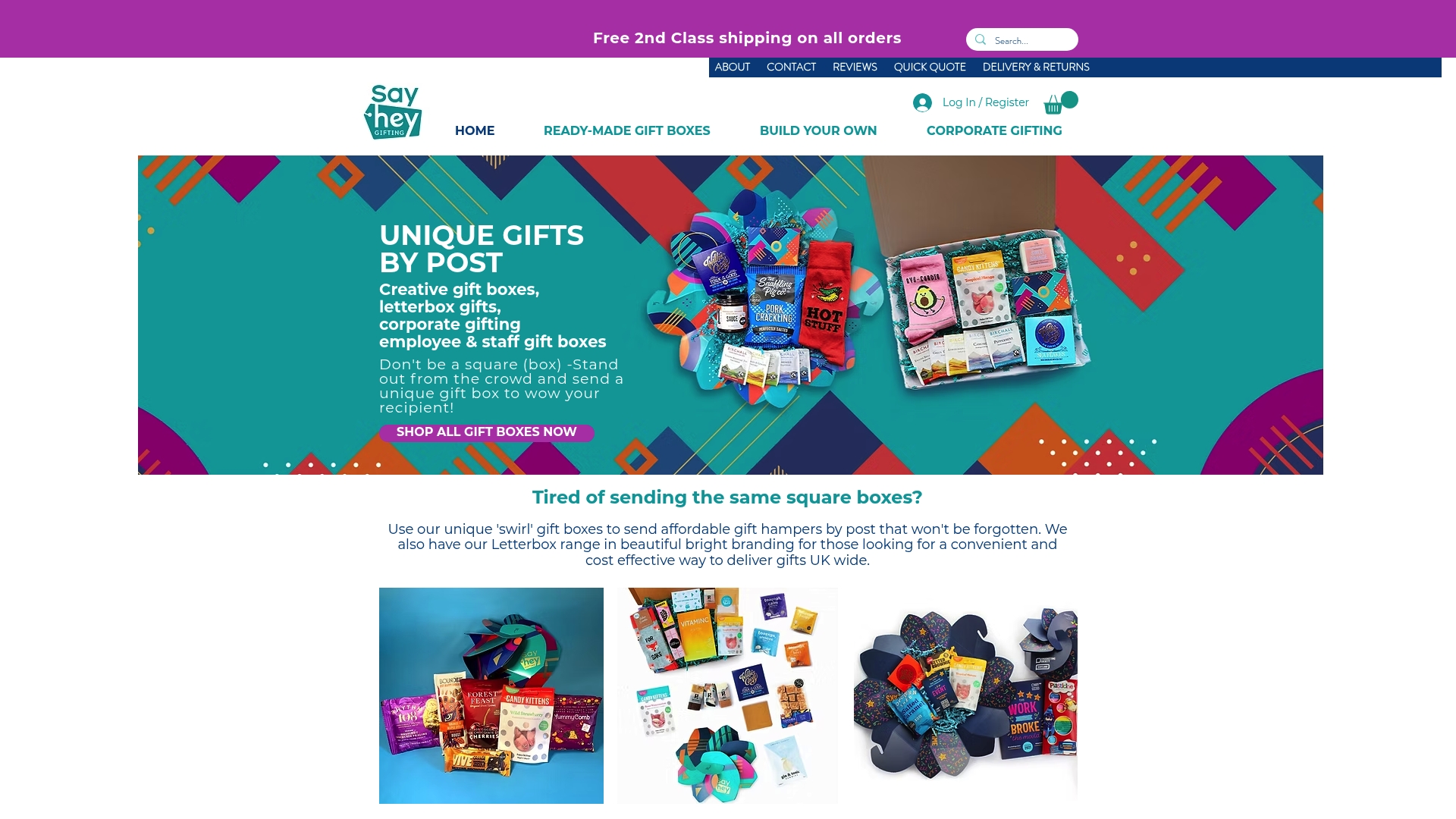
For a welcome kit or reward programme, the employee gift box range gives you a ready-made option at scale. If you want full creative control over the item and note, the build-your-own letterbox gift lets you pick each component while Sayhey Gifting handles the packing and posting. Running a tight pilot cohort first? The letterbox gift under £10 keeps your cost per recipient low while you test messaging. Whichever route fits your budget and timeline, browse the range of ready-made boxes and place your first order today.
Sources
FAQ
What is lumpy mail?
Lumpy mail is a direct mail piece that contains a physical object, giving the envelope or parcel a noticeable bulk or shape that stands out from flat post and encourages the recipient to open it.
What are some good marketing ideas beyond lumpy mail?
Pairing dimensional mail with a customer retention strategy such as loyalty follow-ups or personalised email sequences extends the impact of a single physical send well beyond the moment it lands.
What are some ideas for an email drip campaign to support lumpy mail?
Send an anticipation email before the parcel arrives, a delivery-day follow-up with the CTA link, and a short reminder a few days later for anyone who hasn’t clicked through yet.
Can you give me some examples of direct mailing that uses lumpy mail?
Common examples include a seeded bookmark mailed with a sustainability pitch, a branded USB stick sent to a named decision maker, and a build-your-own letterbox gift used as a client welcome kit.
Recommended

Comments