
Why gifting builds client relationships that last
- sayheystudio
- 3 days ago
- 8 min read

Client gifting is defined as the deliberate practice of sending personalised, thoughtful gifts to clients with the purpose of deepening trust, signalling appreciation, and creating emotional connections that outlast any single transaction. Understanding why gifting builds client relationships requires looking beyond the gift itself. The real mechanism is psychological: a well-chosen gift communicates that you see your client as a person, not a contract. Companies with structured gifting programmes report up to 5 times greater ROI in client retention and engagement. Sayheygifting works with businesses across the UK to make that kind of thoughtful, personalised gifting practical and repeatable.
Why gifting builds client relationships: the psychology behind it
Gifting works because it triggers a deeply human response. Robert Cialdini’s principle of reciprocity, detailed in his influence framework, explains that when someone receives something of genuine value, they feel a natural, subconscious pull to respond positively. That pull does not require a large spend. It requires sincerity.
83% of recipients report feeling closer to companies after receiving a corporate gift. That figure is not about gratitude alone. It reflects a shift in how the client perceives the relationship: less transactional, more collaborative.
Daniel Kahneman’s endowment effect adds another layer. Physical gifts carry stronger brand recall than digital equivalents because ownership creates emotional attachment. A beautifully presented letterbox gift sitting on a client’s desk does something an email voucher cannot. It occupies physical space in their world, and that presence keeps your brand in their mind.
The most effective gifting moments are also the unexpected ones. Sending a gift outside of the predictable December window, perhaps after a successful project milestone or a difficult quarter, signals that you are paying attention. That attentiveness is what transforms service-provider dynamics into genuine partnerships.
“A gift given at the right moment, with genuine knowledge of the recipient, communicates more about your values as a business than any pitch deck or proposal ever could. It says: I see you, I value you, and I am invested in your success.”
Key psychological drivers that make gifting effective:
Reciprocity: Clients feel a natural inclination to respond positively to genuine gestures of appreciation.
Endowment effect: Physical gifts create lasting emotional attachment that digital alternatives rarely replicate.
Surprise and delight: Unexpected gifts generate stronger emotional responses than anticipated ones.
Personalisation signal: A gift tailored to the recipient’s role or preferences shows real investment in the relationship.
Social proof: Clients who feel valued are more likely to refer your business to others.
What 2026 data reveals about gifting and client retention
The business case for client gifting is well evidenced. 80% of C-suite executives believe business gifts deliver measurable ROI, and 52% report increased sales following a gifting programme launch. These are not soft metrics. They reflect real commercial outcomes tied to relationship investment.

Personalisation is the single biggest driver of gifting effectiveness. Personalised gifts are 2.5 times more likely to be retained than generic alternatives and yield 89% higher ROI. That gap between personalised and generic gifting is significant enough to reshape how you allocate your gifting budget entirely.
Metric | Result |
Client retention improvement with gifting | Up to 43% |
ROI uplift from personalised vs generic gifts | 89% higher |
C-suite executives reporting measurable ROI | 80% |
Sales increase post gifting programme launch | 52% report growth |
Recipients feeling closer to gifting companies | 83% |
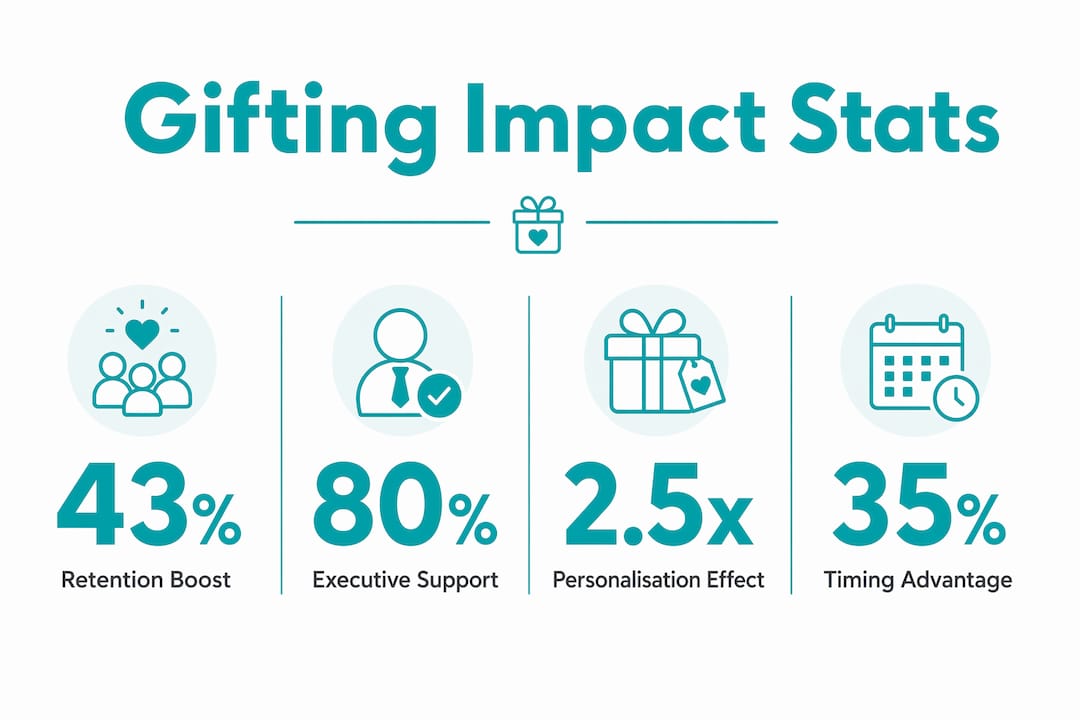
Timing amplifies these numbers further. 35% of recipients are more open to companies that send gifts at unexpected moments, and 24% identify unexpected gifting as the most effective relationship-building method. The implication is clear: calendar-driven gifting alone leaves significant relationship value on the table.
For a deeper look at the full business case, the 2026 gifting ROI analysis from Sayheygifting breaks down the numbers by sector and client tier.
How does timing and personalisation affect gifting success?
Generic calendar gifting, the December hamper sent to every client on the list, has become so predictable that it barely registers. The gift arrives, it is appreciated briefly, and it is forgotten. The reason is saturation. When every supplier sends something in december, no single gift stands out.
Timing your gifts around meaningful client milestones changes that entirely. Gifts aligned with client milestones improve renewal conversations and reduce friction during negotiations. A gift sent after a client’s product launch, a company anniversary, or a challenging quarter communicates that you were paying attention at a moment that mattered to them.
Personalisation goes further than adding a logo to a box. It means knowing whether your client prefers artisan food, wellness products, or experiences. It means knowing whether they work from home or an office, and choosing a letterbox gift by post that fits their lifestyle. That level of thoughtfulness is what separates a gift that creates a lasting memory from one that ends up in a recycling bin.
Tiering your gifts by client value also matters. A top-tier account warrants a different level of investment than a newer or smaller client. Tiering maintains budget discipline while ensuring your most important relationships receive the attention they deserve.
Milestone gifting: Send gifts after project completions, contract renewals, or significant client achievements.
Surprise moments: Gifting outside expected windows creates stronger emotional impact.
Role-specific choices: A gift suited to the recipient’s actual interests shows genuine knowledge.
Tier-based budgeting: Align gift value with relationship maturity and commercial significance.
CRM-triggered delivery: Use your CRM to flag key dates and automate reminders without losing the personal touch.
Pro Tip: Log every gift you send in your CRM alongside the client’s response. Over time, this builds a picture of what resonates with each client, making future gifting more precise and more meaningful.
Practical strategies for building client relationships through gifting
A gifting programme built on good intentions but no structure produces inconsistent results. Ad hoc gifting typically produces minimal relational equity compared to structured programmes with defined tiers, event triggers, and measurement frameworks. The difference between the two is discipline.
Here is how to build a gifting programme that delivers consistent relationship value:
Define your gifting tiers. Segment clients into two or three tiers based on revenue, strategic importance, or relationship stage. Each tier gets a defined budget range and a shortlist of appropriate gift types.
Set event triggers. Identify the moments that warrant a gift: contract signing, project completion, renewal, referral, or a significant client milestone. Build these into your CRM as automated reminders.
Choose personalisation over price. Generic, high-cost luxury gifts perform worse than lower-cost, personalised items that reflect genuine knowledge of the recipient. Spend your budget on thoughtfulness, not opulence.
Track and measure outcomes. Log every gift sent, the occasion, the recipient, and any subsequent change in engagement or commercial activity. This data tells you what is working and where to refine.
Use digital platforms with care. Digital gifting platforms enable scalable, trackable gifting but must not replace genuine human intent in the accompanying message. A personalised note, even a short one, transforms a package into a gesture.
Pro Tip: If you are unsure where to start, Sayheygifting’s build your own gift box option lets you curate a gift that reflects exactly what you know about your client, without needing a large budget or a long lead time.
Strategically tiered gifting programmes align gift value and type with relationship maturity and commercial significance. That alignment is what optimises both budget and impact over the long term.
Businesses investing in human touchpoints like personalised gifting build a competitive advantage in an era of automated outreach. When every other touchpoint in your client’s inbox is automated, a physical, thoughtful gift stands apart in a way that no email sequence can replicate.
Key takeaways
Client gifting builds lasting relationships because it communicates genuine appreciation, triggers reciprocity, and creates emotional connections that outlast any single transaction.
Point | Details |
Reciprocity drives response | Clients feel a natural pull to respond positively when they receive a sincere, well-chosen gift. |
Personalisation multiplies ROI | Personalised gifts yield 89% higher ROI and are 2.5 times more likely to be retained than generic ones. |
Timing amplifies impact | Unexpected, milestone-aligned gifts outperform predictable calendar gifting in emotional and commercial effect. |
Structure produces results | Programmes with defined tiers and event triggers consistently outperform ad hoc gifting in relational equity. |
Physical gifts create lasting recall | The endowment effect means a tangible gift keeps your brand present in a way digital alternatives cannot match. |
Gifting is the most underused relationship tool in business
I have spent years watching businesses invest heavily in proposals, pitches, and account management frameworks, then send every client the same branded notebook in december and call it relationship building. That approach does not work, and most professionals know it. They just have not found a better system yet.
The insight that changed my thinking was this: gifting is not a reward for a good client. It is a signal of how you intend to show up in the relationship going forward. A gift sent after a difficult quarter, or after a client takes a chance on a new service, says something that a quarterly review call simply cannot. It says you noticed, and you care.
The biggest mistake I see is insufficient personalisation. A gift that could have been sent to anyone communicates exactly that: you are anyone to us. The second biggest mistake is poor timing. Gifting in december because everyone else does is the business equivalent of sending a birthday card a week late. The gesture is there, but the moment has passed.
What I have found actually works is combining CRM discipline with genuine curiosity about your clients as people. Know what they value. Know what they are working through. Then choose something that speaks to that. You do not need a large budget. You need attention. The benefits of personalised gift boxes are not theoretical. They show up in renewals, referrals, and the quality of conversations you have at the next review.
— Craig
How Sayheygifting helps you gift with purpose
Thoughtful client gifting does not have to be complicated. Sayheygifting offers a range of curated and customisable gift boxes designed for business professionals who want to send something genuinely meaningful, without spending hours sourcing products or managing logistics.
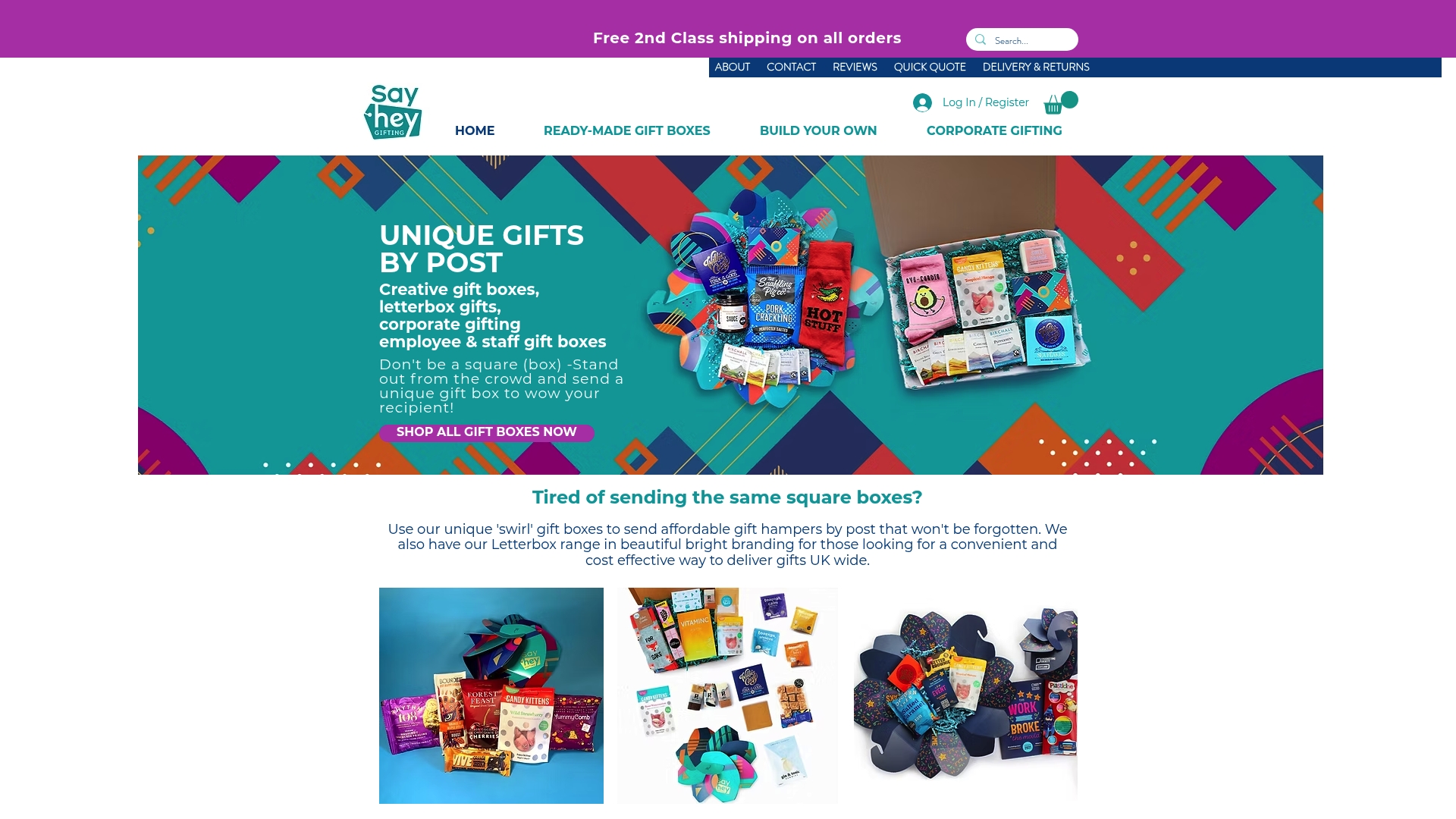
From employee gift boxes suited to client appreciation to letterbox gifts that arrive beautifully presented at any address in the UK, every option is built around the idea that a gift should feel personal. You can choose from ready-made selections or build your own gift box to match the specific preferences of your most valued clients. Whether you are gifting one person or one hundred, Sayheygifting makes it straightforward to send something that creates a lasting memory and strengthens the relationship you have worked hard to build.
FAQ
Why does gifting improve client retention?
Gifting improves client retention because it triggers reciprocity and signals genuine appreciation, making clients feel valued beyond the transactional level. Companies with structured gifting programmes report client retention improvements of up to 43%.
How much should you spend on a client gift?
Spend is less important than personalisation. A thoughtful gift under £100 can lead to referrals and account upgrades, while a costly generic item often has little relational impact.
When is the best time to send a client gift?
The most effective timing is tied to meaningful milestones such as project completions, contract renewals, or significant client achievements. Unexpected gifting outside the december window generates stronger emotional responses than predictable calendar gifting.
What makes a client gift personalised?
A personalised gift reflects genuine knowledge of the recipient’s role, preferences, and circumstances. It goes beyond adding a logo and instead shows that you have paid attention to who the client actually is.
How do you measure the impact of a client gifting programme?
Log every gift in your CRM alongside the occasion and any subsequent change in client engagement or commercial activity. Tracking renewal rates, referral frequency, and conversation quality before and after gifting provides a clear picture of programme effectiveness.
Recommended
Comments