
Common corporate gifting mistakes to avoid in 2026
Updated: Sep 24

The most damaging corporate gifting mistakes are sending generic gifts, leaving planning too late, sacrificing quality to save money, ignoring cultural and dietary sensitivities, and failing to document gifts for compliance. Each one chips away at the relationship you were trying to strengthen. Here is what to do instead:
Generic, one-size-fits-all gifts — survey recipients in advance or use a build-your-own option so every gift feels personal.
Last-minute ordering — plan four to six weeks ahead for standard campaigns; add more lead time for peak seasons.
Cutting quality to hit a low budget — set a realistic per-head spend by occasion and relationship tier rather than a flat company-wide figure.
Poor or branded-heavy packaging — invest in presentation; sturdy, thoughtfully arranged packaging signals care before the recipient even opens the box.
Cultural, religious, or dietary oversights — collect dietary and cultural preferences as part of your recipient data, and offer alternatives such as vegan hampers or non-alcoholic options.
No compliance record — log every gift with value, recipient, and approver before it ships, especially for anything above your policy threshold.
Skipping measurement — set a simple success metric (response rate, thank-you messages, repeat orders) so the next campaign improves on this one.
Sayheygifting’s curated employee gift boxes and build-your-own options are designed to address each of these points from the outset.
Key takeaways
Avoiding common corporate gifting mistakes comes down to planning early, setting clear tiers, collecting recipient preferences with consent, and documenting every gift before it ships.
Point | Details |
Plan four to six weeks ahead | Suppliers need this lead time for quality, personalised campaigns; peak seasons require more. |
Set budget tiers by relationship | Per-head spend should reflect the recipient’s tier and occasion, not a flat company-wide figure. |
Collect preferences with consent | Dietary, cultural, and delivery data must be actively provided by recipients under UK GDPR. |
Document every gift | Log recipient, value, occasion, and approver before dispatch to stay compliant with the Bribery Act. |
Use Sayheygifting for curated quality | Fresh, presentation-ready gift boxes and build-your-own options remove the most common failure points. |
Table of Contents
Why getting corporate gifting right matters more than you think
Thoughtful gifting is one of the few marketing and HR tools that creates a tangible, physical moment of recognition. When it lands well, it reinforces loyalty, sparks genuine goodwill, and keeps your brand visible in a way that a follow-up email never quite manages. When it goes wrong, the damage is equally concrete: a gift that misses the mark can feel dismissive, and research suggests a significant share of corporate gifts are discarded because they simply do not match recipient preferences.
The business case for corporate gifting ROI rests on three measurable outcomes: stronger client retention, higher employee engagement scores, and improved brand perception. None of those outcomes happen by accident. They require a clear objective before the first gift is ordered.
Before you start any gifting campaign, confirm:
What you want the gift to achieve (retention, recognition, celebration, or new-relationship building)
Who the recipients are and what their preferences, dietary needs, or cultural backgrounds might be
What your per-head budget is, broken down by recipient tier and occasion
How you will measure success after delivery
Getting those four points agreed in writing takes twenty minutes and prevents the majority of gifting blunders before they happen.
The most common corporate gifting mistakes and how to fix them
Large-scale gifting programmes repeatedly fail for the same handful of reasons: rushed planning, poor personalisation, and no measurement. The list below names each mistake, explains why it hurts, and gives you a quick fix you can act on today.
1. Sending generic, impersonal gifts
A branded pen or a generic chocolate box says “we had to send something.” Recipients notice, and the gift often ends up in a drawer or the bin. The harm is not just wasted spend; it actively signals that the recipient was not worth a moment’s thought.

Quick fix: Collect basic preferences (dietary requirements, interests, allergies) at onboarding or via a short survey. Use that data to select or build a gift that reflects the individual.
2. Leaving it too late
Suppliers commonly recommend four to six weeks’ notice for corporate gifting campaigns, and considerably more around Christmas and other peak periods. Rushing an order means accepting whatever stock is available, which usually means lower quality and no personalisation.
Quick fix: Add gifting milestones to your annual HR or marketing calendar in January so lead times are never a surprise.
3. Sacrificing quality to cut costs
A hamper that looks impressive on screen but arrives with stale contents or flimsy packaging does more harm than no gift at all. Hampers assembled from older warehouse stock can taste stale; practitioners advise asking suppliers for packing dates and favouring fewer premium items over many mediocre ones. Fewer genuinely good items create a far stronger impression than many filler items.
Quick fix: Ask every supplier when items were packed and what their inventory turnover is. If they cannot answer, choose a different supplier.
4. Over-branding the gift
Slapping a large logo across every item turns a gift into a promotional leaflet. Recipients feel like a marketing channel rather than a valued person, and the gift rarely makes it past the office kitchen.
Quick fix: Keep branding subtle: a branded ribbon, a quality gift card, or a small logo on the outer box is enough. Let the quality of the contents carry the message.
5. Ignoring cultural, religious, and dietary sensitivities
Sending alcohol to a recipient who does not drink, pork products to someone with religious dietary restrictions, or a gift that inadvertently references a cultural taboo can cause genuine offence. This is one of the most avoidable corporate gifting blunders, yet it happens regularly when teams rely on assumptions rather than data.
Quick fix: Make dietary and cultural preferences a standard field in your recipient database. Offer a non-alcoholic gourmet hamper or a vegan gift box as a default alternative for anyone whose preferences are unknown.
6. Getting the timing wrong
A gift that arrives a week after the event it was meant to celebrate feels like an afterthought. Equally, sending a client gift immediately before contract renewal can look transactional rather than genuine.
Quick fix: Map gifting occasions to your relationship calendar. Aim for gifts to arrive on or just before the occasion, and avoid sending anything in the two weeks before a commercial negotiation.
7. Inconsistent gifting across teams or locations
When one office receives a premium hamper and another gets a budget token, recipients compare notes. The result is resentment rather than appreciation. Inconsistency across locations is one of the most cited reasons gifting programmes fail.
Quick fix: Standardise gift tiers by recipient level and occasion, and document them in a policy that every manager can access.
8. Poor packaging and presentation
Presentation and packaging materially affect recipients’ impressions; sturdy outer packaging and intentional internal arrangement increase perceived care and visibility. A gift that arrives crushed or loosely rattling inside an oversized box undermines everything inside it.
Quick fix: Choose suppliers who use structured, protective outer boxes and arrange contents intentionally. A gift that sits beautifully on a desk creates lasting visibility for your brand.
9. Failing to account for environmental and ethical concerns
Failing to consider environmental and ethical concerns is a common mistake and one that is increasingly noticed by recipients. Single-use plastics, excessive packaging, or gifts sourced from suppliers with poor ethical records can contradict your company’s stated values.

Quick fix: Align gift choices with your sustainability policy. Favour suppliers using recyclable or compostable packaging, and consider personalisation options that add meaning without adding waste.
10. Breaching privacy when personalising
Personalisation is powerful, but using personal data that a recipient did not knowingly share (a home address sourced from HR files without consent, or a reference to a personal detail they mentioned in passing) can feel intrusive rather than thoughtful.
Quick fix: Only use data the recipient has actively provided or consented to share. Confirm delivery addresses directly with recipients rather than pulling them from internal systems without notice.
11. No compliance record or approval process
A gift sent without documentation can become a liability under the UK Bribery Act 2010 if it is later questioned. Without a log, you cannot demonstrate that the gift was proportionate, approved, and not intended to influence a decision.
Quick fix: Log every gift with the recipient’s name and role, the gift value, the occasion, and the approver’s name before it ships. Keep records for at least six years.
12. Skipping measurement
Gifting without measurement is spending without accountability. If you cannot show what a campaign achieved, it is difficult to justify the budget next year or to improve the programme over time.
Quick fix: Set one or two simple metrics before the campaign launches: delivery confirmation rate, recipient response rate, or a short post-gift survey. Review results within four weeks of delivery.
How to plan, budget, and personalise gifts effectively
A repeatable process is the single biggest protection against gifting errors. Teams that treat corporate gifting as a programme rather than an ad-hoc task consistently produce better outcomes and fewer complaints.
Campaign planning timeline
Stage | Action | Lead time before send date |
Strategy | Set objectives, audience, and budget tiers | 8+ weeks |
Supplier selection | Shortlist, request packing dates, confirm ethical credentials | 6–8 weeks |
Personalisation | Collect recipient preferences and delivery addresses | 5–6 weeks |
Order placement | Confirm quantities, branding, and packaging | 4–5 weeks |
Approval | Run through compliance sign-off | 3–4 weeks |
Dispatch | Confirm delivery windows with recipients | 1–2 weeks |
Measurement | Send follow-up survey or track responses | 2–4 weeks post-delivery |
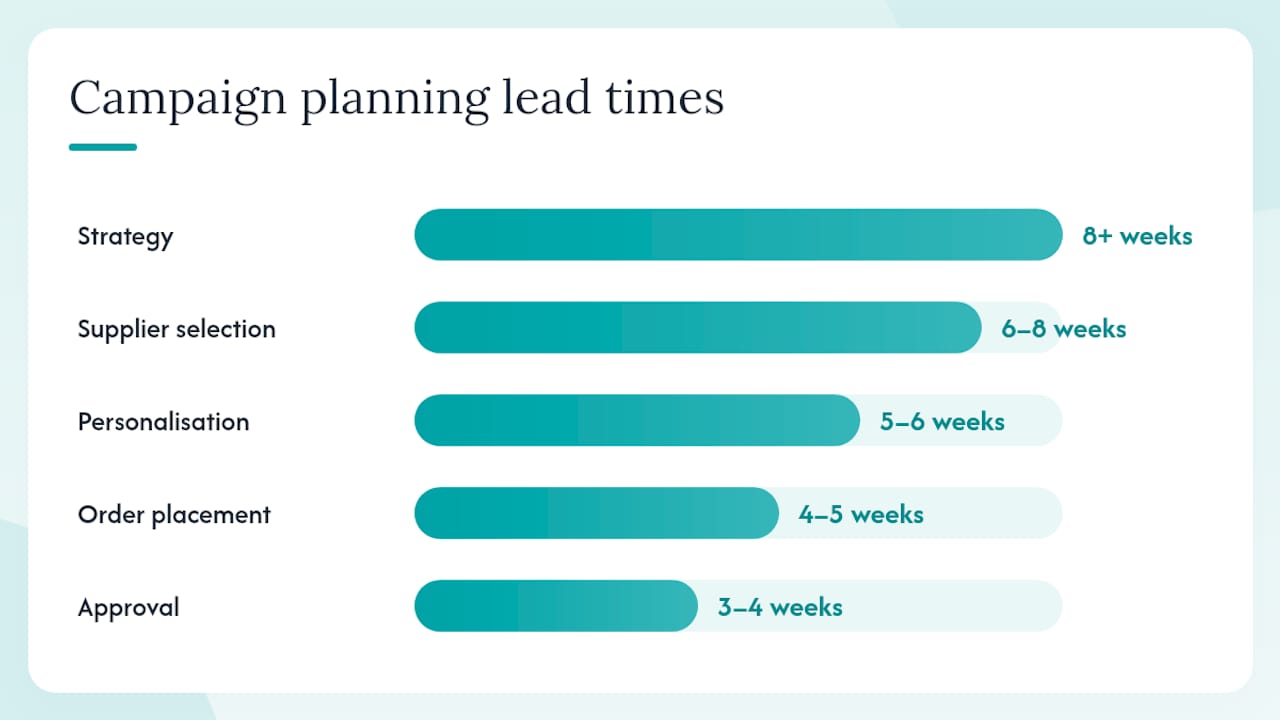
For event-specific gifting, the corporate events planning guide covers occasion-specific lead times in more detail.
Budget guidance by tier
Set budgets by relationship tier and occasion rather than a flat company-wide figure. A visible drop in quality typically occurs when per-head spend falls below a modest threshold, so it is worth agreeing minimums by tier in your gifting policy.
Tier 1 (key clients, senior employees, long-tenure recognition): higher per-head spend; premium curated hampers or build-your-own boxes with personalised notes
Tier 2 (active clients, team-wide recognition, milestone events): mid-range; quality letterbox gifts or themed hampers
Tier 3 (prospect welcome gifts, wide-team celebrations): entry-level; consistent, well-presented letterbox gifts that still feel considered
Personalisation without overstepping
Pro Tip: Collect preferences through a short, opt-in form sent to recipients before the gifting season. Ask about dietary requirements, allergies, and a broad interest area (food, wellness, books). Use those answers to select from a curated range rather than building a bespoke gift from scratch, which keeps costs predictable and privacy intact.
For corporate gift delivery to home addresses, always confirm the address directly with the recipient via a brief, friendly message. Never pull home addresses from HR records without explicit consent.
UK compliance: Bribery Act, tax, and data protection basics
The legal risks around corporate gifting in the UK are real but manageable. Three areas deserve attention: the Bribery Act 2010, HMRC’s tax treatment of gifts, and GDPR obligations when you use personal data to personalise.
Bribery Act 2010
Under the Bribery Act 2010, a gift given or received with the intention of influencing a business decision is a criminal offence. “Reasonable and proportionate” hospitality and gifts are permitted, but the Act places the burden of proof on the company to demonstrate that a gift was not intended to induce improper conduct. Practical rules of thumb:
Keep a written gifts register and update it for every gift given or received above your policy threshold (many organisations set this at £25–£50 per person per occasion, though the Act sets no fixed monetary limit).
Require manager approval for any gift above the threshold.
Never give cash or cash-equivalent vouchers to public officials or procurement contacts.
Consult your legal or compliance team if a gift could reasonably be seen as influencing a contract decision.
HMRC tax treatment
HMRC treats most business gifts to clients as non-deductible for corporation tax purposes unless they carry a conspicuous advertisement for your business and cost no more than £50 per recipient per year. Gifts of food, drink, tobacco, or vouchers exchangeable for those items are excluded from this relief regardless of value. For employee gifts, the trivial benefits exemption allows gifts of up to £50 per employee per occasion (not cash or cash vouchers) without triggering a tax or National Insurance liability, provided the gift is not a reward for performance or contractual entitlement.
GDPR and personal data
Using a recipient’s name, dietary preferences, or home address to personalise a gift means processing personal data under UK GDPR. Collect only what you need, store it securely, and obtain clear consent before using personal details for gifting purposes. Delete recipient data once the campaign is complete unless you have a legitimate reason to retain it.
Workplace gifting etiquette and the unwritten rules
Etiquette guidance emphasises matching gift type to the recipient’s role, the occasion, and the length of the relationship. Getting this wrong does not always break a rule; sometimes it just creates awkwardness that lingers.
Gifting to a manager or boss
Individual gifts from a single employee to their manager can easily be perceived as currying favour. The longstanding workplace convention, endorsed by etiquette authorities including the Emily Post Institute, is to pool contributions across the team so the gift comes from the group rather than one person. Keep the value modest and the occasion clear (a birthday, a work anniversary, a leaving gift).
Peer-to-peer and team gifting
Peer gifts work best when they are low-value, occasion-specific, and not obligatory. A team-wide celebration gift (a shared hamper, a group experience) avoids the discomfort of unequal individual gifts and is less likely to create perceived favouritism.
Dos and don’ts for managers
Do set a clear gifting policy so employees know what is appropriate.
Do give team gifts consistently across all direct reports.
Do acknowledge cultural and religious occasions with sensitivity.
Don’t give personal or intimate gifts to individual team members.
Don’t give gifts that could be read as commenting on appearance or lifestyle.
Don’t send gifts that single out one employee for recognition without a transparent, documented reason.
For practical ideas on employee gifting and team rewards, a curated gift box that feels personal without being intrusive is usually the safest and most appreciated choice.
What counts as an unethical gift, and what to send instead
Unethical gifts are often about context and timing rather than pure monetary value. A bottle of wine sent as a thank-you after a project closes is very different from the same bottle sent the day before a contract renewal meeting. When gifts could affect professional judgement, HR and compliance should be involved.
Before-and-after examples
Expensive personal item (watch, jewellery) to a procurement contact → A branded experience for their team (a virtual tasting, a group workshop) or a charitable donation in their name. The value is comparable; the conflict-of-interest risk is eliminated.
Alcohol sent to a client without knowing their preferences → A gourmet non-alcoholic hamper or a wellness gift box. Equally generous, universally appropriate.
Cash or gift cards above your policy threshold → A curated gift box at an approved value. Cash equivalents are the most scrutinised category under the Bribery Act and HMRC rules.
A gift timed to coincide with a tender or procurement decision → Delay the gift until after the decision is made and documented, then send it as a genuine thank-you for the relationship.
If you are ever unsure whether a gift crosses a line, the test is simple: would you be comfortable if the gift and its timing appeared in a compliance audit? If not, escalate to your legal or compliance team before sending.
A ready-to-use checklist and sample message templates
Templates save time and reduce the chance of a mistake slipping through at the last moment. The checklist below covers the full campaign cycle; the message templates can be adapted for client and employee gifting.
Campaign checklist
[ ] Objectives agreed and documented
[ ] Recipient list confirmed with dietary and cultural preferences noted
[ ] Budget tiers approved by finance
[ ] Supplier shortlisted and packing dates confirmed
[ ] Personalisation data collected with consent
[ ] Delivery addresses verified directly with recipients
[ ] Gifts logged in the gifts register with values and approver names
[ ] Packaging and presentation reviewed before dispatch
[ ] Delivery tracking set up
[ ] Post-campaign survey or response tracking planned
Approval matrix
Gift value per recipient | Approver required |
Up to £25 | Line manager |
— | Senior manager or HR |
— | Director sign-off |
— | Director + legal or compliance review |
Sample client thank-you note
“Thank you for another brilliant year working together. We genuinely value the partnership we have built, and this small token is our way of saying so. We look forward to everything ahead.”
Sample employee recognition note
“Your contribution this [quarter/year] has made a real difference to the whole team. We wanted to mark that with something that reflects just how much your effort is appreciated. Thank you.”
Pro Tip: Keep both templates in a shared HR or marketing folder so any manager can access them without starting from scratch. Consistency in tone across all gifting communications reinforces the sense that recognition is a company value, not a one-off gesture.
Why thoughtful gifting design matters more than a big budget
Corporate gifting done well is not about spending more. It is about removing the friction points that turn a generous intention into a forgettable or, worse, an offensive experience. What strikes me most, having worked through the research and the compliance landscape, is how many gifting blunders come down to one root cause: treating gifting as a task to complete rather than a relationship to invest in.
The companies that get this right are not necessarily the ones with the largest gifting budgets. They are the ones that plan early, collect the right recipient data, set clear tiers, and choose suppliers who can answer basic questions about freshness, packaging, and ethical sourcing. A £30 letterbox gift that arrives on time, looks beautiful, and contains something the recipient actually enjoys will outperform a £100 hamper of stale mixed nuts in a flimsy box every single time.
The compliance piece is equally underestimated. Most UK businesses have a gifts policy somewhere in their employee handbook, but far fewer have a gifts register that is actually maintained. That gap is where Bribery Act exposure lives. A simple spreadsheet updated before every dispatch is not a bureaucratic burden; it is the difference between a confident “yes, we have records” and a very uncomfortable conversation with your legal team.
Sayheygifting takes the guesswork out of corporate gifting
Avoiding the mistakes above is far easier when your gifting partner has already solved the hard problems for you. Sayheygifting’s curated employee gift boxes are built around fresh, quality-selected contents in structured, presentation-ready packaging, so you are never sending a gift that looks good in a photo but disappoints on arrival. Every order can be personalised, branded subtly, and dispatched to home or office addresses across the UK, which means remote and hybrid teams are covered without the logistical headache.
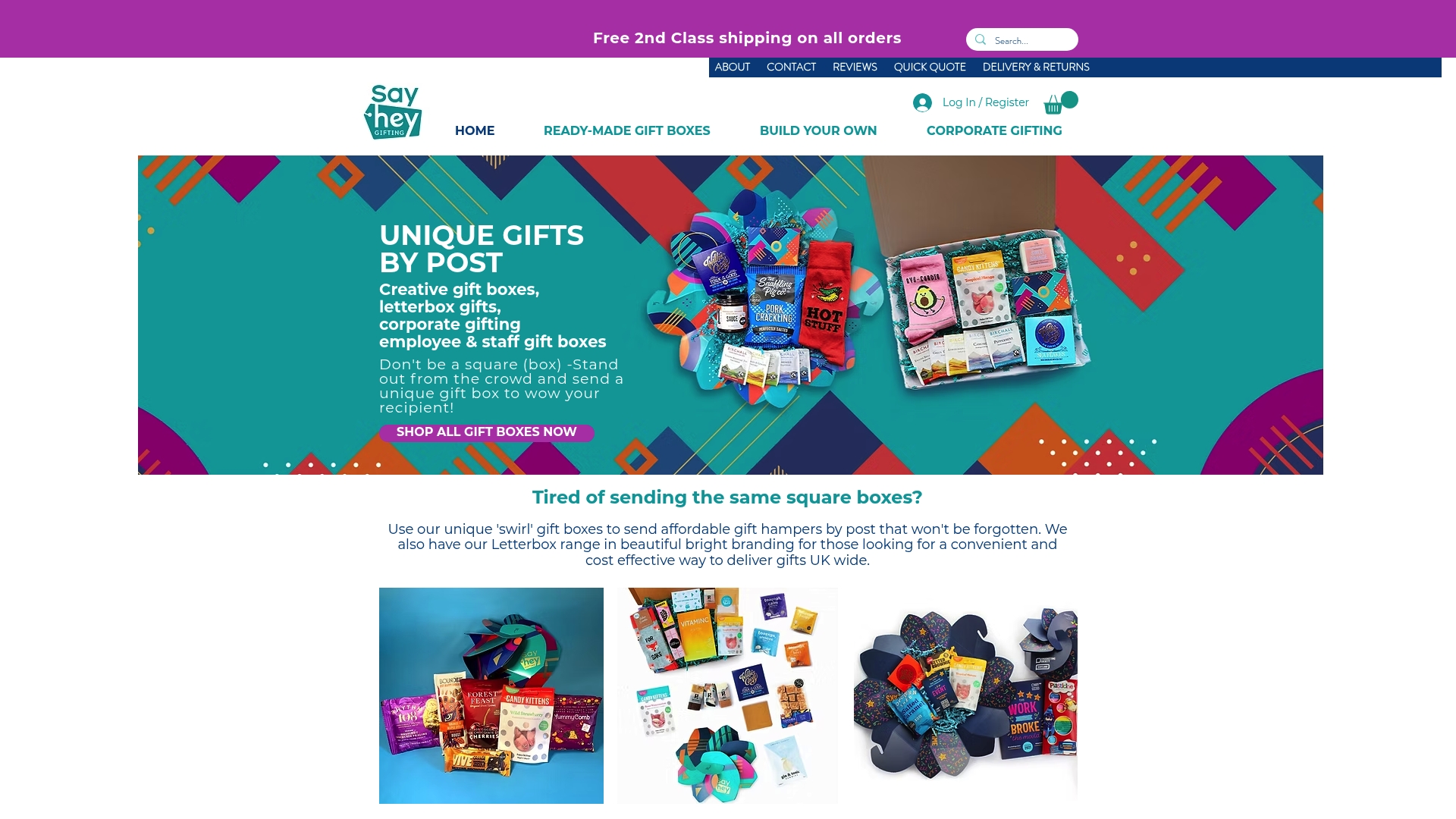
For teams that want full control, the build-your-own gift box option lets you select contents by dietary preference and occasion, keeping personalisation meaningful without breaching privacy. Bulk orders come with consistent packaging and tiered pricing, so your approval matrix stays clean and your gifts register stays simple. Browse the full range and place your order at Sayheygifting.
Sources
FAQ
What is the etiquette for giving corporate gifts?
Match the gift type and value to the recipient’s role, the occasion, and the length of your relationship. Avoid overly personal items, keep branding subtle, and always check for dietary or cultural considerations before ordering.
What are the unwritten rules of gifting at work?
Individual gifts from an employee to their manager can appear as favouritism; pooled team gifts are the accepted convention for bosses. Peer gifts should be low-value and occasion-specific, and no gift should single out one colleague without a transparent, documented reason.
What should you avoid when giving a boss a gift?
Avoid giving an expensive individual gift from yourself alone, as this risks being perceived as currying favour. A modest contribution to a pooled team gift is the widely accepted approach, as endorsed by workplace etiquette guidance from the Emily Post Institute.
Can you give an example of unethical gift giving?
Sending a high-value gift to a procurement contact immediately before a contract decision is a clear example: the timing creates an implied expectation of influence, which falls within the scope of the UK Bribery Act 2010. Delay the gift until after the decision is finalised and documented.
How does Sayheygifting help avoid common gifting mistakes?
Sayheygifting’s curated employee gift boxes and build-your-own options come in structured, presentation-ready packaging with fresh, quality-selected contents, removing the most common failure points around quality, presentation, and personalisation for UK teams.
Recommended

gojiliwin org gives me a reason to examine the usefulness of search tools when visitors are looking for a particular item. Search should be easy to locate, while its results should display understandable names and relevant context. Slot games, table games, and bingo offer examples for evaluating how a visitor might move from a broad catalogue to a more specific selection. I would check whether the search interface communicates its purpose clearly and whether any available filters provide meaningful distinctions. It is also important to consider what happens when a search produces no results. A helpful interface should explain the outcome and offer a sensible way to continue browsing rather than leaving visitors at a dead end.
casino jiliwin interests me as a subject for a broader review of navigation, device compatibility, and information transparency. I would begin with the homepage structure, then examine card games, slot games, and bingo to evaluate how individual categories are identified and accessed. Clear labels and consistent page layouts may help visitors understand the available selection, while responsive design can support use across different screen sizes. I would also look for accessible instructions, readable policies, and clear contact information. Any claims about company ownership, licensing, user numbers, or security would require independent confirmation. My overall assessment would therefore distinguish visible interface characteristics from unverified claims, focusing on whether the website provides a coherent, understandable, and accessible browsing experience.
88JL gives me several recognizable visual cues whenever I return to explore the platform. I usually take a quick look at the lobby before choosing a direction. Casino with Dragon Tiger creates one stopping point around the table presentation, while Fishing Games shifts my attention toward aquatic themes. Moving into Lottery introduces another style centered on numbers and results. I also notice how the account area remains part of the overall interface while I browse different sections. After spending more time exploring, these elements become familiar landmarks that help me maintain a comfortable rhythm throughout each visit.
sp8bet khiến mình quan tâm đến cách những thông tin bổ sung được đặt trong cùng một cấu trúc với nội dung trò chơi. Mình thường quan sát các khu vực chính trước rồi mới tìm hiểu phần dành cho thành viên để xem cách hệ thống phân chia những mục đích khác nhau. Có phiên mình bắt đầu với Xổ số, chuyển sang Bắn cá rồi mở khu vực khuyến mãi để quan sát cách các chương trình được giới thiệu. Khi thay đổi phạm vi, mình chú ý đến những mốc giúp phân biệt nội dung đang sử dụng. Sau khi xem xong, mình quay lại hướng trước qua menu chung. Với mình, cách bố trí này giúp nhiều…
https://f168.ing/ khiến tôi quan tâm đến cách giới thiệu các trò chơi casino có hình thức tương tác khác nhau. Khi tìm hiểu Baccarat, Roulette và Sicbo, tôi chú ý liệu mỗi danh mục có tên gọi rõ ràng, phần mô tả riêng và hướng dẫn dễ tiếp cận hay không. Việc phân chia hợp lý giúp người dùng nhận diện lựa chọn trước khi mở nội dung chi tiết. Tôi cũng quan sát cách bố trí hình ảnh, tiêu đề và nút quay lại giữa các trang. Theo cảm nhận của tôi, giao diện casino nên ưu tiên khả năng đọc hiểu và tra cứu quy tắc thay vì chỉ tập trung vào hiệu ứng hình ảnh. Các thông tin…