
Corporate gifting ROI benefits: the 2026 business case

Corporate gifting ROI benefits are the measurable business returns that organisations gain by giving thoughtful, well-timed gifts to employees and clients. Structured gifting programmes deliver up to 5x higher returns in client retention and employee engagement, according to enterprise research published in 2026. These returns show up in renewal rates, referral volumes, and engagement scores — not just goodwill. For HR professionals and corporate decision-makers, understanding the importance of corporate gifting means treating it as a relationship investment with a trackable financial return, not a discretionary budget line.
1. What are the top measurable corporate gifting ROI benefits?
The corporate gifting return on investment is most visible in three areas: client retention, employee engagement, and referral generation. Each of these drives revenue in a way that finance teams can quantify and report.
Client retention is the clearest financial signal. Client gifting models show up to 43% improvement in customer retention. Retaining a client costs a fraction of acquiring a new one, so even modest retention gains translate directly into profit.

Employee engagement is the second major driver. Employee gifting programmes report 31% lower voluntary turnover. Replacing a single employee typically costs between 50% and 200% of their annual salary, so reducing churn through recognition is one of the highest-return activities an HR team can run.
Referral generation is the third, and often the most underestimated, benefit of corporate gifts. Clients who feel genuinely appreciated are significantly more likely to recommend your business. A well-placed gift at a contract renewal or project milestone creates the kind of emotional goodwill that prompts a referral conversation.
Improved client retention of up to 43%
Reduced voluntary employee turnover by 31%
Increased referral likelihood from appreciated clients and staff
Higher renewal rates tied to relationship-led gifting moments
80% of C-suite executives report that business gifts deliver measurable ROI. That level of executive confidence reflects a shift in how gifting is categorised: not as a social nicety, but as a business development tool.
2. How does personalisation increase corporate gifting ROI?
Personalisation is the single biggest lever for improving the ROI of corporate gifts. Personalised gifts yield 89% higher ROI than generic ones and are 2.5 times more likely to be kept by recipients. That retention matters because a gift that stays visible continues to reinforce your brand and relationship long after it was received.
The psychology behind this is straightforward. A generic gift signals that the recipient was one of many. A personalised gift signals that someone paid attention. That distinction shifts the emotional response from polite acknowledgement to genuine appreciation, and genuine appreciation drives loyalty.
Personalisation also counters what researchers call digital fatigue. When inboxes are full of automated messages and discount codes, a thoughtful, relevant gift cuts through the noise and elevates the relationship from transactional to meaningful. The result is stronger brand perception and higher retention.
Choose gifts that reflect the recipient’s role, preferences, or recent milestones
Add a handwritten note or personalised message to reinforce the human connection
Align the gift to the relationship stage, such as onboarding, anniversary, or renewal
Avoid one-size-fits-all hampers unless they are genuinely curated for the individual
Pro Tip: Record gift preferences and past choices in your CRM. Even a simple note about dietary requirements or personal interests transforms a standard gift into a memorable one.
3. What strategic practices maximise corporate gifting ROI?
The shift from ad-hoc gifting to event-triggered gifting is where most organisations see the biggest improvement in their gifting return. Structured gifting tied to specific milestones such as onboarding, contract renewals, work anniversaries, and project completions delivers significantly higher retention and renewal rates than gifts sent without a clear purpose.
A structured gifting programme operates on three principles:
Trigger-based timing. Gifts are sent in response to defined business events, not calendar dates alone. This makes the gift feel relevant rather than routine.
Tiered investment. Budget is allocated according to relationship value. A long-standing client or a high-performing team member warrants a more considered gift than a new contact.
Measurement from the outset. Every gift sent is logged against a relationship record, so you can track whether renewal rates, satisfaction scores, or referral volumes shift in the months that follow.
A single well-timed gift increases job satisfaction for 67% of employees for six months or longer. That is a significant return on what is often a modest spend, and it demonstrates why timing matters as much as the gift itself.
Leading organisations treat gifting not as a courtesy but as competitive relationship infrastructure that compounds value over time. When gifting is embedded into the client and employee lifecycle, it strengthens resilience and supports expansion revenue.
4. What are common pitfalls that diminish corporate gifting ROI benefits?
Generic, poorly timed, or untracked gifts do not just fail to deliver ROI. They can actively damage the relationship they were meant to strengthen. A gift that feels impersonal signals a lack of care, which is worse than no gift at all in some professional contexts.
The most common mistakes that reduce the benefits of corporate gifts are:
Generic choices. A branded pen or a standard food hamper sent to every contact on the same date reads as a bulk exercise, not a personal gesture.
Poor timing. A gift that arrives weeks after a milestone has passed loses its emotional relevance entirely.
Cultural missteps. Gifts that conflict with dietary requirements, religious observances, or company gifting policies create discomfort rather than goodwill.
No tracking. Gifts sent without any record in a CRM or gifting platform cannot be attributed to outcomes, making budget justification impossible.
Compliance blind spots. Many organisations overlook internal policies or HMRC guidelines on gifts and entertainment, which can create legal and reputational risk.
Pro Tip: Before launching a gifting programme, audit your client and employee data for dietary requirements, cultural considerations, and any existing company policies on gift acceptance. A short checklist prevents the most common missteps.
Thoughtful personalisation directly counters these pitfalls by making each gift feel considered rather than automated. The investment in getting it right pays back in the relationship quality it creates.
5. How to measure and report corporate gifting ROI to stakeholders
Measuring gifting ROI requires connecting gift activity to business outcomes, not just tracking spend. The main barrier is what researchers call the measurement gap: most teams send gifts without logging them in a CRM, which makes it impossible to link gifting to renewal rates, engagement scores, or referral volumes.
The metrics that matter most to CFOs and leadership teams are:
Metric | What it measures | Data source |
Client renewal rate | Whether gifted clients renew at higher rates | CRM renewal records |
Employee engagement score | Shift in engagement after recognition gifts | HR survey data |
Referral volume | Increase in inbound referrals from gifted contacts | Sales pipeline data |
Voluntary turnover rate | Reduction in staff leaving after gifting programme launch | HR records |
Net Promoter Score | Change in client advocacy following gifting touchpoints | NPS survey tool |
Closing the measurement gap by integrating gifting data with CRM systems is the most direct way to demonstrate programme value to finance and leadership. When you can show that gifted clients renew at a higher rate than non-gifted ones, the budget conversation becomes straightforward.
Start with two or three metrics and build from there. Tracking everything at once creates complexity that slows adoption. A simple before-and-after comparison of renewal rates across gifted and non-gifted client cohorts is often enough to make the case.
Key takeaways
Corporate gifting ROI benefits are most reliably delivered through personalised, event-triggered programmes that are tracked against measurable business outcomes from the outset.
Point | Details |
Personalisation drives returns | Personalised gifts yield 89% higher ROI than generic alternatives and are 2.5x more likely to be retained. |
Timing amplifies impact | Gifts tied to milestones such as renewals or onboarding outperform ad-hoc gifting on retention and satisfaction. |
Track outcomes, not just spend | Integrating gifting data with CRM systems closes the measurement gap and supports budget justification. |
Retention is the core financial case | A 43% improvement in client retention and 31% lower employee turnover represent significant cost savings. |
Avoid generic gifting | Impersonal, poorly timed gifts can damage relationships rather than strengthen them. |
Why gifting is the relationship investment most businesses undervalue
I have seen gifting programmes treated as an afterthought for years, a line item approved in december and forgotten by february. The organisations that get real, lasting returns from gifting do something fundamentally different. They treat it as infrastructure, not ceremony.
The data supports this view. When gifting is tied to lifecycle events and tracked against renewal and engagement outcomes, it stops being a cost and starts being a driver. The 5x ROI figure that enterprise research cites is not achieved by spending more. It is achieved by spending with intention.
What I find most compelling is the compounding effect. A well-timed gift at onboarding sets a tone. A thoughtful recognition gift at a work anniversary reinforces it. By the time a client or employee reaches a renewal or promotion decision, the relationship has been quietly strengthened by a series of small, considered moments. That is not sentiment. That is brand awareness through gifting that accumulates into measurable loyalty.
The organisations that still treat gifting as a courtesy are leaving retention and referral revenue on the table. The ones that treat it as a relationship programme are seeing it show up in their numbers.
— Craig
Sayheygifting: personalised gifting that supports your programme goals
Building a gifting programme that delivers real returns starts with having the right gifts to send. Sayheygifting offers a range of personalised employee gift boxes designed to make every recipient feel genuinely valued, whether you are recognising a work anniversary, welcoming a new team member, or thanking a long-standing client.
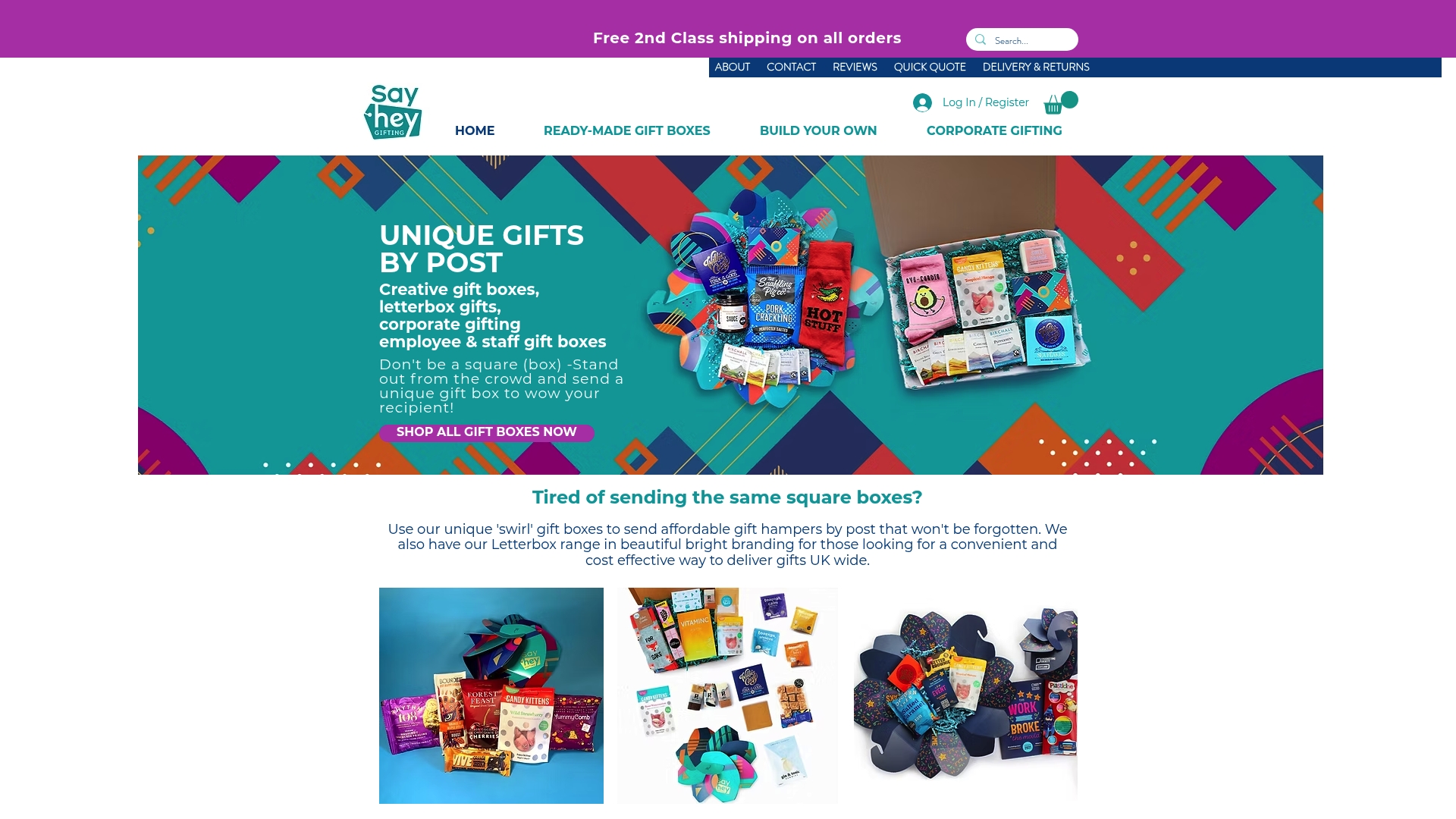
Every box is curated with care, and the build your own gift box option means you can tailor each gift to the individual rather than defaulting to a generic selection. From letterbox gifts to hampers, Sayheygifting makes it straightforward to send something that feels personal, arrives beautifully presented, and reflects the thoughtfulness your relationships deserve. Explore the full range and find the right gift for every milestone in your programme.
FAQ
What is corporate gifting ROI?
Corporate gifting ROI is the measurable business return generated by a structured gift programme, including improvements in client retention, employee engagement, and referral rates. Structured programmes can deliver up to 5x higher returns compared to ad-hoc gifting.
How do personalised gifts improve ROI?
Personalised gifts yield 89% higher ROI than generic ones and are 2.5 times more likely to be kept by recipients, which strengthens brand recall and loyalty over time.
What metrics should I track to measure gifting ROI?
Track client renewal rates, employee engagement scores, voluntary turnover, referral volumes, and Net Promoter Score before and after gifting programme activity. Logging gifts in your CRM makes attribution straightforward.
How often should a business send corporate gifts?
Gifts are most effective when tied to specific business milestones such as onboarding, contract renewals, work anniversaries, and project completions, rather than sent on fixed calendar dates alone.
Can corporate gifting reduce employee turnover?
Employee gifting programmes report 31% lower voluntary turnover. A single well-timed gift increases job satisfaction for 67% of employees for six months or longer, making recognition gifting one of the most cost-effective retention tools available.
Recommended

Setting up a shared space for written content often involves trade-offs between simplicity and structure, and this kind of platform leans toward the former.