
Gifts for sick employees: the HR manager's guide

Send a small, choice-based care package paired with a short, professional message. That single action does more for an unwell employee’s sense of belonging than any policy document, and it takes less than ten minutes to arrange when you know where to look.
TL;DR
Fastest route: order a ready-made wellness gift box or letterbox gift for next-day home delivery; no minimum order for single purchases.
Before you order: confirm the employee’s home address, check for known allergies or dietary needs, and avoid anything heavily scented or alcohol-based.
Typical budget: £10–£30 covers a thoughtful letterbox gift; £30+ unlocks a full pamper hamper or curated care package.
Bulk or branded orders: allow extra lead time and contact your supplier directly for corporate invoicing and custom branding.
Pro Tip: If you are unsure of the employee’s home address, send a digital gift card or a build-your-own gift link so they can choose their own items and enter their own delivery details, protecting their privacy completely.
Table of Contents
What are the best gifts for sick employees, by category?
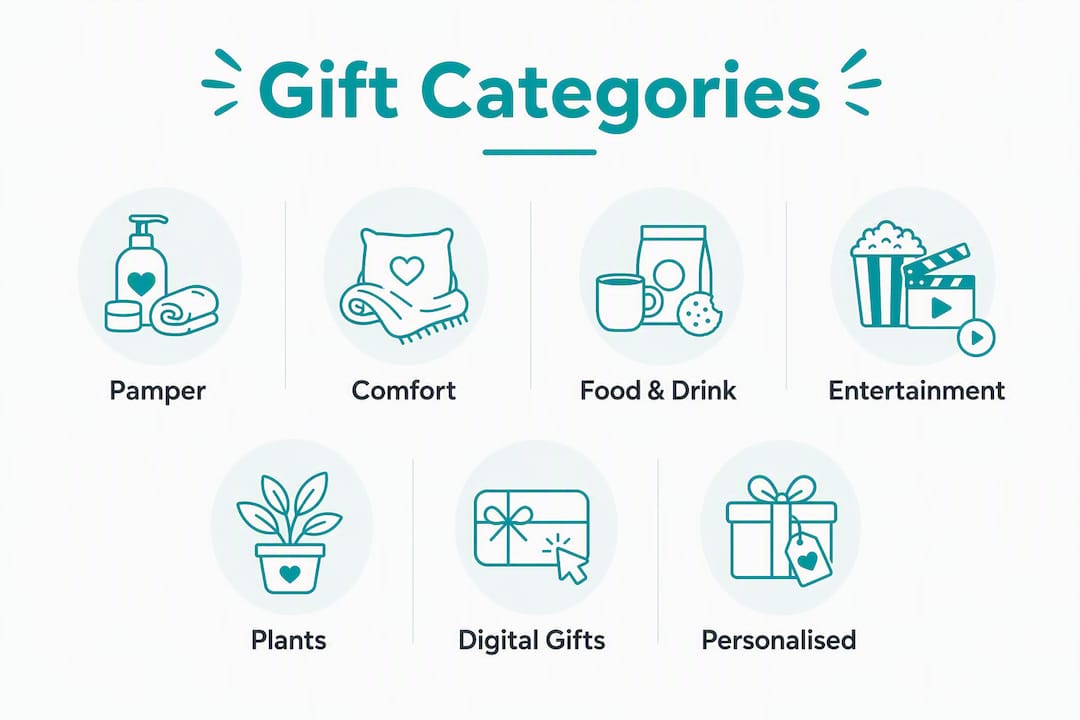
The most effective get-well gifts tend to fall into a handful of clear categories. Knowing which category fits the situation helps you move from “I should send something” to “order placed” in minutes. Care packages for employees are designed to demonstrate appreciation and make recipients feel genuinely valued, so the category you choose matters as much as the item itself.
Pamper and self-care
Bath salts, a face mask, a soft eye pillow, or a small aromatherapy candle give someone permission to rest and look after themselves. These work especially well for stress-related illness or post-surgery recovery. Avoid heavily fragranced products for anyone with respiratory conditions or known sensitivities.
Comfort and warmth
Cosy slippers, a soft throw blanket, a quality mug, or a warming wheat bag are universally appreciated and carry no dietary risk. These are the safest category for employees you do not know well, and they travel beautifully in a letterbox-friendly format.

Food and drink
Soothing herbal teas are a classic starting point for any get-well basket, and for good reason: they are warm, comforting, and appropriate for almost everyone. Pair with honey sticks, shortbread, or a small selection of healthy snacks. Always check for nut allergies and confirm whether the employee follows a vegan, halal, or gluten-free diet before selecting food items.
Entertainment and distraction
Magazines and word games help morale during recovery, particularly for employees who are well enough to be bored but not well enough to work. A puzzle book, a small jigsaw, or a streaming gift card all fit this category. These are especially useful for longer-term illness where the novelty of resting has worn off.

Plants and flowers
A small succulent, a pot of herbs, or a simple flowering plant brightens a room without the fuss of cut flowers. Note that hospitals often restrict fresh flowers on wards, so a plant is a better choice for home delivery.
Vouchers and digital gifts
A gift card for a book retailer, a streaming service subscription, or a spa experience gives the recipient complete choice. This is the right call when you are uncertain about preferences, when the employee is remote, or when privacy means you cannot confirm a home address.
Personalised gifts
A custom gift box with the employee’s name, a printed message card, or a branded care package adds a layer of recognition that a generic item cannot match. Personalised, wellness-focused gifts are increasingly the standard in modern workplaces because they signal that the recipient is seen as an individual, not just a headcount.
Category | Best for | Letterbox-friendly? | Hospital-safe? | Approx. cost |
Pamper/self-care | Stress, burnout, post-surgery | Yes | Check fragrances | Varies |
Comfort/warmth | Any illness, universal appeal | Yes (slippers may vary) | Usually yes | Varies |
Food and drink | Short-term illness, recovery | Yes | Check ward rules | Varies |
Entertainment | Longer-term illness | Yes | Yes | Varies |
Plants/flowers | Home recovery | No (size) | No (ward restrictions) | Varies |
Vouchers/digital | Remote staff, privacy cases | N/A (digital) | Yes | Any budget |
Personalised box | Any occasion, high impact | Yes | Yes | Varies |
How do you choose a thoughtful, appropriate get-well gift?
A well-chosen gift lands with warmth. A poorly chosen one can feel intrusive or tone-deaf. Running through a short checklist before you buy protects both the employee and you.
Key questions to ask first
How serious is the illness? A minor cold calls for a light, cheerful gesture; a serious diagnosis or surgery warrants something more considered and private.
How long will they be off? Short-term illness suits a quick letterbox gift; longer absence may call for a series of smaller gestures over time.
Do they have dietary restrictions or allergies? Check HR records or ask a trusted colleague. Never assume.
What is their delivery preference? Home address, a family member’s address, or a digital option? Confirm before ordering.
Are there cultural or religious considerations? Alcohol, pork-derived products, and certain fragrances are inappropriate for some employees. When in doubt, choose a neutral category such as comfort items or vouchers.
Have you coordinated with their line manager? Avoid duplication and ensure the gift aligns with any workplace wellbeing programme already in place.
Red flags: what to avoid
Alcohol or wine gifts (inappropriate for many employees and potentially harmful during illness or medication)
Heavily scented candles or bath products (can trigger migraines or respiratory reactions)
Anything that implies the employee caused their own illness (fitness trackers, diet books)
Medical advice items or supplements (well-intentioned but overstepping)
Overly personal items (clothing, jewellery) unless you know the person very well
Quick suitability check
☐ Confirmed delivery address or digital option chosen
☐ Dietary/allergy check completed
☐ Cultural and religious considerations reviewed
☐ No alcohol, strong fragrance, or medical advice items included
☐ Message tone reviewed (warm but professional; no reference to work pressure)
☐ Coordinated with line manager to avoid duplication
Pro Tip: For employees on long-term sick leave, space out two or three smaller gifts rather than sending one large package at the start. Consistent recognition over time communicates ongoing support far more powerfully than a single gesture.
How do you get the gift to an employee reliably?
Delivery is where good intentions can unravel. A gift that arrives at the wrong address, gets lost in a hospital reception, or turns up three weeks late does more harm than no gift at all.
Delivery checklist
Confirm the address in writing before placing the order. Do not rely on an old HR record; addresses change, especially for remote workers.
Choose a tracked service. Most reputable gift suppliers offer tracked delivery as standard. Request a tracking number and share it with the employee or their emergency contact.
Select a suitable delivery window. If the employee is in hospital, check whether the ward accepts parcels and whether there is a reception desk. Many NHS wards do not accept deliveries directly to the bedside.
For home delivery, consider whether someone will be in to receive the parcel. Letterbox-sized gifts solve this neatly: they fit through a standard letterbox and require no signature.
For digital gifts, delivery is instant and requires only an email address, making them the most reliable option for urgent situations.
Corporate and bulk ordering
Plan lead times early. Custom-branded or bulk orders typically require additional production time beyond standard single-order dispatch. Contact your supplier at least five to seven working days ahead for branded packaging.
Confirm minimum order quantities. Some corporate gift suppliers set a minimum for bulk orders; others handle single and bulk orders from the same platform.
Request a corporate invoice. For expense reporting, you will need a VAT invoice. Confirm this is available before placing a large order.
Agree on branding requirements upfront. Logo placement, colour matching, and custom message cards all need sign-off before production begins.
Keep a record of all orders. Log recipient names, gift values, and order dates for your expense and gifting policy records.
Hospital delivery: what to know
Fresh flowers are frequently prohibited on NHS wards. Food items may be restricted depending on the patient’s treatment. A small comfort gift (soft toy, book, cosy socks) in a clearly labelled package addressed to the patient by name and ward is usually the safest approach. Always call the ward in advance if you are unsure.
What should you write in a get-well message?
A gift without a message is a missed opportunity. The note is often what the employee remembers longest. Keep it warm, brief, and entirely free of work pressure.
Professional templates (from a manager or HR)
“We were sorry to hear you are unwell. Please focus on resting and getting better — everything here is in hand. Wishing you a smooth and speedy recovery.”
“The whole team is thinking of you. Take all the time you need; your well-being comes first. We look forward to welcoming you back when you are ready.”
“We wanted to send a small token to let you know you are valued and missed. Please do not worry about work — just concentrate on feeling better.”
Warmer, team-style messages
“We miss your energy in the office! Sending you lots of good wishes and hoping you are back to your brilliant self very soon.”
“The team has been thinking of you and wanted to send a little something to brighten your day. Get well soon — we are rooting for you!”
“A little care package from all of us. Rest up, take it easy, and know that we are here whenever you need us.”
For longer-term or complex illness
This template deliberately avoids timelines, return-to-work references, and any language that could feel like pressure. For employees dealing with serious or long-term illness, thoughtful curation and a personalised note increase the emotional impact of the gesture considerably.
What should you spend? Gift ideas by budget
Under £10
A small but meaningful gesture is entirely possible at this level. Think a single-serve herbal tea selection, a pretty notepad, a packet of quality biscuits, or a letterbox gift under £10 that arrives through the door without requiring a signature. This tier works well for large teams where a token from the group is appropriate, or when the illness is minor and a light touch is right.
£10–£30
This is the sweet spot for most workplace get-well gifts. At this level you can send a curated letterbox gift box containing two or three items: a herbal tea, a small candle, a soft eye mask, or a selection of healthy snacks. Practical, universally useful items paired with a small personal treat deliver high perceived value without feeling intrusive. A build-your-own letterbox gift lets you tailor contents to the employee’s preferences while staying within budget.
£30 and above
A full pamper hamper, a wellness box with multiple self-care items, or a premium food and drink selection all sit comfortably here. This tier is appropriate for a valued long-term employee, a serious illness, or a team pooling contributions. A pamper hamper or a hug-in-a-box style care package creates a genuinely memorable moment of recognition.
A note on expenses and gifting policy: In the UK, HMRC’s trivial benefits exemption allows employers to give employees gifts worth up to £50 per occasion without triggering a tax or National Insurance liability, provided the gift is not cash or a cash voucher, is not a reward for performance, and is not part of a salary sacrifice arrangement. Always record the gift value, date, and recipient in your expense system and check your internal gifting policy before ordering.
Why do choice-based, wellbeing gifts work better?
Modern workplace gifting is shifting decisively away from generic promotional items. Wellness-focused, personalised gifts that help recipients feel seen and connected to team culture are now the standard expectation, particularly for remote and hybrid teams where in-person gestures are not possible.
The reasoning is straightforward. When an employee is unwell, their sense of connection to the workplace is at its most fragile. A gift that says “we chose this with you in mind” does something a branded pen or a generic voucher cannot: it signals that the organisation sees them as a person, not a resource. Business care packages are specifically designed to make recipients feel special and irreplaceable, and that emotional signal has a measurable effect on engagement and loyalty when the employee returns.
Choice-based options amplify this further. When an employee can select their own items from a curated set, the gift respects their autonomy and avoids the risk of sending something unsuitable. For remote workers especially, a social gifting approach, where colleagues contribute to a shared gift fund or a team-selected box, adds a layer of collective warmth that a single manager-ordered item cannot replicate.
Pro Tip: Structure a care package around three pillars: something comforting (warmth/rest), something nourishing (healthy snacks or tea), and something entertaining (a book, puzzle, or streaming voucher). This combination addresses the physical, nutritional, and psychological dimensions of recovery.
Key takeaways
The most effective gifts for sick employees combine physical comfort, personal recognition, and practical delivery, with a short, pressure-free message that puts the employee’s well-being first.
Point | Details |
Choose by category | Match the gift type to the illness severity: comfort items for any illness, pamper for recovery, entertainment for longer absence. |
Check before you order | Confirm address, dietary needs, and cultural considerations before placing any order. |
Budget smartly | £10–£30 covers a strong letterbox gift; £30+ suits a full pamper hamper or care package for serious illness. |
Pair with a message | A short, pressure-free note increases the emotional impact of any gift, especially for remote employees. |
Sayheygifting for corporate orders | Ready-made and build-your-own get-well boxes with corporate invoicing and custom branding available for single or bulk orders. |
Why the “just send flowers” instinct misses the point
There is a persistent assumption in many workplaces that a get-well gesture needs to be either flowers or nothing. Both choices tend to underdeliver. Flowers wilt, hospitals often refuse them, and they carry no personal recognition. Nothing, meanwhile, sends its own message, and it is not a kind one.
What actually lands well is a small, considered package that communicates: we thought about you specifically. That does not require a large budget or a lengthy procurement process. It requires a moment of genuine attention, a quick check on preferences, and a supplier who can fulfil reliably.
The other thing worth saying plainly: the message matters as much as the gift, sometimes more. An employee dealing with a difficult illness does not need to be reminded that their inbox is piling up. They need to feel that their organisation values them as a human being, not a resource. Getting that tone right in four sentences is a skill worth developing, and the templates above are a starting point, not a script.
For long-term illness, the single most common mistake is sending one large gesture at the start and then going quiet. Consistent, low-key recognition over weeks or months, a card, a small gift, a brief check-in, communicates sustained care in a way that a single hamper cannot.
Sayheygifting makes corporate get-well gifting straightforward
When you need to send a get-well gift quickly, without navigating a complicated procurement process, Sayheygifting offers ready-made and fully customisable options designed specifically for HR teams and managers. The range includes curated employee gift boxes, letterbox gifts that fit through any standard door, pamper hampers, and a build-your-own option that lets you tailor every item to the recipient’s preferences and dietary needs.
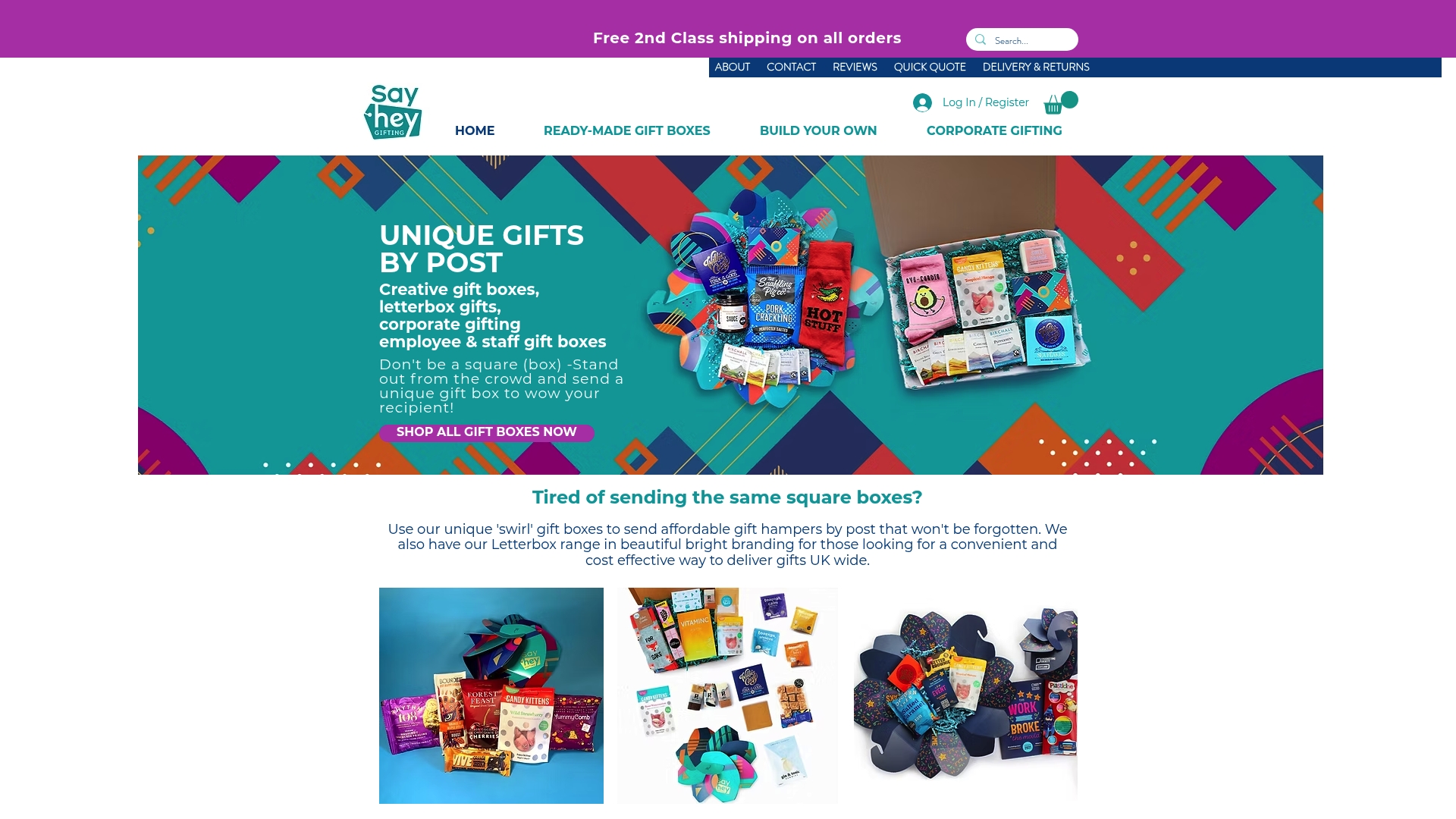
For corporate orders, Sayheygifting handles custom branding, personalised message cards, and VAT invoicing, making expense reporting straightforward. Single orders ship quickly; bulk orders for larger teams are available with branded packaging. Eco-friendly packaging is used across the range, so your gift reflects your organisation’s values as well as your care for the individual.
Browse the full employee gift box range or build your own gift box to get started. For bulk or branded orders, get in touch directly to discuss lead times, minimums, and custom options.
Useful sources and further reading
25 get-well soon gift ideas for employees and clients — practical corporate-focused ideas with delivery guidance
37 best employee care package ideas — broad inspiration for HR teams building care packages
Get-well gift baskets for employees — food and drink category guidance including tea selections
Best gifts for co-workers — Wirecutter’s curated list of universally appropriate workplace gifts
Gift ideas and inspiration — UK gift discovery resource for managers seeking fresh ideas
Wellness gift box design guide — Sayheygifting’s guide to building meaningful self-care packages
Top 10 wellness gift boxes for employee wellbeing — curated shortlist of purchasable wellness options
Employee gift giving occasions: your 2026 HR guide — timing and policy context for workplace gifting decisions
Recommended
Comments