
Trivial benefits gifts: your HMRC-compliant guide for 2026

Yes: you can give tax-free trivial benefits gifts so long as each gift costs £50 or less, isn’t cash or a cash voucher, and isn’t tied to performance or a contractual entitlement. That’s the whole principle behind trivial benefits, and it’s a genuinely generous allowance once you know how to use it properly.
Before you order anything, run it past this quick checklist:
Cost check: is the item £50 or less, including VAT and delivery?
Cash check: is it a physical gift or non-cash voucher, never money or a cash-equivalent voucher?
Motive check: is it a genuine gesture of appreciation, not a reward for hitting targets or written into someone’s contract?
Directors of close companies face an extra rule: an annual cap across all trivial benefits received in the tax year. Keep that figure in mind before you start planning company-wide treats.
Key Takeaways
Tax-free trivial benefits gifts must stay at £50 or less per person, VAT-inclusive, and must never function as a reward for work or a contractual entitlement.
Point | Details |
£50 cap is all-inclusive | Add VAT and delivery before checking the total, not just the item price. |
No cash or cash vouchers | Non-cash retailer vouchers qualify; cash and cash-equivalent vouchers never do. |
Directors face a £300 yearly cap | Log every gift given to close-company directors to track the running total. |
Avoid aggregation | Space out gifts and treat each occasion separately to avoid HMRC combining them. |
SayHeyGifting simplifies sourcing | Ready-made and build-your-own boxes come with itemised, VAT-inclusive per-recipient costs. |
Table of Contents
What are the rules for trivial benefits gifts?
The exemption sits in section 323A of the Income Tax (Earnings and Pensions) Act, and HMRC has broken it down into four conditions in its draft guidance. A gift qualifies as tax-free only when it costs £50 or less per person, isn’t cash or a cash voucher, isn’t a reward for work or performance, and isn’t something the employee is contractually entitled to receive.
That £50 figure is VAT-inclusive, and it isn’t just the sticker price of the item. HMRC’s internal manual makes clear the cost is calculated per employee, including delivery charges, gift wrapping, and any add-ons bundled into the order. Miss that and you can tip a £48 hamper over the line without realising it.
The all-or-nothing trap: if a gift costs even a penny over £50, the entire value becomes taxable, not just the excess. Employers commonly get caught out by unbudgeted delivery fees or VAT that push a gift just over the threshold.
Aggregation is where good intentions go wrong. If you send a £30 gift card in March and top it up with another £25 in April as part of the same gesture, HMRC can treat that as one combined benefit worth £55, which fails the test entirely. Treat each gift as a standalone event with its own clear purpose.
For directors of close companies, the £300 annual cap applies on top of the £50 per-gift limit. That means you’ll need a simple running log of what each director has received across the tax year, including any gifts given to family members who work in the business, since HMRC allows apportionment in those cases.
What gifts qualify as trivial benefits?
Once you understand the £50 ceiling, the fun part is choosing gifts that feel generous rather than tokenistic. Here’s where creativity earns its keep.
Letterbox gifts and single-item hampers. A well-chosen letterbox gift lands directly through the door, no signature required, and can be costed precisely because it’s a fixed, pre-packaged item. Look for options priced comfortably under £50 including delivery, leaving headroom for VAT.
Wellness and desk-joy boxes. Think herbal teas, a scented candle, a notebook, and a handwritten note. These feel personal because of the combination, not the price tag, and a well-curated build your own gift box lets you control the total spend exactly.
Food and drink picks. Artisan biscuits, specialty coffee, or an alcohol-free fizz work well for teams with mixed preferences. Check the VAT-inclusive total before adding a second treat, as stacking items is the easiest way to sail past £50 without noticing.
Remote-worker options. For distributed teams, letterbox-sized gifts remove the need for a signature or someone to be home, making them the most practical route for staff spread across the UK.
Pro Tip: Price your gifts at £49 or under rather than cutting it fine at £49.99. A small buffer absorbs any delivery fee variance or VAT rounding, so you never accidentally breach the limit.
How do you keep gifts inclusive of dietary and cultural needs?
A generous gesture can misfire fast if it ignores allergies, dietary restrictions, or personal choice. A short, anonymous preference survey at onboarding, updated annually, catches most issues before they become awkward.
Ask a simple multiple-choice question: vegan, vegetarian, alcohol-free, no preference, or “happy to skip physical gifts.”
Stock one or two vegan and alcohol-free swaps as defaults, such as plant-based chocolate or a botanical soft drink, both easily kept under the £50 cap.
Use non-judgemental wording in invites: “Let us know if you’d rather skip this one, no explanation needed” removes any pressure to justify an opt-out.
How should you cost and record trivial benefits?
Getting the paperwork right matters as much as choosing the gift, particularly if HMRC ever asks to see your reasoning.
Calculate the true per-person cost. Add the item price, VAT, and delivery together before checking it against £50. A £45 hamper with a £6 courier charge fails the test even though the item itself looked safely under budget.
Log directors separately. Maintain a running total against the £300 annual cap for each close-company director, updated every time a gift goes out. A simple spreadsheet with date, item, and VAT-inclusive cost is enough.
Space out gifting occasions. Sending gifts too close together, or clearly linked in intent, risks the aggregation rule treating them as one benefit. Build a reliable delivery schedule around distinct occasions like birthdays, work anniversaries, or seasonal thank-yous.
Pro Tip: Keep every invoice for at least the current tax year plus one, even though trivial benefits skip P11D reporting entirely. If HMRC ever queries your records, having the paper trail ready saves considerable back-and-forth.
How do you frame gifts so they read as goodwill, not reward?
The wording on your card matters more than most HR teams expect, because it’s the first thing that signals whether a gift is a genuine gesture or a disguised bonus.
Use phrases like “just to say thank you” or “a little something for your wellbeing” rather than anything referencing targets, results, or performance.
Avoid timing gifts to coincide precisely with appraisal outcomes or sales figures, even if that’s coincidental.
Add a printed note or name sticker rather than expensive engraving. Personalisation should feel warm, not costly, and a thoughtfully packaged surprise often lands better than a pricier, generic one.
Ribbon, tissue paper, and a branded sticker can make a £15 item feel like a considered treat without adding meaningful cost.
What HR teams consistently get wrong about trivial benefits
Most guidance on trivial benefits focuses so heavily on the £50 figure that it misses where employers actually trip up: VAT and delivery costs slipping through unnoticed, and directors’ gifts going untracked until year-end panic sets in.
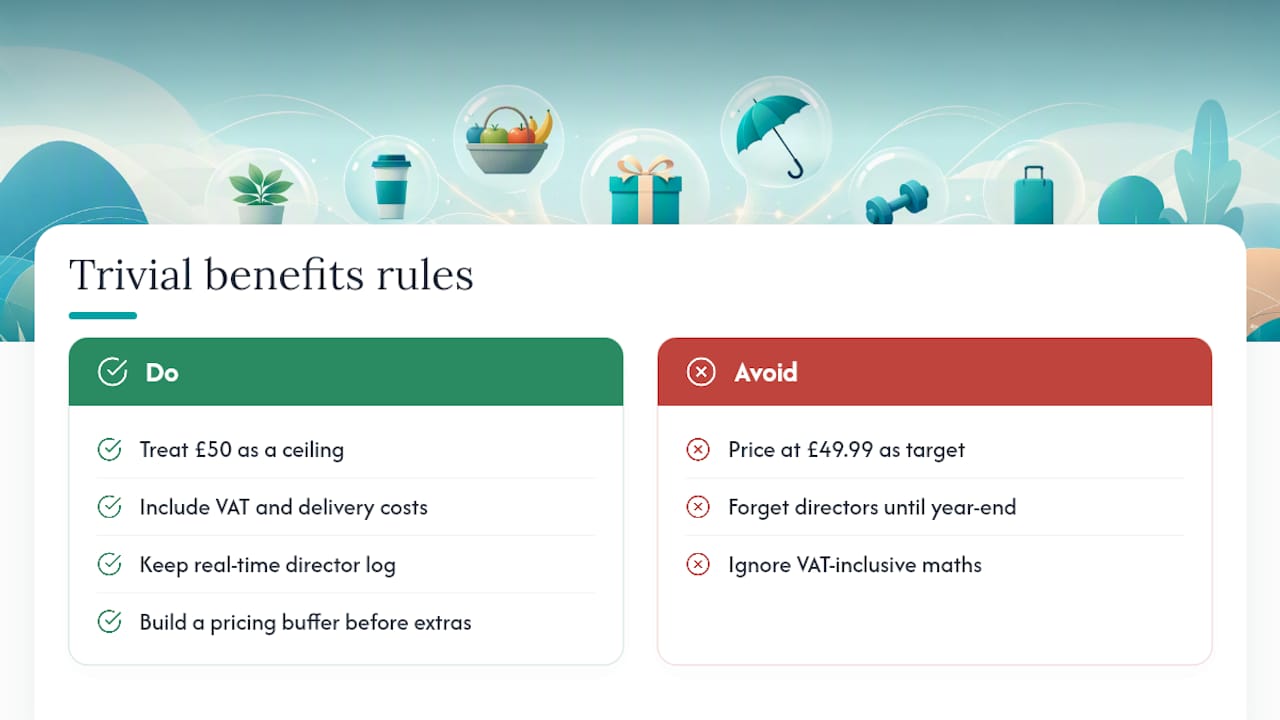
The conventional advice treats £50 as a target to hit, when it should be treated as a ceiling to stay well clear of. Price a gift at £49.99 and you’ve left zero margin for a courier surcharge or a gift-wrap add-on. Build in a proper buffer instead.
The bigger gap is director tracking. Sole-director businesses and small close companies often forget the £300 annual cap exists at all until their accountant asks for evidence at year-end. A basic log, updated in real time, avoids that scramble entirely.
If there’s one thing worth prioritising above gift selection itself, it’s costing discipline. Get the VAT-inclusive maths right first, and the fun part, choosing gifts your team will actually enjoy, becomes far less stressful.
Where SayHeyGifting fits into your gifting plan
Once you’ve got the rules straight, the practical challenge is sourcing gifts that are genuinely under £50 including VAT and delivery, without spending your afternoon hunting through separate suppliers for each occasion.
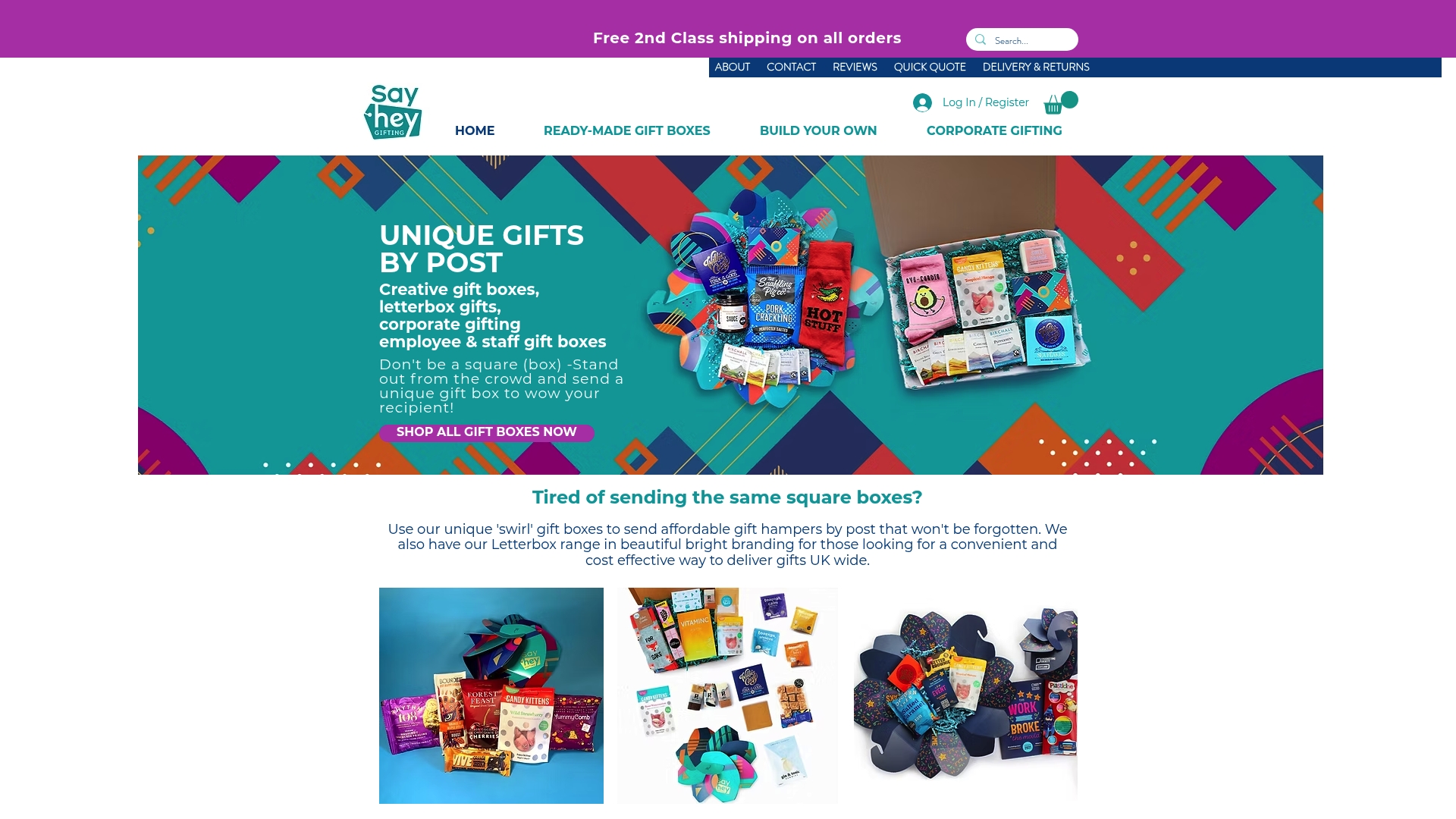
Sayheygifting offers ready-made employee gift boxes built with the £50 cap in mind, alongside build your own gift box options if you want full control over contents and cost. For teams with dietary needs, the vegan hampers range keeps things inclusive without extra admin. Every order comes with a clear per-recipient cost breakdown, VAT and delivery included, so your records are audit-ready from the moment the gift is dispatched. Bulk orders are handled with itemised invoicing, which makes director tracking and HR record-keeping considerably simpler. If you’re planning gifts for a whole team, browse the employee gift box range and request a bulk quote to see per-person costing before you commit.
Sources
Gov
FAQ
Can I give an employee two trivial benefits in one month?
Yes, provided each gift independently meets the £50 limit and isn’t linked in a way that suggests they’re really one combined benefit.

Does the £50 limit include VAT?
Yes, the limit is VAT-inclusive, and delivery charges count towards the total too.
What happens if a gift costs £51?
The entire amount becomes taxable, not just the small excess, since the exemption applies only when the total stays at £50 or under.
Do trivial benefits need to be reported to HMRC?
No, qualifying trivial benefits are exempt from P11D reporting and Class 1A National Insurance.
Can new starters or leavers receive trivial benefits?
Yes, there’s no minimum service requirement, so employees joining or leaving partway through the tax year can still receive a qualifying gift, provided it meets the usual conditions.
Where can I order compliant gifts quickly?
Sayheygifting supplies ready-made employee gift boxes with per-recipient cost breakdowns designed to fit comfortably within the £50 exemption.
Recommended
Comments