
What is a staff appreciation gift? Your 2026 guide

A staff appreciation gift is a tangible or digital item given by an employer to an employee as a genuine expression of thanks and recognition for their contribution. Unlike a bonus or pay rise, it carries symbolic weight. It says, “We see you, and we value what you bring.” Research from the O.C. Tanner Institute shows that intentional, personalised gifts increase employee trust by 8x and reduce the likelihood of disengagement by 89%. That is not a marginal improvement. That is a culture shift.
Employee recognition gifts sit within a broader appreciation ecosystem that includes public shout-outs, handwritten notes, and verbal praise. The gift itself is the physical or digital anchor of that recognition. Done well, it creates a lasting memory. Done poorly, it feels like a branded pen from a conference.
What is a staff appreciation gift, and what makes it meaningful?
A meaningful employee recognition gift does three things: it feels personal, it carries context, and it arrives at the right moment. Generic gifts, such as a generic mug or a box of chocolates with no note, fail on all three counts. They communicate effort, but not thought.

Personalisation and symbolism are the two qualities that separate a meaningful gift from a forgettable one. An award engraved with an employee’s name and the project they led tells a story. A curated gift box built around their known interests shows you paid attention. Both communicate something a generic gift never can: “This was chosen for you specifically.”
Context is equally critical. The most common gifting failure is the absence of a message explaining why the gift was given. Without that context, even a thoughtful gift can feel transactional. A short, specific note, whether handwritten or digital, transforms the experience entirely.
“Recognition’s greatest impact comes from strengthening human connection. The gift’s object matters less than the personalised feeling of being seen.” — O.C. Tanner Institute, 2026
Gifting also works best when it is part of an ongoing recognition programme rather than a one-off gesture. A single gift at Christmas is kind. A culture where staff appreciation ideas are woven into everyday working life is transformative.
Pro Tip: Pair every gift with a specific written acknowledgement that names the employee’s contribution and explains its impact on the team or business. This single step amplifies the emotional value of any gift, regardless of its price.
How should employers structure a staff gifting programme?
A well-structured gifting programme removes guesswork and protects fairness. Fairness requires recognising all employees equally on identified occasions, with consistent gift values to avoid perceptions of favouritism. The most effective approach is to define three things in advance: the occasions, the approved value per occasion, and the approved gift formats.
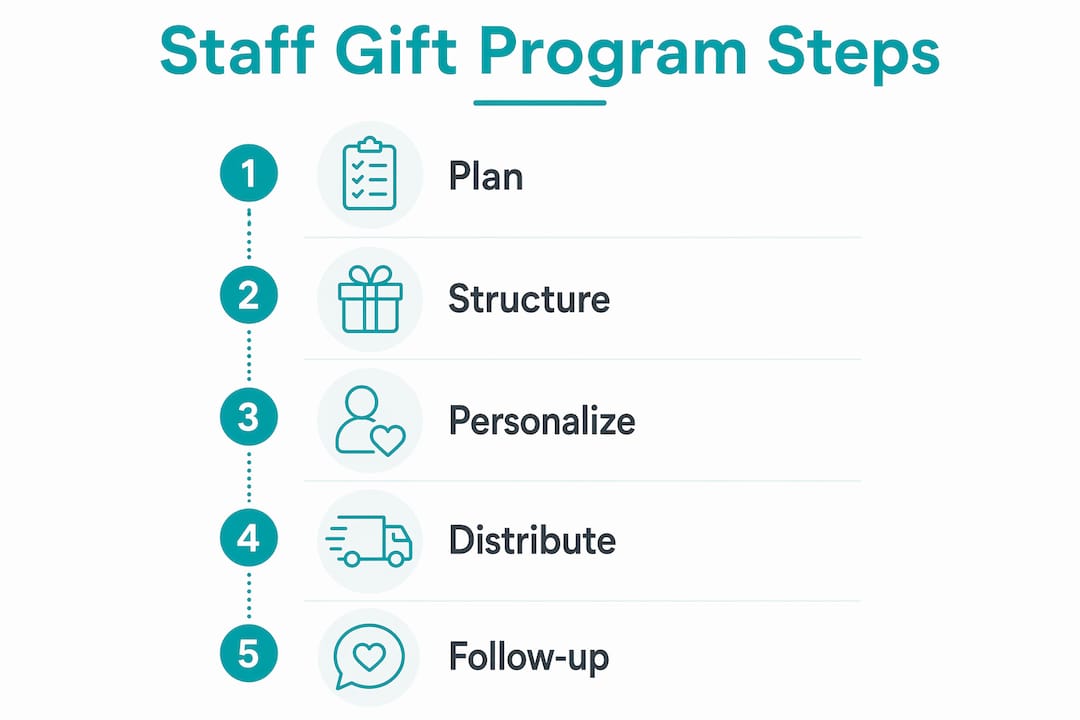
Common occasions include birthdays, work anniversaries, onboarding, Employee Appreciation Day (the first friday of march), project completion, and spot recognition for exceptional work. Each occasion warrants a different level of investment. Onboarding gifts tend to be lower value and brand-focused. Long-service milestones justify a more significant, personalised reward.
Routing all gifts through approved programmes rather than leaving them to individual manager discretion is the single most effective way to maintain consistency. It also protects the business legally.
Tax treatment: what HR needs to know
Gift cards are taxable as cash equivalents regardless of their value. Non-cash tangible gifts of low value may qualify as de minimis fringe benefits and can be tax-exempt under HMRC guidelines. This distinction matters enormously when you are gifting at scale.
Gift type | Tax treatment | Notes |
Gift cards and vouchers | Taxable as earnings | Must be reported via payroll |
Non-cash tangible gifts (low value) | Potentially tax-exempt | Subject to HMRC trivial benefits rules |
Experiential rewards | Taxable if above trivial benefit threshold | Seek accountancy advice for high-value experiences |
Company swag and branded items | Generally exempt | Must be of low value and not cash-equivalent |
Personalised awards and trophies | Generally exempt | Symbolic value, not cash-equivalent |
Pro Tip: Consult your payroll team or accountant before launching a gifting programme. The HMRC trivial benefits exemption allows employers to give non-cash gifts of up to £50 per employee per occasion without a tax liability, provided certain conditions are met.
What types of staff appreciation gifts work best?
The best staff gifts are the ones your employees actually want. That sounds obvious, but many programmes default to what is easiest to procure rather than what is most meaningful. Offering recipients a degree of choice is one of the most effective ways to improve satisfaction. Choice-based gifting via curated catalogues or gift card programmes enhances perceived personalisation and removes the risk of a misaligned gift.
The most popular categories of employee recognition gifts, and the occasions they suit best, are:
Personalised awards and trophies. Best for long-service milestones and annual recognition events. They carry lasting symbolic value and are often displayed proudly.
Curated gift boxes and hampers. Ideal for onboarding, team celebrations, and seasonal gifting. Options like employee gift boxes can be tailored by interest or dietary preference.
Letterbox gifts. Perfect for remote and hybrid teams. They arrive through the post and feel personal without requiring a physical handover.
Experiential rewards. Spa days, cookery classes, and theatre tickets work well for high-performers and long-service recognition. They create memories rather than clutter.
Gift cards. Flexible and universally appreciated, though remember they carry a tax liability. Best used when choice is the priority.
Digital eCards and recognition messages. Low cost and immediate. Most effective when paired with a physical gift or public acknowledgement rather than used alone.
Sustainable gift options. Eco-friendly gift boxes and sustainable staff gifts resonate strongly with environmentally conscious teams and reflect well on your employer brand.
Pro Tip: Combining a symbolic award, such as an engraved plaque or personalised certificate, with a gift of choice deepens engagement. The award communicates lasting recognition. The gift of choice communicates respect for the individual.
How do you deliver staff appreciation gifts for maximum impact?
Timing and presentation determine whether a gift lands or falls flat. Spot recognition, given immediately after a specific achievement, carries far more emotional weight than a gift delivered weeks later at a scheduled review. Employee Appreciation Day is a valuable prompt, but the most effective programmes treat it as one moment within a year-round culture of recognition.
Delivery method matters too. A gift handed over personally in a team meeting, with a few words of genuine praise, creates a shared moment that the whole team witnesses. A mailed package with a handwritten card creates a private, personal moment. Both have value. The choice depends on the employee’s personality and the nature of the recognition.
Here are the key best practices for delivering thank you gifts for employees with real impact:
Be specific in your message. Name the exact contribution you are recognising. “Thank you for your work on the client presentation that won us the Henderson account” lands far better than “Thank you for all your hard work.”
Match the delivery to the employee. Some people love public recognition. Others find it uncomfortable. Know your team.
Act promptly. Spot recognition loses its power when delayed. Aim to recognise within 24–48 hours of the achievement.
Use the right channel. In-person handovers work for office-based teams. Mailed letterbox gifts and digital recognition platforms work well for remote employees.
Avoid gifts without context. A gift that arrives with no explanation, no note, and no named reason feels like a corporate transaction. Always include a message.
Pro Tip: For remote teams, a letterbox gift sent directly to an employee’s home, accompanied by a personalised digital card and a shout-out in your team communication channel, replicates the warmth of an in-person moment without requiring anyone to be in the same room.
Key takeaways
A staff appreciation gift only delivers its full value when it is personalised, contextualised, and embedded within a consistent recognition programme rather than treated as a one-off gesture.
Point | Details |
Personalisation drives impact | Intentional, personalised gifts increase employee trust by 8x and reduce disengagement by 89%. |
Context is non-negotiable | Always pair a gift with a specific message naming the employee’s contribution and its significance. |
Structure protects fairness | Define occasions, approved values, and gift formats in advance to maintain consistency and avoid favouritism. |
Tax treatment varies by gift type | Gift cards are taxable; non-cash tangible gifts may qualify as HMRC trivial benefits up to £50 per occasion. |
Choice enhances satisfaction | Offering recipients a degree of choice reduces misaligned gifts and improves perceived personalisation. |
Why most gifting programmes miss the point
I have seen a lot of gifting programmes over the years, and the pattern of failure is almost always the same. The budget is approved, the gifts are ordered, and they arrive on desks with a compliments slip that says “Thank you for your hard work.” Full stop.
The gift itself is often perfectly nice. A quality hamper, a branded notebook, a box of chocolates. But without a specific reason, without a named contribution, without any indication that someone actually thought about this employee and this moment, it reads as a process rather than a gesture. Employees are perceptive. They know the difference between a gift that was chosen for them and a gift that was ordered in bulk.
What I have found genuinely works is treating the message as the primary gift and the physical item as the vehicle for it. When you write, “We are giving you this because your handling of the Barker project under pressure kept the whole team on track,” the gift becomes a permanent reminder of that specific moment of recognition. It sits on a shelf and tells a story. That is the gift that keeps on giving.
HR teams often ask me whether the budget matters. My honest answer is: less than you think. A £15 letterbox gift with a thoughtful, specific note outperforms a £100 gift card with no message, every single time. The research from O.C. Tanner backs this up. Personalisation and symbolism drive the outcome, not the price tag.
The other mistake I see frequently is treating gifting as a standalone initiative rather than part of a broader recognition culture. A gift programme that runs in isolation, without public acknowledgement, without manager conversations, without ongoing feedback, will always underperform. Gifting is one thread in a much larger fabric. Pull it out and it loses its strength.
— Craig
Sayheygifting: curated gifts built for meaningful recognition
Building a gifting programme that feels personal at scale is one of the most common challenges HR teams face. Sayheygifting makes it straightforward.
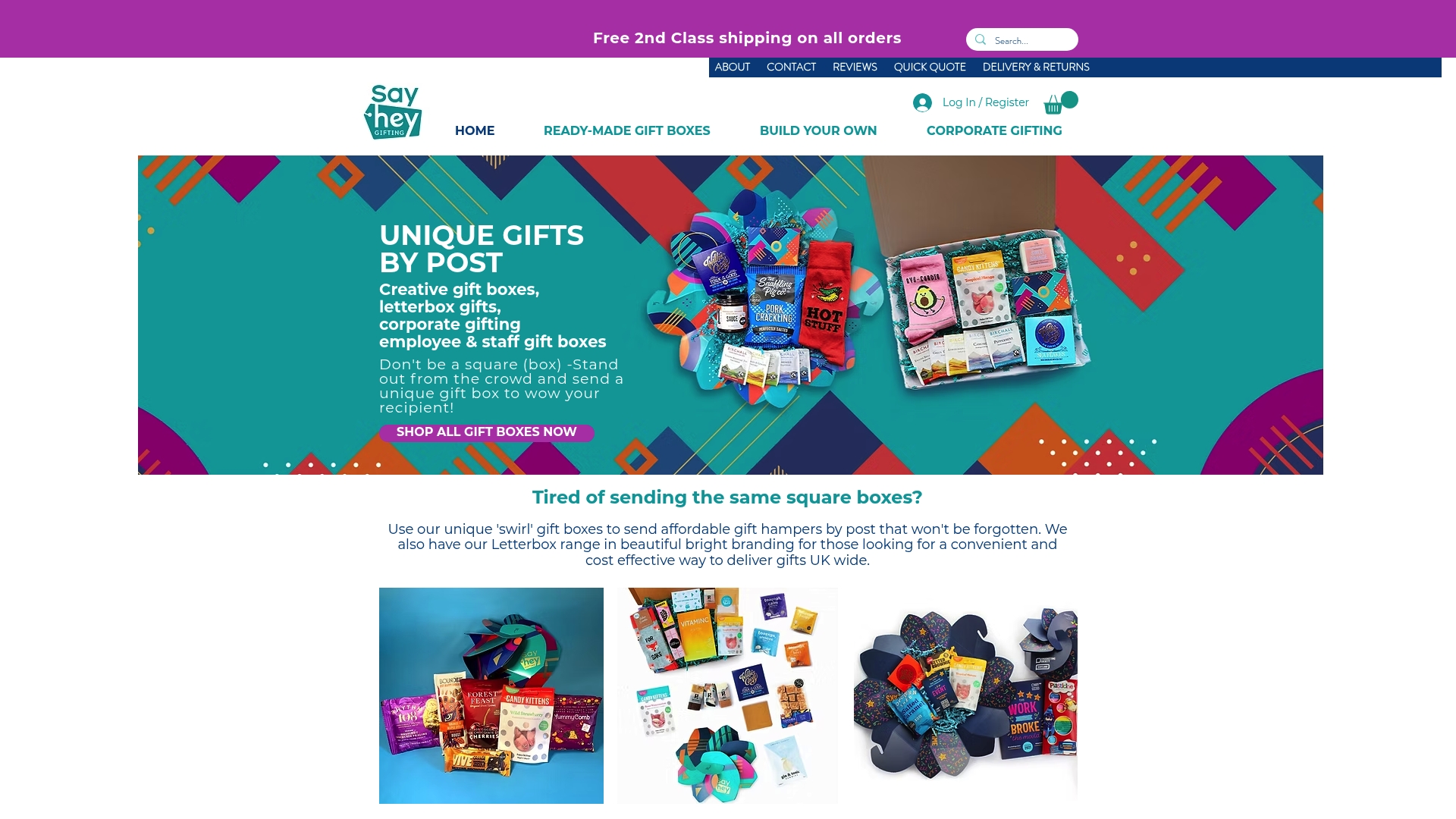
From ready-made curated employee gift boxes to fully customisable letterbox gifts and build-your-own hampers, Sayheygifting offers a range of options designed for every recognition occasion, from onboarding and work anniversaries to spot recognition and seasonal celebrations. Every gift can be tailored to the individual, and nationwide delivery means your remote and hybrid team members receive the same quality of recognition as those in the office. Whether you are looking for a build-your-own gift box or a ready-made collection, Sayheygifting has a solution that reflects the thoughtfulness your team deserves.
FAQ
What is a staff appreciation gift?
A staff appreciation gift is a tangible or digital item given by an employer to an employee to express genuine thanks and recognition for their work. It differs from a bonus in that it carries symbolic, personal meaning rather than purely financial value.
How much should you spend on employee recognition gifts?
There is no fixed rule, but HMRC’s trivial benefits exemption allows non-cash gifts of up to £50 per employee per occasion without a tax liability. The message and personalisation matter more than the price.
Are gift cards taxable for employees in the UK?
Yes. Gift cards and vouchers are treated as cash equivalents by HMRC and must be reported through payroll as taxable earnings, regardless of their value.
How often should employers give staff appreciation gifts?
The most effective programmes combine structured occasions, such as birthdays, work anniversaries, and Employee Appreciation Day, with spontaneous spot recognition tied to specific achievements throughout the year.
What makes a staff appreciation gift meaningful rather than generic?
Personalisation, a specific contextual message, and timely delivery are the three factors that separate a meaningful gift from a generic one. Gifts without context feel transactional; gifts with a named reason feel genuinely appreciative.
Recommended
Comments