
What is corporate gifting and why does it matter?

Corporate gifting is defined as the intentional practice of a company presenting meaningful gifts to employees, clients, and business partners to express appreciation, build loyalty, and strengthen professional relationships. It sits at the intersection of people management and relationship marketing, making it one of the most personal tools a business has. Done well, corporate gifting is a strategic investment rather than a marketing expense. A thoughtfully chosen gift can protect a long-term client account, extend employee tenure, and reinforce your brand values in a way no email ever could. Sayheygifting works with businesses across the UK to make that kind of thoughtful gifting accessible, personal, and genuinely memorable.
What is corporate gifting and what types exist?
Corporate gifting covers four distinct recipient groups, each with its own purpose and ideal approach.
Client gifts aim to reinforce loyalty and signal that the relationship matters beyond the contract. Employee gifts recognise effort, mark milestones, and contribute to well-being and retention. Partner and supplier gifts maintain goodwill in relationships that support your operations. Prospect gifts open doors, creating a warm first impression before a commercial conversation begins.

The occasion shapes the gift as much as the recipient does. Common gifting moments include new employee onboarding, work anniversaries, project completions, sales achievements, and seasonal recognition. Each occasion calls for a different level of personalisation and spend.
Gift type | Typical budget | Business outcome |
Client retention gift | £50–£150 | Protects long-term account value |
Employee milestone gift | £30–£100 | Improves retention and morale |
Onboarding welcome gift | £20–£50 | Sets a positive tone from day one |
Prospect introduction gift | £15–£40 | Creates goodwill before a sales conversation |
Partner appreciation gift | £40–£120 | Sustains operational relationships |
The gap between a personalised gift and a generic one is significant. A branded notebook with the recipient’s name and a handwritten note creates a lasting memory. A generic branded pen does not. Personalised employee gifts consistently outperform generic items in both emotional impact and retention outcomes.
Pro Tip: Build a simple gift register in your CRM or HR system. Tag each contact with their role, preferences, and key dates so gifting decisions take minutes rather than days.
Why does timing matter in corporate gifting?
Timing is the most impactful variable in gifting effectiveness, favouring personalised gifts at meaningful moments over larger, sporadic gestures. A modest, well-timed gift outperforms an expensive one given at a generic, saturated period like christmas. That single insight changes how most businesses should think about their gifting calendar.
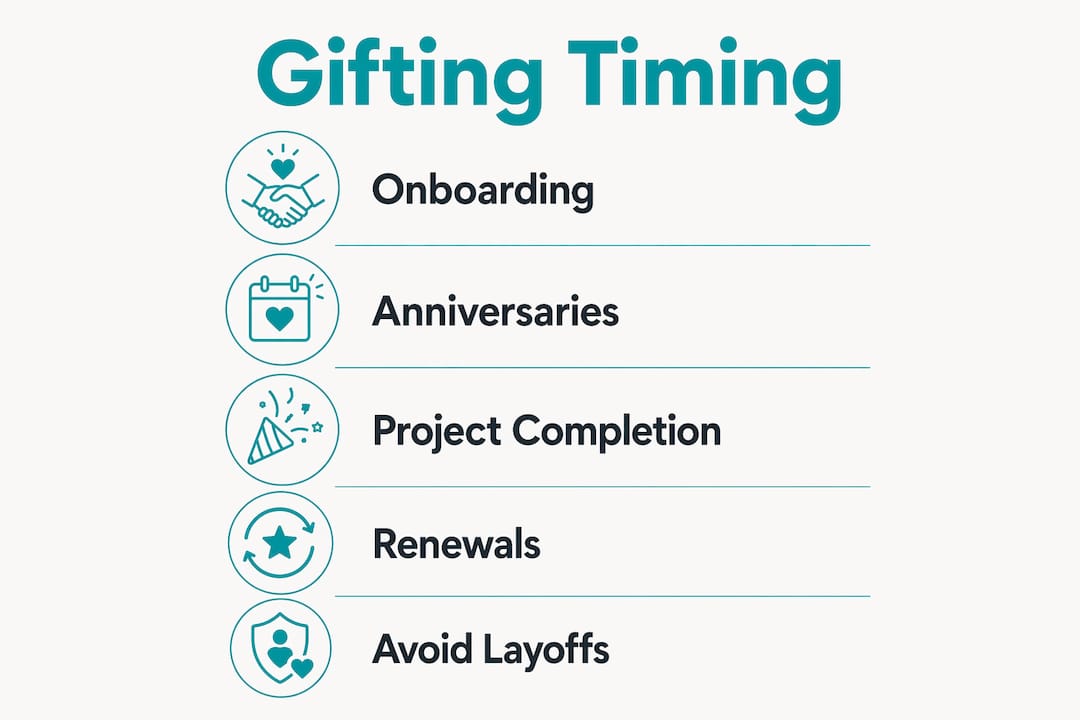
The role of timing in corporate gifting becomes clear when you map gifts to the recipient’s journey rather than the company’s calendar. Lifecycle gifting, aligned to onboarding, project completions, sales achievements, or work anniversaries, feels intentional and valued in a way that a december hamper simply does not.
The optimal gifting moments for maximum impact are:
Onboarding (day one or week one). A welcome gift tells a new employee they were expected and valued before they even logged in.
Project completion. Recognising the effort immediately after a team delivers reinforces the behaviour you want to repeat.
Work anniversaries. Marking one, three, and five years shows long-term appreciation, not just short-term enthusiasm.
Client contract renewal. A gift at renewal signals that the relationship matters beyond the transaction.
Personal milestones. A new baby, a promotion, or a significant birthday creates a human connection that business gifts rarely achieve.
Equally important is knowing when not to give. Gifting during contract negotiations, company layoffs, or financial difficulty can be misread as an attempt to influence rather than a genuine expression of appreciation. Sensitivity to context protects the relationship rather than risking it.
Pro Tip: Avoid the december rush by planning at least one gifting moment per quarter. Spreading recognition throughout the year creates a culture of appreciation rather than a single annual gesture.
How have corporate gifting trends evolved in 2026?
The shift in corporate gift trends for 2026 is clear: businesses are moving away from disposable promotional swag towards durable, responsibly sourced gifts that recipients actually use. Quality, sustainability, and credibility now dominate gifting decisions, replacing the old logic of volume and visibility.
This matters because recipients remember gifts that serve a purpose. A reusable travel mug or a quality thermos bottle provides year-round visibility while demonstrating that the company cares about responsible choices. A cheap branded pen ends up in a drawer within a week.
The defining corporate gifting trends for 2026 include:
Durability over disposability. Gifts designed to last years, not days, reflect a company’s commitment to quality.
Subtle branding. Recipients prefer gifts where the logo is understated. The experience of the gift matters more than the brand impression.
Sustainability as standard. Eco-friendly materials, minimal packaging, and responsibly sourced products are now expected, not optional. Sayheygifting’s range of sustainable corporate gifts reflects this shift directly.
Personalisation at scale. Technology now allows businesses to personalise gifts for large teams without significant extra cost.
Experience-led gifting. Curated gift boxes that tell a story, like a tasting adventure or a self-care collection, create lasting memories rather than a single moment of unboxing.
Corporate gifting is evolving from visibility-driven swag to credibility-enhancing merchandise that recipients remember. That shift increases brand trust in a way that traditional promotional items never could.
What are the best practices for a corporate gifting strategy?
A well-planned corporate gifting workflow begins 4–6 weeks before the intended gifting moment. That lead time allows for sourcing and personalisation to be integrated into broader engagement calendars rather than treated as a last-minute task. Last-minute corporate gifting almost always results in generic choices that undermine the gesture’s intent.
The table below outlines a practical gifting workflow for businesses managing multiple recipients.
Step | Timeline | Responsibility |
Identify gifting occasions and recipients | 6 weeks before | HR or account manager |
Set budget and personalisation requirements | 5 weeks before | Finance and team lead |
Source and order gifts | 4 weeks before | Procurement or gifting partner |
Personalise and package | 2 weeks before | Gifting partner or internal team |
Deliver and follow up | On the gifting date | Account manager or HR |
Personalisation is the single biggest driver of gift impact. Knowing a client prefers artisan food over tech accessories, or that a team member is vegan, transforms a standard gift into a genuine expression of care. Sayheygifting offers build-your-own gift boxes that make this level of personalisation straightforward, even for large teams.
A corporate gifting policy guide helps businesses avoid common pitfalls. Define a clear budget per recipient tier, set rules around timing and appropriateness, and document any compliance requirements relevant to your industry. Financial services and public sector organisations, for example, have strict rules around gifts that could be perceived as inducements.
The business case for corporate gifts is compelling when gifting is treated as a retention tool. A well-chosen gift protecting a £50,000 annual client account represents extraordinary return on a £100 investment. Thoughtful gifts substantially improve both client retention and employee loyalty when they are relevant, timely, and personal.
Pro Tip: Integrate your gifting calendar with your CRM renewal dates and HR anniversary tracking. Automated reminders mean no key moment is missed, and gifting becomes a consistent part of your relationship management rather than a reactive afterthought.
Key takeaways
Corporate gifting is most effective when it is personalised, well-timed, and treated as a relationship investment rather than a marketing line item.
Point | Details |
Timing beats budget | A modest, well-timed gift outperforms an expensive one given at a generic moment like christmas. |
Personalisation drives impact | Gifts tailored to the recipient’s preferences create lasting memories and stronger loyalty. |
Plan 4–6 weeks ahead | Early planning enables personalisation and avoids the poor-quality choices that last-minute gifting produces. |
2026 trends favour quality | Durable, sustainably sourced gifts with subtle branding now outperform disposable promotional items. |
Avoid sensitive periods | Gifting during contract negotiations or layoffs risks being misread as undue influence. |
Craig’s honest view on where corporate gifting goes wrong
Most businesses treat corporate gifting as a december problem. They panic in november, order the same hamper they sent last year, and wonder why it does not move the needle on retention or loyalty. The truth is that the timing of a gift matters far more than its price tag, and yet budget is the first conversation most companies have.
What I have seen work consistently is gifting that feels personal enough to be slightly surprising. When a client receives a gift that reflects a conversation you had three months ago, that is the moment the relationship deepens. When an employee receives a welcome box on their first day that includes something specific to their interests, they tell people about it. That word-of-mouth effect is worth more than any advertising spend.
The 2026 shift towards sustainability and quality is not a trend to watch. It is a baseline expectation. Recipients notice when a gift is cheap, and they notice when it is thoughtful. The gap between those two experiences is the gap between a forgettable gesture and a gift that keeps on giving.
My honest advice is to build gifting into your people and client strategy at the start of the year, not the end. Map your key moments, set your budgets, and choose a gifting partner who understands personalisation. The companies doing this well are not spending more. They are spending smarter, and the results show up in retention, engagement, and the quality of their relationships.
— Craig
How Sayheygifting supports your corporate gifting needs
Sayheygifting specialises in curated, personalised gift boxes designed for businesses that want their gifting to feel genuinely thoughtful. From employee gift boxes that celebrate your team to fully customisable corporate gifting solutions, every box is crafted to create a real moment of appreciation.
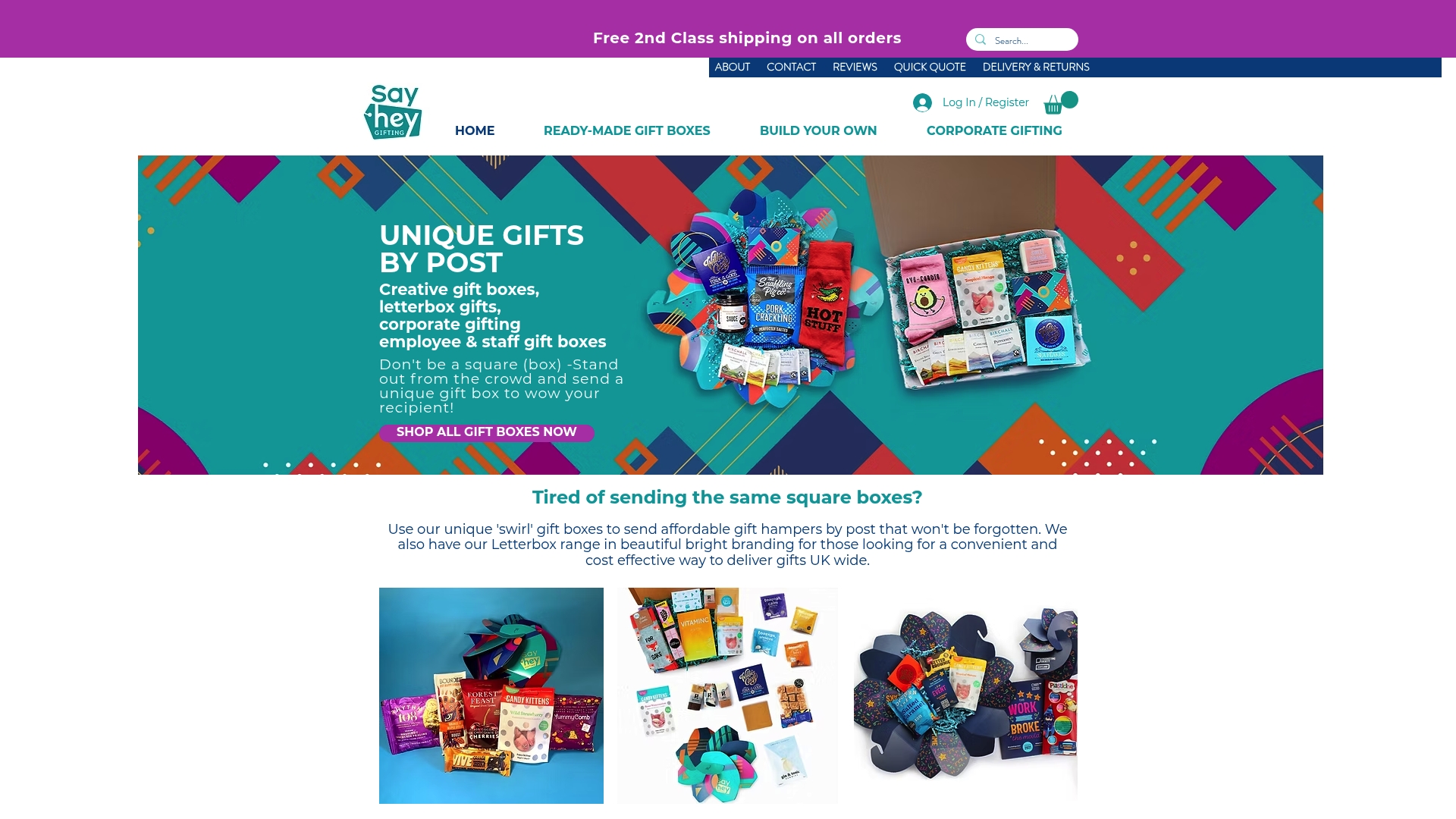
Whether you are planning ahead for the year or need a quality solution at short notice, Sayheygifting makes it straightforward to gift with care. Explore the full range of corporate gifting options and find the right fit for your team, your clients, and your values. Because the best gift is one that shows you were paying attention.
FAQ
What is corporate gifting in simple terms?
Corporate gifting is the practice of a company giving meaningful gifts to employees, clients, or partners to express appreciation and strengthen professional relationships. It is a relationship tool, not just a marketing exercise.
How much should a company spend on corporate gifts?
Budget depends on the recipient and occasion, but client retention gifts typically range from £50–£150, while employee milestone gifts sit between £30–£100. The quality and personalisation of the gift matter more than the spend.
When is the best time to give a corporate gift?
The most impactful gifting moments are onboarding, project completions, work anniversaries, and client renewals. Timing a gift to a specific milestone consistently outperforms generic seasonal gifting.
What are the key corporate gifting trends for 2026?
The dominant trends are durability, sustainability, subtle branding, and personalisation at scale. Businesses are moving away from disposable promotional items towards gifts that recipients use and remember.
Should businesses have a corporate gifting policy?
A gifting policy sets clear budgets, timing rules, and compliance boundaries, which is especially important in regulated industries like financial services. It protects the business and ensures gifting remains a genuine gesture rather than a perceived inducement.
Recommended
Comments