
Why staff gifts boost morale: a guide for HR leaders

Staff gifts boost morale by giving employees tangible proof that their work is seen, valued, and appreciated. This is the core principle behind employee recognition gifting, the practice of using thoughtful, physical tokens to reinforce a culture of appreciation. 72% of UK employees feel more positive about work after receiving a gift card, and 88% report that even a modest £50 reward significantly improves their daily life. For HR professionals and company leaders, understanding why staff gifts boost morale is the first step to using gifting as a deliberate, measurable tool for engagement.
Why staff gifts boost morale and drive employee loyalty
Recognition gifting works because it triggers a psychological response that verbal praise alone cannot replicate. A physical gift creates a lasting reminder of appreciation. It sits on a desk, gets used in daily life, or arrives in a beautifully presented box. Each time an employee encounters it, the positive association with their employer is reinforced.
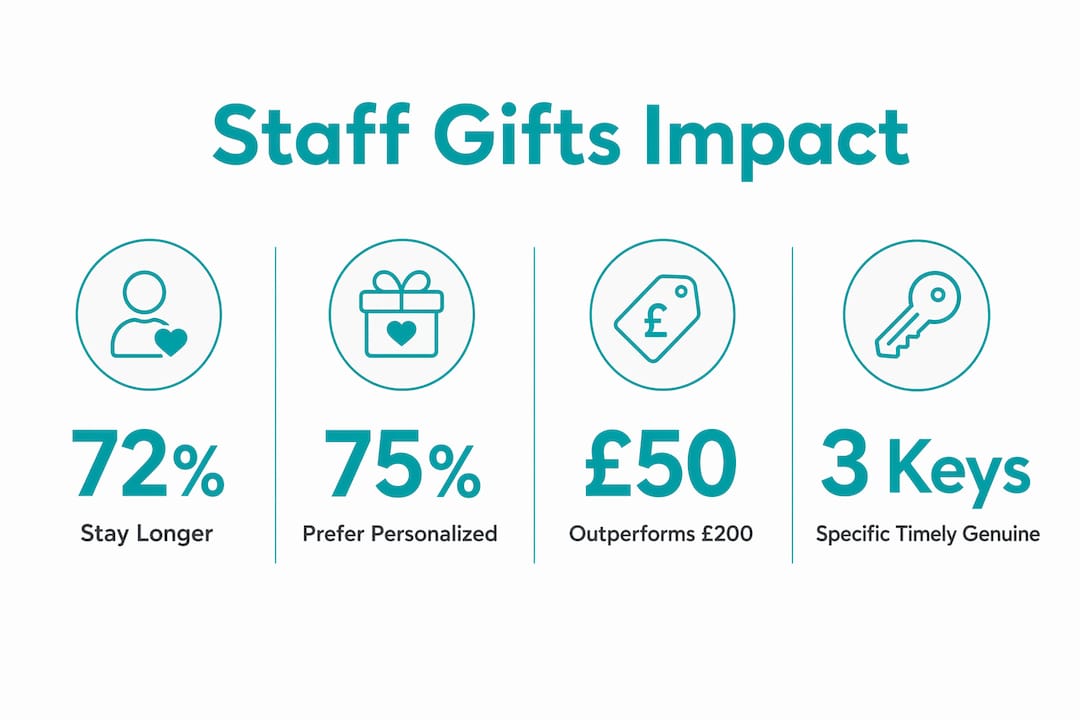
The numbers support this. 72% of full-time employees say work anniversary gifts increase their likelihood of staying with a company. That figure reveals a direct link between gifting and retention, two outcomes that HR leaders care about deeply. Gifts also fuel what organisational psychologists call discretionary effort, the extra energy employees choose to give beyond their basic job requirements.

Consistency matters as much as the gift itself. When employees receive recognition at regular intervals, they begin to trust that their contributions are genuinely noticed. That trust builds a sense of belonging, which is one of the strongest predictors of long-term engagement.
Key benefits of consistent recognition gifting include:
Increased loyalty: Employees who feel appreciated are less likely to seek roles elsewhere.
Higher discretionary effort: Recognised employees go beyond their minimum responsibilities.
Stronger team cohesion: Shared gifting moments create collective positive experiences.
Reduced absenteeism: Employees who feel valued take fewer unplanned days off.
Improved well-being: Tangible recognition signals that the organisation cares about the whole person.
Pro Tip: Schedule gifting moments around milestones such as work anniversaries, project completions, and personal achievements. Predictable recognition builds trust far more effectively than sporadic gestures.
Why personalised gifts have greater impact than generic tokens
Personalisation is the single most powerful variable in employee gifting. Over 75% of employees say thoughtful gifts increase their likelihood of staying with a company, and 81% attach higher value when gifts include personal touches. Generic gifts, by contrast, can feel like an afterthought, signalling that the giver did not invest thought in the individual.
The financial logic is equally compelling. A specific £50 gift outperforms a generic £200 gift in terms of perceived value and emotional impact. That means personalisation multiplies your gifting budget without requiring you to spend more. The signal being sent is: “We know who you are, and we chose this for you.”
Hand-written notes amplify this effect significantly. A hand-written note naming a specific achievement turns a simple present into a lasting token. Employees keep these notes. They re-read them. The gift becomes a story rather than an object.
Gift type | Emotional impact | Retention signal |
Generic branded merchandise | Low: feels impersonal and mass-produced | Weak: employee feels interchangeable |
Personalised gift with a note | High: feels considered and individual | Strong: employee feels uniquely valued |
Curated gift bundle with packaging | Very high: unboxing creates a peak moment | Very strong: experience is memorable and shareable |
Pro Tip: When writing a note to accompany a gift, name one specific thing the employee did well. “Thank you for your hard work” is forgettable. “Thank you for staying late to resolve the client issue in March” is not.
Common mistakes in staff gifting and how to avoid them
The most common gifting mistake is prioritising novelty over utility. A gift that is clever but useless creates a brief moment of amusement and then disappears into a drawer. Michael Schwandt of Imprint Engine puts it plainly: gifts people desire and use daily create stronger, lasting positive associations. The test is simple. Would you want to receive this gift yourself?
Inconsistency is the second major pitfall. When only certain departments or seniority levels receive recognition gifts, the message sent to everyone else is that their contributions matter less. Hannah Shimko, Managing Director of the Gift Card & Voucher Association, is clear that recognition must include all staff, not just select groups, to improve motivation and loyalty across the organisation. Exclusion, even unintentional, erodes morale faster than no gifting at all.
The third mistake is ignoring individuality. A team of twenty people has twenty different preferences, dietary requirements, and personal tastes. A one-size-fits-all hamper sent to every employee communicates efficiency, not care.
Avoid these common errors by following a few clear principles:
Prioritise utility: Choose gifts employees will use in their daily lives, not items that gather dust.
Include everyone: Recognition programmes must reach every role, every department, and every level.
Gather preferences: Use a short annual survey to understand what your team actually wants.
Time gifts thoughtfully: A gift given immediately after an achievement lands far better than one sent weeks later.
Avoid assumptions: Never assume dietary preferences, lifestyle choices, or personal tastes without asking.
Practical approaches to implementing a staff gifting programme
A well-structured gifting programme does not require a large budget. It requires deliberate choices about what to give, when to give it, and how to present it.
Start with curated gift bundles
Curated bundles of coordinated gifts outperform single items because the unboxing experience creates an emotional peak. When an employee opens a box to find several thoughtfully chosen items arranged beautifully, the experience feels like an event rather than a transaction. That emotional peak is what gets remembered and talked about. Sayheygifting’s employee gift boxes are designed precisely around this principle, combining quality items with presentation that makes the moment feel special.
Use digital gift cards for flexibility and inclusion
Digital gift cards offer employees the freedom to choose what they genuinely want. This is particularly valuable for diverse teams where individual preferences vary widely. A £50 gift card chosen by the employee delivers more satisfaction than a £50 physical item chosen without consultation. Flexibility also removes the risk of gifting something that conflicts with dietary needs, cultural preferences, or personal values.
Align gifts with company milestones
The most impactful gifting programmes connect recognition to meaningful moments. Work anniversaries, project completions, promotions, and team achievements all represent natural gifting opportunities. Timing a gift to coincide with a milestone reinforces the message that the organisation pays attention and cares about individual journeys.
Map your gifting calendar: Identify key milestones across the year, including work anniversaries, seasonal moments, and company events.
Segment your team: Group employees by preference, role, or tenure to tailor gift choices appropriately.
Choose your format: Decide between physical gift boxes, letterbox gifts, digital cards, or a combination based on team size and budget.
Add personalisation: Include a hand-written note or a personalised message with every gift, naming a specific achievement or quality.
Gather feedback: After each gifting moment, ask employees how the gift made them feel and use that insight to improve future choices.
Gifting format | Best suited for | Key advantage |
Curated gift box | In-office teams and milestone moments | High emotional impact through unboxing experience |
Letterbox gift | Remote or hybrid employees | Delivered directly to the door, no office required |
Digital gift card | Large or diverse teams | Fully inclusive, employee chooses their own reward |
Build-your-own box | Teams with varied preferences | Personalised without requiring individual consultation |
How to measure the impact of staff gifts on morale
Measuring gifting impact turns a well-intentioned programme into a provable business investment. Without measurement, gifting remains a cost. With it, gifting becomes a retention and engagement strategy with demonstrable returns.
Use these approaches to track outcomes:
Pre and post surveys: Send a short pulse survey before and after a gifting initiative to measure sentiment shifts. Ask employees directly how valued they feel and whether recognition has improved.
Retention tracking: Monitor turnover rates in the months following gifting campaigns. A reduction in voluntary departures is a strong signal that recognition is working.
Absenteeism data: Compare unplanned absence rates before and after a gifting programme. Employees who feel appreciated take fewer unplanned days off.
Engagement scores: If your organisation runs regular engagement surveys, track whether scores improve in departments where gifting is most consistent.
Qualitative feedback: Encourage managers to note informal comments from team members following gifts. These anecdotes often reveal impact that numbers cannot capture.
Iterate on your programme annually. Gift preferences change, team compositions shift, and what resonated last year may feel stale this year. Treat your gifting strategy as a living programme, not a fixed policy.
Key takeaways
Staff gifts boost morale because they deliver tangible, personal recognition that builds trust, loyalty, and discretionary effort across the entire organisation.
Point | Details |
Recognition drives retention | 72% of employees say anniversary gifts increase their likelihood of staying with their employer. |
Personalisation multiplies value | A specific £50 gift outperforms a generic £200 gift in perceived value and emotional impact. |
Inclusion is non-negotiable | Recognition must reach every role and department to improve morale organisation-wide. |
Presentation creates peak moments | Curated gift bundles and thoughtful packaging turn a gift into a memorable experience. |
Measurement proves ROI | Tracking retention, absenteeism, and engagement scores links gifting directly to business outcomes. |
Why I think most gifting programmes miss the point entirely
After years of observing how organisations approach staff recognition, one pattern stands out. Most gifting programmes are designed around what is convenient for the giver, not what is meaningful to the receiver. A bulk order of branded mugs sent to every employee at Christmas is not a recognition programme. It is a logistics exercise dressed up as appreciation.
The gifting moments that genuinely shift morale share three qualities. They are specific, they are timely, and they feel personal. When an employee receives a gift that references something they actually did, delivered at the moment it matters, in packaging that signals real effort, the message lands differently. It says: “We were paying attention.” That is the message that builds loyalty.
The psychology of gifting confirms what experienced leaders already sense. The unboxing experience creates a psychological peak moment that amplifies perceived value and stays in the memory long after the gift itself has been used. This is why presentation is not a luxury. It is part of the gift.
My honest advice to HR leaders is this: spend less time worrying about budget and more time worrying about specificity. A thoughtful staff appreciation gift chosen with genuine care will always outperform an expensive generic gesture. The employees who feel truly seen are the ones who stay.
— Craig
Thoughtful gifting, made easy with Sayheygifting
Putting the principles in this article into practice starts with having the right gifting partner. Sayheygifting specialises in creative corporate gifting designed to make every employee feel genuinely appreciated.
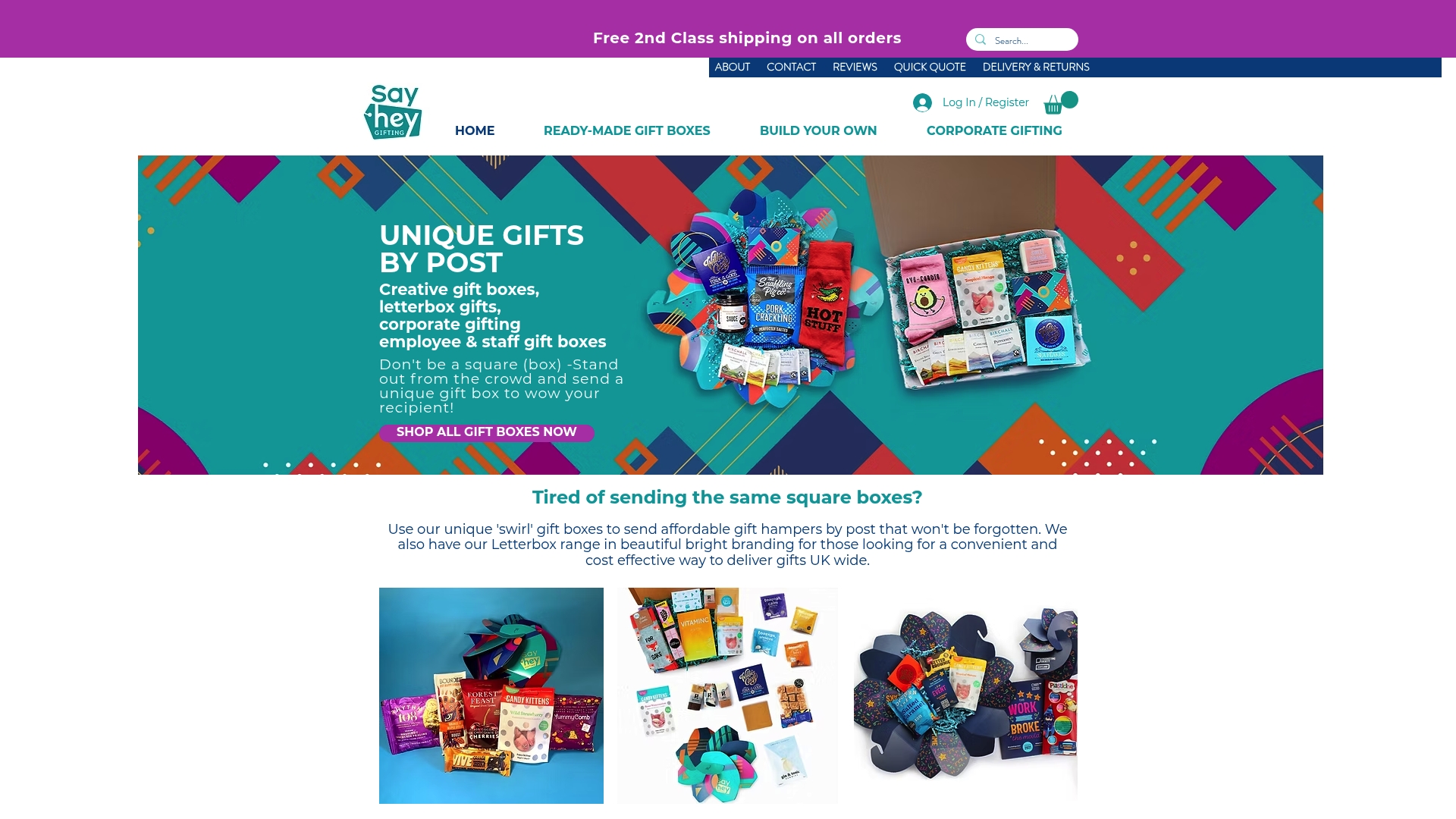
From beautifully curated employee gift boxes to flexible build-your-own gift boxes, Sayheygifting offers options for every team size, budget, and occasion. Whether you are recognising a work anniversary, celebrating a project win, or simply saying thank you, the range includes letterbox gifts, hampers, and personalised gift sets that arrive ready to impress. Every box is crafted with the kind of thoughtfulness that turns a gift into a lasting memory. Your team deserves recognition that feels as considered as the work they put in.
FAQ
Why do staff gifts improve morale?
Staff gifts improve morale because they provide tangible proof of recognition. Employees who feel appreciated report higher motivation, stronger loyalty, and greater well-being at work.
Why should staff gifts be practical rather than novelty items?
Practical gifts create repeated positive associations because employees use them daily. A gift that sits unused sends no ongoing message of appreciation, whereas a useful item reinforces recognition every time it is reached for.
How much should you spend on employee appreciation gifts?
Spend is less important than personalisation. A specific £50 gift outperforms a generic £200 gift in perceived value, meaning thoughtfulness consistently delivers more impact than a larger budget alone.
How often should companies give staff gifts?
The most effective gifting programmes align with meaningful milestones such as work anniversaries, project completions, and seasonal moments. Consistency builds trust, so regular, predictable recognition outperforms occasional large gestures.
How do you measure whether staff gifts are working?
Track retention rates, absenteeism, and engagement survey scores before and after gifting initiatives. Pulse surveys asking employees directly how valued they feel provide the clearest signal of whether your programme is having the intended effect.
Recommended

Comments