
Keep Gifts Tax Free Under £50: Inclusive Corporate Gifting for UK HR

Inclusive corporate gifting means offering employees and clients meaningful choice while removing barriers to access, from dietary needs to disability considerations to cultural preferences. The recommended approach favours choice-based fulfilment, such as digital selection or build-your-own boxes, over a single fixed hamper sent to everyone. It also means budgeting with UK tax rules in mind from the outset, so your gesture of appreciation doesn’t accidentally create a tax headache.
TL;DR:
Choice-based gift formats like build-your-own boxes and digital stores minimize mismatch risks and support greater inclusion across dietary, cultural, and accessibility needs.
All gifts must be carefully documented, including recipient choices and opt-outs, to ensure compliance with governance and HMRC tax rules, especially the £50 exemption threshold.
Supplier checks should confirm that packaging, delivery, and redemption processes are accessible and meet sustainability standards before finalizing your brief.
Piloting small, feedback-driven programs with employee resource groups significantly reduces costly mistakes and improves overall inclusivity.
Gifts exceeding £50 or that resemble cash, rewards, or contractual benefits automatically become taxable, making precise budget management essential.
Table of Contents
Why inclusive gifting matters: the business and ethical case
Gifting has quietly become a signal of how much an organisation values its people, and employees notice when that signal feels generic or exclusionary. The CIPD’s guidance on inclusive practice makes clear that inclusion works best when it’s woven into everyday people management, not bolted on as a seasonal campaign, and that leadership commitment and plain, honest communication carry more weight than a beautifully wrapped box ever could.
That framing matters for gifting specifically. A programme that only considers one dietary preference, one body size or one cultural calendar tells a chunk of your workforce they weren’t part of the plan. Done well, inclusive gifting instead reinforces belonging: it tells people their individuality was actually considered, not assumed away.
Gifting that reflects genuine choice supports a stronger sense of belonging and recognition among staff.
Values-aligned gifting strengthens how employees and clients perceive your organisation’s character, not just its generosity.
Treating inclusion as embedded practice, rather than a one-off gesture, tends to produce more consistent goodwill over time.
Values-driven gifting is on the rise, with recipients increasingly favouring gifts that reflect ethical sourcing and social responsibility, a shift that rewards employers who think beyond the standard hamper.
The business case and the ethical case point the same way here. Gifting that respects difference tends to land better, cost for cost, than gifting that assumes everyone wants the same thing.
Core principles and checklist for inclusive corporate gifts
A useful inclusive gifting brief rests on a handful of principles you can copy straight into a procurement document. Each one closes off a common way that well-meaning gifting programmes accidentally exclude people.
Offer meaningful choice: provide multiple formats, sizes and at least one non-apparel option so no single recipient is boxed into something unsuitable.
Build accessibility into the brief itself: ordering, redemption and packaging should all be checked for ease of use, including for assistive technology, rather than fixed after the fact.
Check sustainability and provenance: where relevant, favour suppliers who can point to certifications such as those recommended in sustainable sourcing guidance.
Practise branding restraint: a logo stitched onto every item can undercut the personal feel of a gift meant to say thank you.
Keep records: document recipient choices, opt-outs and consent, both for good governance and for tax purposes.
Disability-led guidance is particularly instructive here. URevolution’s practical checklist argues that genuine inclusion comes from giving people choice and removing access barriers, rather than guessing at what someone might want based on assumptions about their identity or background. That single shift, from guessing to asking, underpins most of what follows in this guide.
Pro Tip: Test your redemption journey yourself, ideally with a screen reader switched on, before you send a single gift.
Accessibility retrofitted after procurement rarely works as well as accessibility built in from the brief stage. If your supplier can’t answer questions about packaging weight, opening mechanisms or delivery flexibility before you sign off, that’s worth treating as a red flag rather than a detail to fix later.
Practical gift formats and inclusive examples
Some formats naturally support inclusion better than others, and the differences are worth knowing before you brief a supplier.
Letterbox gifts work well for distributed or remote teams; check the weight and dimensions fit through a standard letterbox, and always include clear allergy labelling alongside non-alcoholic options.
Build-your-own boxes and digital selection stores let each recipient pick what suits them, which sidesteps most dietary, cultural and preference mismatches in one move.
Retailer-specific vouchers preserve a gift’s tax-exempt status in a way that general prepaid cards typically don’t, so they’re worth favouring when cash-like flexibility is wanted.
Apparel should come with a size-selection link or a genuine non-apparel alternative, since a single fixed size guarantees some recipients are left out.
Experiences and charitable donations need the same accessibility thinking applied to letterboxes and boxes: check that the experience itself, and any booking process, works for people with different needs.
Sayhey’s letterbox gifts and build your own gift box ranges are built around this choice-first logic, letting the recipient rather than the buyer make the final call on contents. For teams looking at what a genuinely well-considered box can look like in practice, this piece on brilliant employee gifting walks through real examples.
Whichever format you choose, the underlying test stays the same: would this gift work equally well for someone with a dietary restriction, a disability, a different cultural calendar and a different clothing size, all at once? If the answer is no, the format needs adjusting before the budget is signed off.
UK tax rules that shape inclusive gifting
Getting the tax treatment right is part of running an inclusive programme responsibly, because a gift that triggers an unexpected tax bill for the business, or worse, for the employee, undercuts the goodwill it was meant to create.
Under HMRC’s trivial benefits rules, a gift is tax-exempt only if it meets every one of five conditions, and the £50 threshold operates as a binary gate rather than a sliding scale.
The gift costs £50 or less including VAT; exceeding this threshold invalidates the exemption entirely.
It is not cash or a cash voucher, which is why retailer-specific vouchers are safer than prepaid cards.
It is not a reward for particular performance, so end-of-year bonuses dressed as gifts don’t qualify.
It is not contractual, meaning it can’t be something the employee is entitled to expect.
It is not provided through salary sacrifice arrangements.
A single penny over £50 makes the whole gift taxable, not just the excess, which is why HMRC’s own guidance is worth checking line by line before you finalise a budget. Directors of close companies face an additional constraint: a £300 annual cap across all trivial benefits received in a tax year.
The most common trap is treating £50 as covering only the product itself. Packaging, gift wrap and delivery costs all count towards that ceiling, so a £48 hamper with £4 of premium packaging tips the whole gift into taxable territory. Our own quick guide to trivial benefits rules walks through how to budget with that margin built in from the start.

How to implement an inclusive gifting programme
Turning these principles into a working programme is mostly a sequencing exercise. The order below has proven reliable for organisations moving from ad hoc gifting to something more considered.
Write a short gifting policy covering the purpose of gifting, who’s eligible, and a plain-English summary of the tax rules that apply.
Draft a procurement brief that specifies choice, accessibility, allergy labelling, sustainability credentials and flexible delivery as non-negotiable requirements.
Check your comms for inclusive language, and make any request for personal details, such as dietary needs or sizing, genuinely opt-in with a clear privacy note attached.
Confirm fulfilment logistics, checking that packaging, collection points and redemption processes work for people with different physical and sensory needs.
Pilot with a smaller group, ideally involving employee resource groups, gather feedback, and iterate before rolling the programme out fully.
Pro Tip: Loop in your employee resource groups before the pilot, not after; their feedback is far more useful when it can still shape the brief.
Our corporate gift delivery guide covers the logistics side of this in more depth, particularly for office managers coordinating collection across multiple sites. Getting the sequence right the first time saves you from re-briefing suppliers midway through a rollout.
Measure impact and avoid common pitfalls
A gifting programme is worth tracking the same way you’d track any other people initiative, with a mix of hard numbers and qualitative feedback.
Track participation rates in build-your-own or selection-based formats to see whether choice is actually being used.
Collect satisfaction scores and open comments after each gifting cycle, rather than relying on assumption or silence as a proxy for success.
Watch broader engagement and retention indicators over time, recognising that gifting is one input among many rather than a standalone fix.
Flag tokenistic gestures, such as a single generic hamper sent to everyone regardless of preference, as a sign the programme needs revisiting.
Watch for inaccessible redemption processes, over-branding and poor sizing choices, all common and avoidable causes of complaints.
Pilot cohorts and employee resource groups remain the fastest way to surface problems before a full rollout amplifies them. If the same complaint surfaces twice, it’s worth revisiting the supplier brief rather than hoping the next cycle goes better on its own.
Why trust this guide: SayHey Gifting’s experience and practical proof points
Sayhey Gifting works day to day in this space, building employee gift boxes, letterbox gifts and build-your-own boxes, and handling the fulfilment side for organisations that want a managed process rather than an in-house one. That operational vantage point, seeing which formats actually get used and which sit unopened, shapes the practical detail in this guide.
For readers wanting more detail on specific formats, our post on thoughtful employee gift box ideas and our trivial benefits explainer both expand on points covered briefly above.
Author perspective: what actually works in practice
The lesson that’s stuck with me most is a simple one: pilot small, listen properly to your employee resource groups, and be willing to change the brief before you scale. Programmes that skip that step tend to repeat the same sizing or accessibility mistakes at far greater cost. If you’d like a second opinion on your own gifting plan, we’re happy to talk it through.
— Craig
How SayHey Gifting helps: services and next steps
If you’d rather not build all of this from scratch, Sayhey Gifting’s custom corporate gifting service covers design, sourcing and fulfilment end to end, alongside build-your-own gift boxes for teams that want choice baked in without managing the logistics themselves.
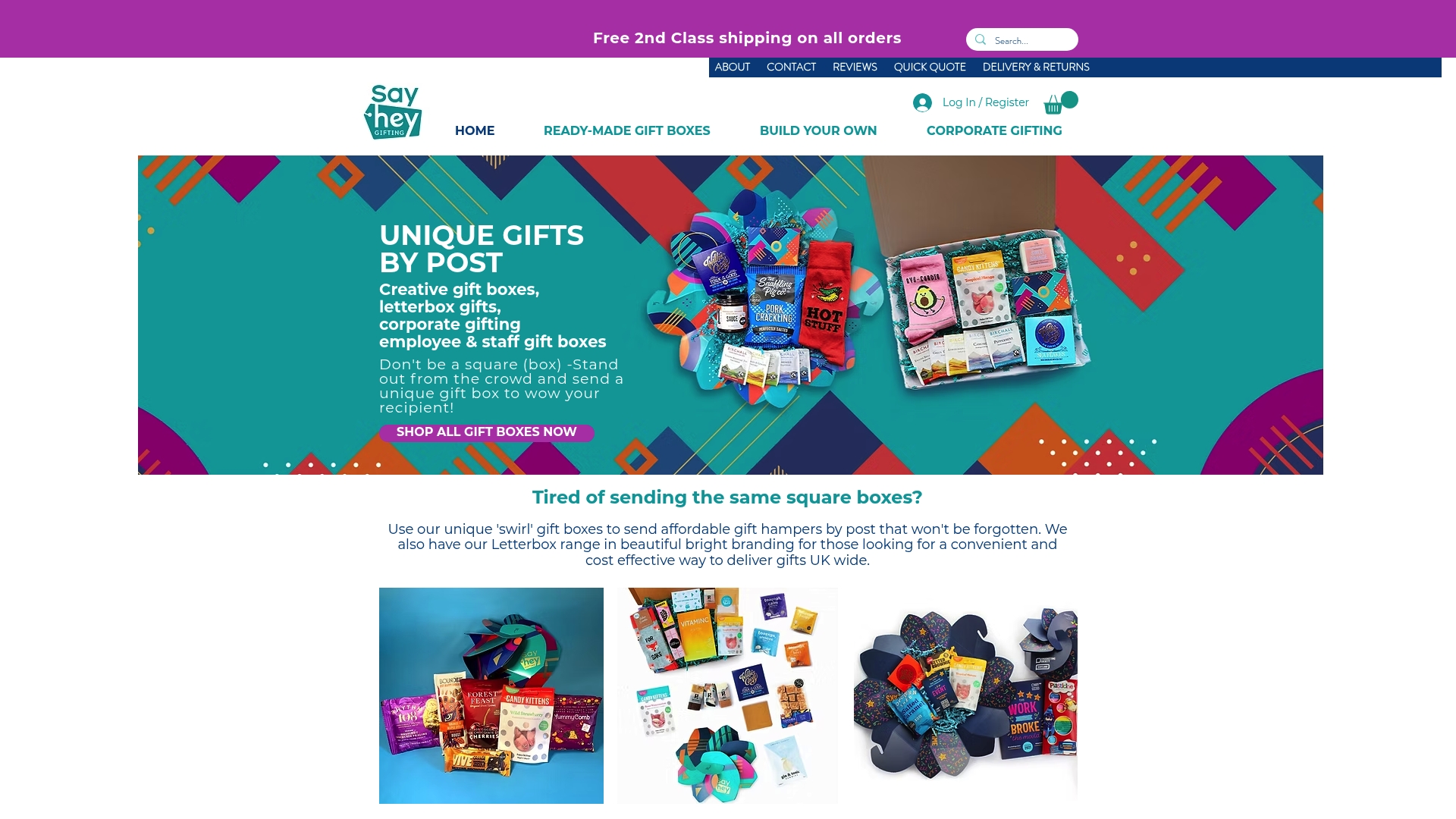
A managed partner tends to suit organisations without dedicated procurement resource, or those running gifting across multiple sites where consistency and accessibility checks matter more than doing everything in-house. An in-house approach can work well for smaller, single-site teams with time to manage supplier relationships directly. Branded boxes can include a company logo, alongside environmentally friendly packaging as standard.
If you’re ready to move from planning to briefing a supplier, visit our corporate gifting page to request a quote for your next gifting cycle.
Sources
FAQ
What are the guidelines for giving corporate gifts?
Good guidelines cover choice, accessibility and tax compliance together: offer more than one option, check the gift works for different dietary, cultural and physical needs, and keep any single gift at £50 or less including VAT if you want it to stay tax-exempt. Document what was offered and who opted out, for governance as much as tax purposes.
What are some examples of inclusive corporate gifts?
Letterbox gifts with clear allergy labelling, build-your-own gift boxes, and retailer-specific vouchers are all practical examples that let the recipient tailor the outcome rather than receiving a fixed, one-size-fits-all item. Employee gift boxes and vegan hampers are common formats used to widen dietary and lifestyle coverage.
What corporate gift is appropriate for clients?
A client gift works best when it reflects thoughtfulness rather than showiness, staying within a modest budget and avoiding items tied to a single dietary or lifestyle assumption. A well-presented letterbox gift or a build-your-own selection tends to travel well across different client preferences and relationships.
What are the appropriate etiquette rules for giving corporate gifts?
Keep gifts modest, non-cash where possible, and free from any suggestion that they’re tied to performance or a contractual entitlement, since that’s what keeps them within HMRC’s trivial benefits exemption. Be mindful of cultural and religious considerations, and always offer a way to decline or swap an item without awkwardness.
Recommended
Comments