
Luxury corporate gift selection: the 2026 quality guide
- sayheystudio
- Jul 4
- 7 min read

Luxury corporate gift selection is the strategic process of choosing high-quality, meaningful presents that strengthen client and employee relationships through impeccable craftsmanship, personalisation, and timing. Done well, it signals respect, reinforces your brand values, and creates lasting memories that generic gifts simply cannot achieve. The difference between a forgettable gesture and a gift that sparks genuine appreciation lies in three things: clear quality criteria, thoughtful recipient matching, and disciplined planning. This guide gives you a practical framework for all three, drawing on current corporate gifting trends and supplier evaluation standards.
What are the essential criteria for luxury corporate gift selection quality?
A quality-focused corporate gift checklist starts with supplier certification, but does not end there. ISO certification is a documented process standard, not a product quality guarantee. Savvy buyers ask vendors directly about their defect thresholds and replacement policies. A supplier who cannot specify acceptable defect percentages lacks an effective quality control system.
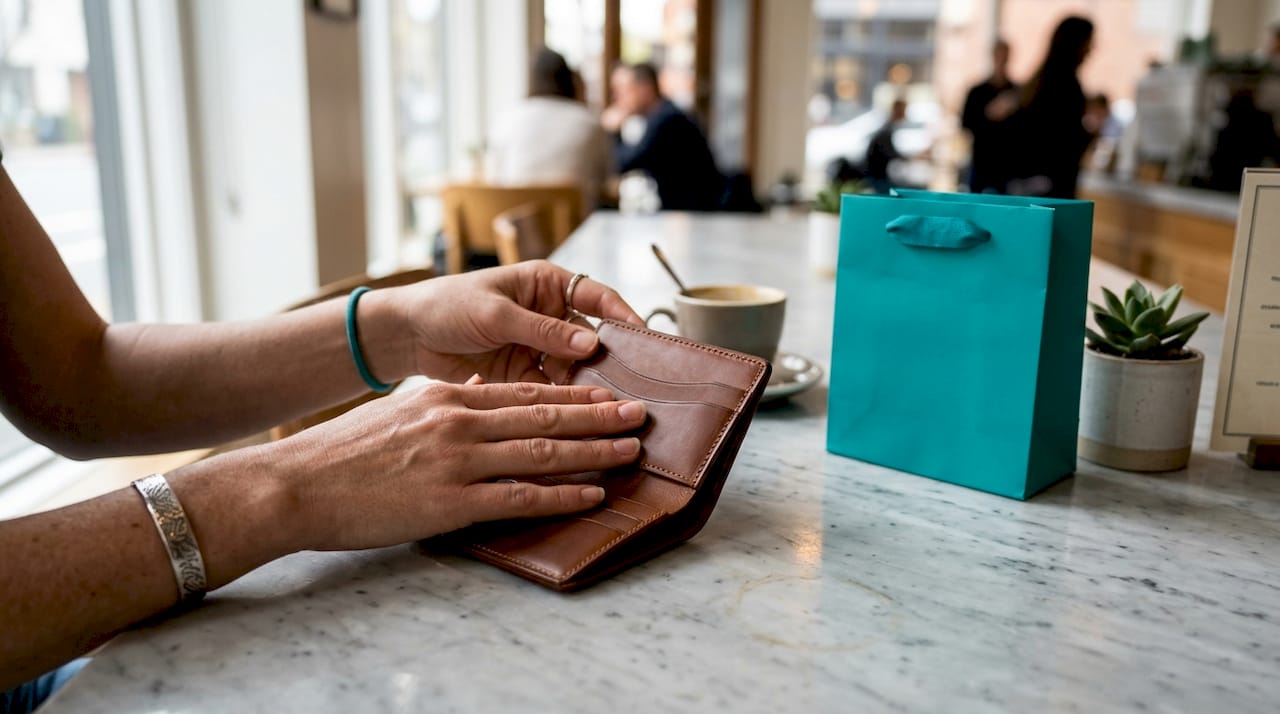
Physical sampling is non-negotiable. Test samples for lasting quality by evaluating how the gift looks and feels three days after delivery, not just on arrival. Packaging that degrades or materials that wear within 72 hours indicate poor production standards. This functional shelf-life test separates premium gifts from those that merely photograph well.
Supplier responsiveness is a diagnostic tool. A vendor response delay of more than 24 hours on an initial enquiry signals operational reliability issues. If they are slow before you place an order, they will be slower when a problem arises.
Watch for these supplier red flags:
Vague answers about subcontracting arrangements
Inability to name specific defect thresholds or quality benchmarks
Demands for full upfront payment before sampling
No written replacement or returns policy
Inconsistency between catalogue images and physical samples
Pro Tip: Request a reorder sample from a previous client batch, not a freshly produced showcase piece. Reorder quality reveals the supplier’s true production standards.
How should you plan timelines for premium corporate gift delivery?
Timeline planning is the most underestimated element of high-end business gifts. Large-scale corporate gifting events require 6–12 months of overall planning, with a minimum 8-week active production cycle. Compressing this timeline leads to rushed quality checks, inflated costs, and preventable errors.
The table below maps the key phases of a well-managed gifting campaign.
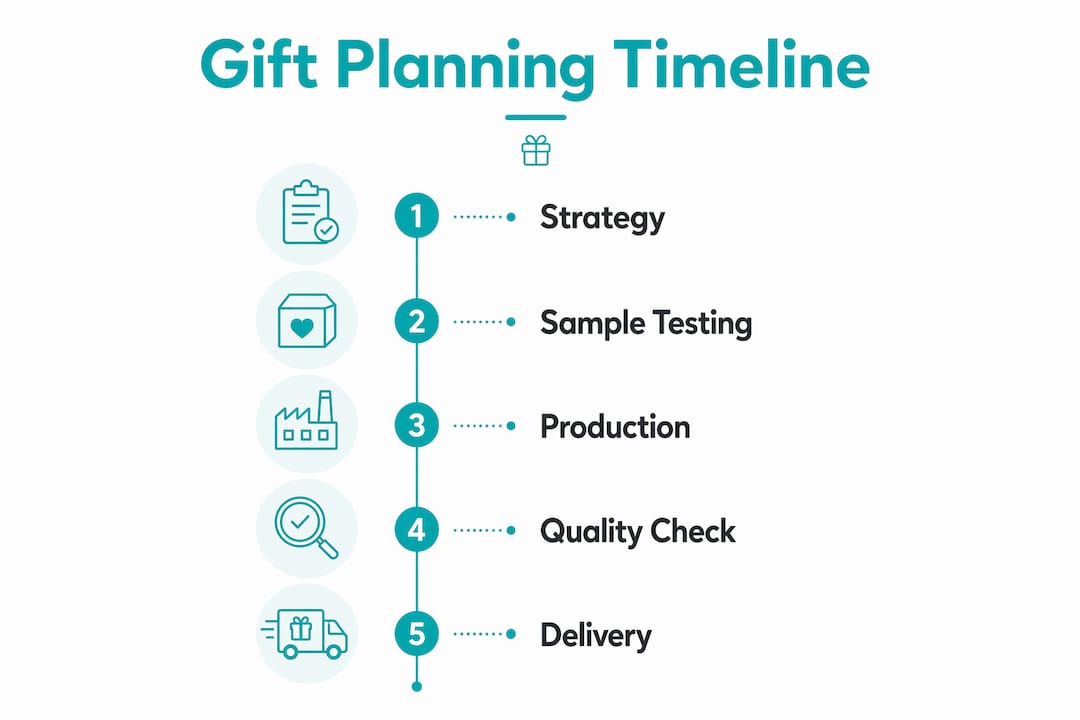
Phase | Timeframe | Key activities |
Strategy and brief | Months 6–12 before event | Define recipient tiers, budget, and brand guidelines |
Supplier selection | Months 4–6 before event | Request samples, verify quality policies, confirm lead times |
Sampling and approval | Months 3–4 before event | Physical sample review, functional shelf-life test |
Production | Weeks 5–8 before event | Confirm order, monitor production milestones |
Quality inspection | Week 3–4 before event | Pre-shipment inspection, packaging check |
Final assembly and dispatch | Weeks 1–2 before event | Personalisation, packing, tracked delivery |
When delays occur, act within 24 hours. Contact your supplier, request a revised production schedule in writing, and identify which phase can absorb the lost time without affecting delivery. If personalisation is the bottleneck, simplify the customisation rather than sacrifice the gift quality itself.
Pro Tip: Build a two-week buffer into every timeline. Customs clearance, courier delays, and last-minute recipient list changes are predictable enough to plan for.
What luxury gifts best convey exclusivity to different recipient segments?
Recipient segmentation is the foundation of effective corporate gift selection criteria. A gift that delights a new employee will feel underwhelming to a long-standing VIP client. Matching the gift to the recipient’s role and your relationship with them is what transforms a transaction into a genuine expression of appreciation.
Recipient segment | Gift focus | Ideal examples | Intended impact |
C-suite executives | Singular, high-craftsmanship item | Bespoke leather goods, premium watch winders | Signals exclusivity and deep respect |
Employees | Curated, personalised experience | Wellness hampers, curated gift boxes | Builds belonging and motivation |
VIP clients | Understated luxury, one standout piece | Bespoke card holders, artisan confectionery | Reinforces long-term relationship value |
Event attendees | Tiered choice-based gifting | Curated sets with 5–8 vetted options per tier | Reduces gift fatigue, increases satisfaction |
For VIP clients, a ‘less is more’ approach with a single high-craftsmanship item outperforms larger, expensive hampers. One bespoke leather card holder communicates more care than a generic hamper filled with branded merchandise. The restraint itself signals confidence.
Choice-based gifting with 5–8 vetted options per tier improves recipient satisfaction and reduces gift fatigue across multi-tier events. Blended approaches, combining direct gifts for senior recipients with choice-based sets for wider teams, work well for large organisations.
Key considerations when matching gifts to recipients:
Acknowledge dietary requirements and lifestyle preferences for food and wellness gifts
For international recipients, research cultural attitudes to gifting before finalising selections
Seasonal and sustainable gift options such as premium fruit boxes align with corporate wellness values and ESG commitments
Personalised, high-craftsmanship gifts build stronger long-term client loyalty than high-volume generic alternatives
How do you personalise luxury corporate gifts without losing brand professionalism?
Personalisation is the single greatest driver of perceived gift value. Minimal logo placement and personalised messaging significantly elevate how recipients experience a gift. The goal is to make the recipient feel seen, not to turn the gift into a branded marketing item.
Elegant personalisation follows a clear hierarchy. The recipient’s name or initials comes first. A handwritten or printed personal note comes second. Your brand mark, if present at all, sits discreetly on the packaging rather than embossed across the product itself. This order of priority reflects what the recipient actually notices and values.
Packaging and the unboxing experience contribute enormously to perceived quality. Tissue paper, ribbon, and a well-structured box interior signal care before the recipient even sees the gift. Sustainable presentation options, including recycled kraft boxes and plantable seed paper cards, align with modern corporate values without sacrificing elegance.
Personalisation best practices:
Use the recipient’s name on the note, not just their job title
Keep brand logos to one placement, small and tasteful
Choose packaging colours and materials that reflect your brand identity without overpowering the gift
Avoid printing slogans or campaign messaging on luxury items; it cheapens the impression
For large teams, build your own gift box options allow consistent quality with individual personalisation at scale
Pro Tip: Commission a short handwritten note template that your team can personalise with one specific detail about the recipient. Even a single personalised sentence transforms a standard gift into a memorable one.
What mistakes should you avoid in executive gift selection?
The most common mistake in executive gift selection is rushing the timeline. Compressed schedules force compromises on sampling, personalisation, and quality inspection. Every shortcut taken under time pressure shows up in the final product.
Neglecting physical samples is the second most costly error. A supplier’s catalogue images and a freshly produced showcase piece are both designed to impress. Reorder shipment inconsistency is a systemic red flag. Logo colour deviations and material quality changes between your first and second orders signal that the supplier lacks reliable production controls.
“Successful corporate gifting hinges on clear communication of quality expectations and transparency throughout the supply chain. Buyers who define their standards in writing before placing an order experience significantly fewer disputes and quality failures.”
Recovery steps when gifts fall short:
Contact the supplier within 24 hours of identifying the issue, with photographic evidence
Request a written explanation and revised delivery or replacement timeline
Communicate proactively with recipients if delivery is delayed; a brief, warm message preserves goodwill
Prepare an alternative gesture, such as a personalised digital gift card or a handwritten note, to bridge the gap
Review your supplier selection criteria before the next campaign and document the failure for future reference
Partnering with a reliable supplier who aligns with your quality and timeline expectations is not a luxury. It is the foundation of a gifting programme that consistently reflects well on your organisation.
Key takeaways
Luxury corporate gift selection succeeds when quality criteria, recipient matching, and timeline discipline work together from the outset.
Point | Details |
Quality criteria come first | Verify defect thresholds, replacement policies, and physical samples before committing to a supplier. |
Plan 6–12 months ahead | Large-scale gifting campaigns need a minimum 8-week production cycle and a two-week delivery buffer. |
Match gifts to recipients | VIP clients respond to singular, high-craftsmanship pieces; employees value curated, personalised experiences. |
Personalise with restraint | Recipient name and a personal note outperform heavy branding in perceived gift value. |
Act fast when things go wrong | Document issues within 24 hours, communicate with recipients proactively, and prepare an alternative gesture. |
Why I believe most corporate gifting programmes underperform
After years of observing how organisations approach premium corporate gifts, the pattern is consistent. The budget is approved, the deadline arrives, and someone searches for a supplier two weeks before the event. The result is a gift that looks acceptable but feels rushed. Recipients notice, even if they never say so.
The organisations that get this right treat gifting as a curated experience, not a procurement task. They define their quality standards in writing before approaching any supplier. They request physical samples and test them properly. They match gifts to recipients with the same care they would apply to a client proposal.
The uncomfortable truth is that a poorly chosen luxury gift does more damage than no gift at all. A bespoke leather item with a misaligned logo or a hamper that arrives damaged tells the recipient that the gesture was an afterthought. That impression lingers far longer than the gift itself.
Investing time in a proper corporate gift quality checklist and a disciplined supplier evaluation process is not excessive. It is the minimum standard for gifting that genuinely reflects your organisation’s values and care for the people who matter most to your business.
— Craig
Sayheygifting: curated luxury gifting for every occasion
Sayheygifting specialises in creative corporate gifting that combines quality, personalisation, and reliable delivery. Whether you are recognising outstanding employees or expressing genuine appreciation to valued clients, the range covers everything from bespoke corporate gift boxes to letterbox gifts and build-your-own options.
Every gift is designed to feel thoughtful and personal, not mass-produced. Sayheygifting supports organisations of all sizes, from small team rewards to large-scale client appreciation campaigns. If you are ready to give gifts that truly reflect your values, explore the full corporate gifting range and find the perfect fit for your next occasion.
FAQ
What is luxury corporate gift selection?
Luxury corporate gift selection is the process of choosing high-quality, brand-aligned gifts for clients and employees, prioritising craftsmanship, personalisation, and strategic timing over volume or cost alone.
How far in advance should you plan corporate gifts?
Large-scale corporate gifting events require 6–12 months of overall planning, with a minimum 8-week active production cycle to avoid quality failures and rush fees.
What makes a corporate gift feel truly premium?
A single high-craftsmanship item with minimal, elegant branding and a personalised note consistently outperforms larger, generic hampers in perceived value and recipient satisfaction.
How do you evaluate a corporate gift supplier’s quality?
Request physical samples, ask for specific defect thresholds and replacement policies, and test how the gift looks and feels three days after delivery. A supplier who takes more than 24 hours to respond to an initial enquiry is a reliability risk.
What are the biggest mistakes in corporate gift selection?
Rushing the timeline, skipping physical samples, and ignoring recipient preferences are the three most common pitfalls. Reorder inconsistency between shipments is also a key red flag that signals unreliable supplier quality.
Recommended
Comments