
Corporate gifting logistics explained: your 2026 guide

Corporate gifting logistics is defined as the end-to-end management of sourcing, producing, storing, and delivering gifts to employees and clients in a way that is timely, compliant, and meaningful. Getting this right is not simply an operational nicety. It is the difference between a gift that creates a lasting memory and one that arrives damaged, late, or in breach of company policy. For corporate gifting programmes to deliver genuine recognition and strengthen relationships, the logistics behind them must be as thoughtful as the gifts themselves. Sayheygifting works with businesses to make that process feel effortless, from the first product decision through to the moment a gift lands on a recipient’s doorstep.
What are the typical phases and timelines in corporate gifting logistics?
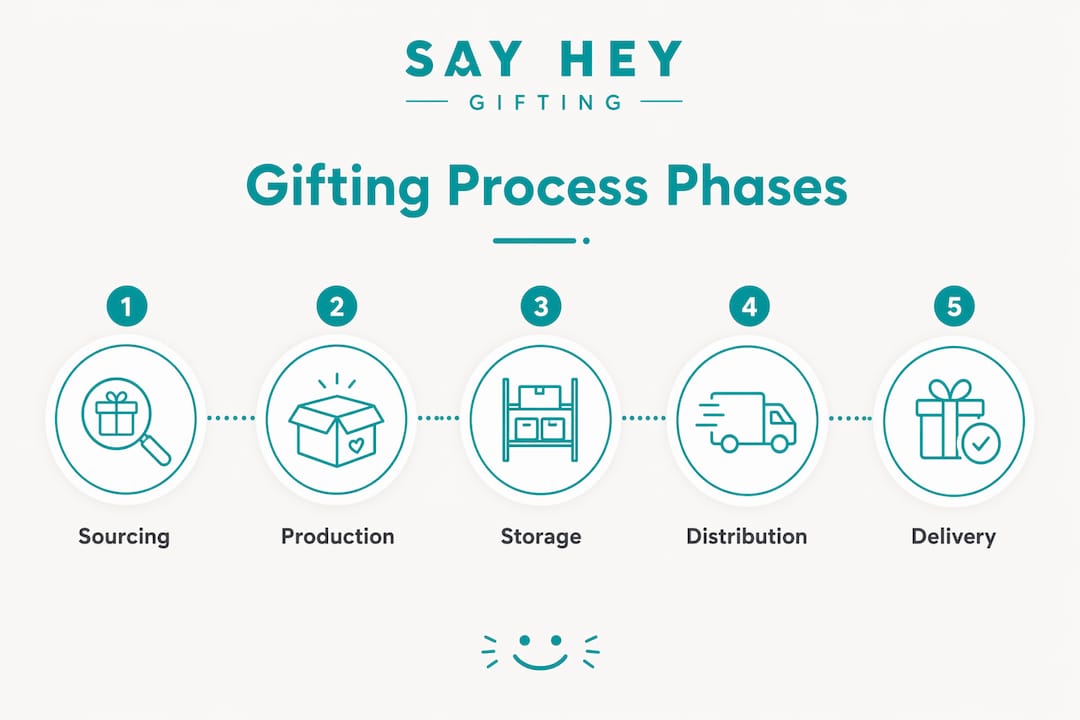
Bulk corporate gifting programmes require structured timelines with clearly defined phases, each carrying its own buffer. Allow 4–8 weeks for sourcing and sampling, 3–6 weeks for production, and 1–3 weeks for final fulfilment and shipping. Skipping or compressing any phase introduces risk, and that risk almost always shows up as a cost.
The three phases work in sequence:
Sourcing and sampling (4–8 weeks). This phase covers supplier identification, product selection, and sample approval. Rushing it leads to quality failures that only surface after production is complete.
Production (3–6 weeks). Branded or customised items need lead time for printing, assembly, and quality checks. Seasonal demand, particularly in the run-up to december, compresses supplier capacity across the board.
Fulfilment and shipping (1–3 weeks). This phase includes packing, labelling, carrier handover, and last-mile delivery. International sends require additional time for customs clearance.
Reverse-timeline planning is the industry best practice. Start with your required delivery date, then calculate backwards through each phase to set a realistic start date. This method removes the guesswork and makes it immediately obvious when a programme is at risk of running late.
Pro Tip: Build an extra five to seven working days into your shipping window to absorb carrier disruptions, public holidays, and any last-minute changes to your event date. This buffer costs nothing to plan but saves a great deal to fix.

How do compliance and ethical considerations influence corporate gifting logistics?
Compliance is not a box-ticking exercise. It shapes which gifts you can send, to whom, at what value, and with what documentation. FINRA Rule 3220 sets a $300 annual cap on gifts to certain recipients in financial services. The UK Bribery Act applies an objective reasonable person standard, meaning a gift does not need corrupt intent to be unlawful. That standard is stricter than the US Foreign Corrupt Practices Act, and it applies to any business operating in the UK.
Common gift acceptance thresholds range from £0 to £500 depending on sector, with a £100 default threshold widely used as a safe starting point for unknown clients. Healthcare and public sector organisations often operate at the lower end of this range. Always verify the recipient organisation’s own policy before sending, as their internal rules may be tighter than the legal minimum.
Compliance best practices for corporate gifting include:
Document every gift. Record the recipient, value, business purpose, and date of each send.
Obtain pre-approval for high-value items. Any gift approaching or exceeding your organisation’s threshold should go through a formal sign-off process.
Segment gifts by category. Separate client gifts, employee recognition gifts, and event gifts in your records to simplify audit preparation.
Verify recipient policies. Regulated industries require you to check the recipient’s own acceptance policy, not just your own.
Review annually. Thresholds and regulations change. A policy that was compliant in 2024 may not meet 2026 standards.
Pro Tip: Integrating approval workflows with your expense management software closes the gap between what was approved and what was actually spent. That gap is the single greatest compliance risk in corporate gifting.
What are the best practices for global fulfilment and distribution?
Global gifting requires more than international shipping. True global infrastructure uses regional warehouses or local production partners to cut customs fees, reduce transit times, and lower the carbon footprint of each send. A single centralised warehouse serving every market sounds efficient on paper, but it creates a fragile single point of failure and generates significant cross-border complexity.
The choice between centralised and distributed fulfilment shapes your entire gifting operation. Here is how the two models compare:
Factor | Centralised fulfilment | Distributed fulfilment |
Cost per unit | Lower at high volume | Higher per unit, lower freight cost |
Speed to recipient | Slower for distant markets | Faster for regional recipients |
Customs complexity | High for international sends | Reduced with local partners |
Brand consistency | Easier to control | Requires strong partner briefing |
Risk profile | Single point of failure | Resilient across disruptions |
Carrier selection goes beyond price. Choosing carriers involves assessing service level agreements, delivery accuracy, special handling capabilities, and the ability to scale during peak periods. A carrier that performs well at 200 parcels may struggle at 2,000. For high-volume programmes, partnering with a third-party logistics provider that has established carrier relationships is often more reliable than managing multiple carrier contracts directly.
Consolidation techniques such as palletisation and less-than-truckload shipments reduce freight costs on large sends. Grouping deliveries by region before final distribution also reduces the number of individual carrier handovers, which is where most damage and delay occurs.
Pro Tip: Use a single integrated system for inventory management, fulfilment tracking, and brand asset control. Fragmented systems create version-control problems with branded packaging and make it nearly impossible to reconcile stock levels across multiple locations.
How can technology and automation improve corporate gifting logistics?
Technology does not replace the human warmth behind a well-chosen gift. It removes the manual errors that undermine it. Last-mile delivery failures cause the majority of issues in gift distribution. Tracked shipping, insured parcels, clear recipient instructions, and AI-based rerouting each reduce the likelihood of a gift going astray.
Key technology features that support gifting logistics at scale include:
Automated packing slip generation. Reduces manual data entry and ensures every parcel carries the correct recipient information.
Segmented courier selection. Assigns the most appropriate carrier based on destination, parcel size, and required delivery speed.
Predictive rerouting. Uses historical carrier data to redirect parcels away from known delay hotspots before a problem occurs.
Recipient communication workflows. Sends automated delivery notifications and collection instructions, reducing failed first-attempt deliveries.
Integrated budget tracking. Flags spend against pre-approved budgets in real time, supporting compliance and corporate gifting budget management.
AI tools now assist with recipient segmentation, recommending gift assortments based on role, location, and previous gifting history. This personalisation at scale was not feasible five years ago. Today, it is a realistic expectation for any programme managing more than a few hundred recipients.
Pro Tip: Automate your packing and despatch confirmation emails to include a personalised message from the sender. This small addition significantly increases the emotional impact of the gift without adding manual effort to your fulfilment process.
What are the common pitfalls in corporate gifting logistics and how do you avoid them?
Most gifting programmes fail at the operational level, not the creative one. The gift idea is usually sound. The execution is where things go wrong.
The most frequent pitfalls, and how to address each one, are:
Inadequate timeline buffers. Starting too late is the most common error. A programme that begins sourcing eight weeks before a delivery date has no room to recover from a supplier delay or a production defect. Apply reverse-timeline planning from day one.
Missing compliance checks. Sending a gift without verifying the recipient’s acceptance policy creates legal and reputational risk. Build a compliance verification step into your approval workflow before any order is placed.
Poor carrier selection. Choosing a carrier on price alone leads to damaged parcels, missed delivery windows, and frustrated recipients. Assess SLA performance, special handling options, and scalability before committing.
Ineffective recipient communication. Recipients who do not know a parcel is coming miss deliveries. Send advance notification with tracking details and clear instructions for collection or redelivery.
No contingency planning. Weather disruption, customs delays, and event date changes are predictable in the sense that they will happen eventually. A contingency plan that identifies alternative carriers and buffer stock prevents a single disruption from derailing an entire programme.
Historical order data and demand forecasting are your best tools for avoiding stock-outs and overstocking. Programmes that track send volumes by season, recipient type, and geography can predict demand with enough accuracy to pre-position stock and negotiate better supplier terms.
Key takeaways
Effective corporate gifting logistics requires structured timelines, documented compliance, and integrated fulfilment systems working together from sourcing through to last-mile delivery.
Point | Details |
Plan with reverse timelines | Start from your delivery date and work backwards through sourcing, production, and fulfilment phases. |
Know your compliance thresholds | Verify both your own policy and the recipient’s before sending any gift above a £100 default threshold. |
Choose fulfilment model carefully | Distributed regional fulfilment reduces customs delays and carbon footprint for global programmes. |
Use technology to reduce errors | Automated packing, tracked shipping, and integrated budget tools prevent the most common operational failures. |
Build contingency into every plan | Carrier disruptions and customs delays are predictable. Pre-positioned stock and alternative carriers protect your programme. |
What I have learned from years of watching gifting programmes succeed and fail
The programmes that consistently land well share one quality: they treat logistics as a creative discipline, not an afterthought. I have seen beautifully curated gift boxes arrive two weeks after the event they were meant to celebrate. The gift was right. The timing was not. The recipient remembered the delay, not the thoughtfulness.
Compliance gaps are equally damaging, and they are almost always avoidable. The disconnect between what a gifting manager approves and what actually gets spent is where most audit problems originate. Integrating your approval workflow with your expense tracking from the start removes that risk entirely. It is not a complex fix. It is simply a decision to treat gifting as the business function it has become.
The shift I find most significant in 2026 is the expectation of personalisation at scale. Recipients now notice when a gift feels generic. They notice even more when it feels considered. Technology makes the latter achievable without adding disproportionate cost, but only if the underlying logistics are sound. A personalised message on a parcel that arrives damaged or late does more harm than a plain box that arrives on time.
My honest advice: invest your planning time in the timeline and the compliance framework first. The creative decisions are the enjoyable part. The logistics are what make them matter.
— Craig
Gifting made easy with Sayheygifting
Getting corporate gifting logistics right takes planning, care, and the right partner. Sayheygifting specialises in employee gift boxes and staff gifts that are designed for corporate programmes, with fulfilment options that take the operational weight off your team.
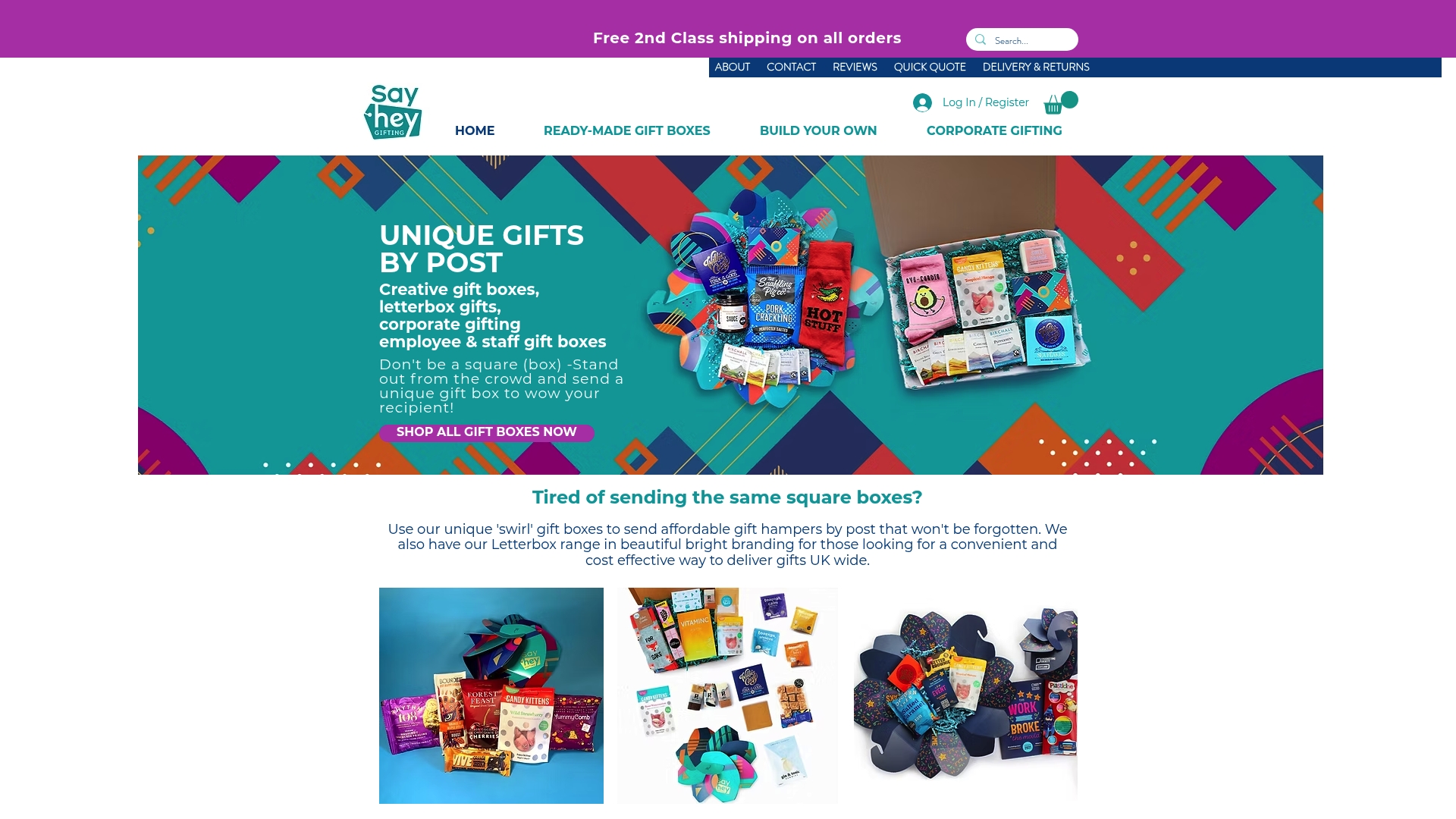
From letterbox gifts that drop through the door without a signature required, to fully customised build-your-own gift boxes with branded packaging, Sayheygifting handles the details so you can focus on the people you are recognising. Every order comes with clear despatch timelines and delivery tracking, giving you the confidence that your gifts will arrive when they should. Explore the full range and find the right fit for your next gifting programme.
FAQ
What is corporate gifting logistics?
Corporate gifting logistics is the end-to-end process of sourcing, producing, storing, and delivering gifts to employees or clients in a timely, compliant, and cost-effective way. It covers everything from supplier selection and production timelines through to carrier management and last-mile delivery.
How far in advance should you plan a corporate gifting programme?
Allow at least 12–17 weeks for a fully customised bulk programme, covering 4–8 weeks for sourcing and sampling, 3–6 weeks for production, and 1–3 weeks for fulfilment and shipping. Shorter timelines are possible for off-the-shelf products but carry higher risk during peak periods.
What are the key compliance rules for corporate gifting in the UK?
The UK Bribery Act requires a documented business purpose for all gifts and applies an objective reasonable person standard to determine whether a gift constitutes an improper inducement. A £100 default threshold is widely used as a safe starting point, though regulated industries often apply lower limits.
What is reverse-timeline planning in corporate gifting?
Reverse-timeline planning starts with the required delivery date and works backwards through each phase, assigning realistic durations to sourcing, production, and fulfilment. This method identifies the latest possible start date and highlights where buffer time is needed to absorb delays.
How do you reduce last-mile delivery failures in corporate gifting?
Use tracked shipping, insured parcels, and automated recipient notifications to reduce failed deliveries. AI-based rerouting tools can redirect parcels away from delay hotspots before a problem occurs, significantly improving first-attempt delivery rates at scale.
Recommended

Comments