
90 Day Pilot to Prove ROI on Corporate Gifting for B2B Teams

An effective corporate gifting strategy is a tiered, moment-driven programme that ties gifts to measurable business outcomes, not a scramble every December. The single highest-impact move is mapping every recipient to a value tier and matching the gift type, budget, and timing to that tier. Success looks like a lift in renewal, expansion, or reply rates you can point to on a report, not a warehouse of unopened hampers.
TL;DR:
Prioritize tiering recipients based on value before selecting gift types and set clear KPIs, such as renewal or pipeline influence, from the start.
Anchor gifts to meaningful moments like contract renewals or milestones rather than solely relying on calendar dates to maximize emotional impact.
Focus on relevance and quality over price, and use automation combined with human oversight to personalize logistics and messaging effectively.
Schedule gift delivery around strategic milestones and avoid the December rush to ensure gifts stand out and are genuinely appreciated.
Measure gifting ROI against specific outcomes and track downstream effects, such as renewal rates and pipeline growth, rather than just delivery or open rates.
Table of Contents
What makes a corporate gifting strategy actually work?
Most gifting programmes fail for one reason: they treat every recipient the same and every date as December 1st. A working programme runs on five pillars, and skipping any one of them tends to show up later as wasted budget or a gift that lands flat.
Tier recipients by value, then map spend to the tier. Your top ten client accounts deserve a different budget and gift type than a mailing list of 400 prospects. Decide the tiers first; the ideas follow naturally.
Anchor gifts to meaningful moments, not just the calendar. A contract renewal, a project milestone, or a promotion announcement carries far more emotional weight than a generic “happy holidays” parcel arriving in the same week as every competitor’s. The most effective programmes tier recipients by relationship value and anchor gifts to meaningful moments rather than relying solely on an end-of-year calendar.

Prioritise relevance and quality over price. A £30 gift chosen with genuine thought about the recipient outperforms a £60 generic branded mug every time. Companies that send truly personalised gifts report materially higher ROI and retention compared with generic sends. Keep branding subtle; nobody wants to unwrap a gift that feels like a billboard.
Automate the logistics, not the personalisation. CRM triggers can fire the fulfilment request the moment a deal closes, but the note inside should still read like a human wrote it. High-performing programmes combine CRM triggers, automation and human intent so the operational load is invisible and the personal touch is not.
Build measurement in from day one. Decide what success looks like before the first box ships, not after the budget review.
Tier recipients before choosing gift types
Tie gifts to moments, not just holidays
Favour relevance over retail price
Automate fulfilment; keep notes human
Define your success metric upfront
Pro Tip: Draft your tiering matrix and your KPI sheet in the same meeting. Teams that separate the two almost always end up measuring the wrong thing three months in.
How do you build or refine a gifting strategy step by step?
A gifting strategy earns its budget line when it behaves like any other revenue programme: goals first, then structure, then a pilot before you scale.
Set goals and pick your KPIs. Decide whether you’re optimising for renewal rate, influenced pipeline, cost per meeting booked, or employee retention. Vague goals produce vague reporting later.
Segment recipients into tiers. A simple four-way split works for most B2B teams: top clients, expansion accounts, active prospects, and internal staff. Assign a per-tier budget range now so nobody is negotiating spend mid-campaign.
Define gift types and approval thresholds. Set a maximum value per tier, and agree a compliance fallback (a donation or a lower-value alternative) for recipients whose employer bans gifts above a certain amount.
Set CRM triggers and choose your fulfilment route. Decide whether a deal-closed or renewal-date field in your CRM should automatically queue a gift, and whether you’ll fulfil in-house or use a dedicated gifting platform for volume.
Pilot before you scale. Run a controlled test on one tier, measure the effect on your chosen KPI, and only then roll it out wider.
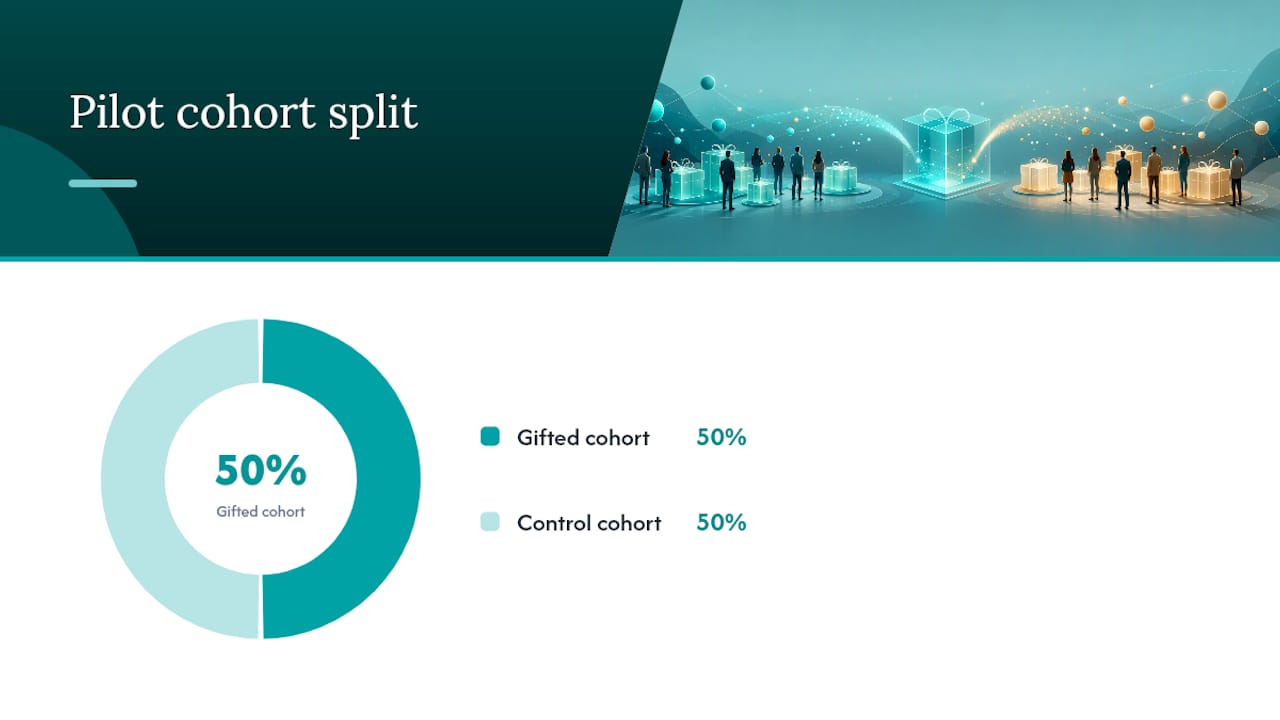
The pilot step matters more than most teams give it credit for. A structured way to prove causation, rather than correlation, is to run a matched-cohort pilot: split comparable accounts into a gifted group and a control group, then track reply rate, meetings booked, and pipeline movement over a fixed window. If the gifted cohort consistently outperforms the control, you have a defensible business case rather than a hunch.
Pro Tip: Keep your pilot small enough to run in one quarter. A 90-day test with 30 to 50 accounts per side gives you a clean read without tying up a year’s budget on an unproven idea.
Which corporate gift ideas suit which budget tier?
Gift ideas should follow your tiers, not the other way round. Working backwards from “what’s a nice gift” produces mismatched spend; working forwards from “who is this for and why” produces a programme that scales sensibly.
Top-tier clients: bespoke experiences, premium personalised items, or a custom-built hamper curated around what you actually know about the recipient, their team, or a shared milestone.
Mid-tier accounts and internal recognition: high-quality curated boxes, useful branded items that people genuinely keep, or vouchers that let the recipient choose their own reward. This is also where employee gift boxes and team reward gifts tend to sit well.
Wide-list sends (large prospect lists, remote teams, event follow-ups): letterbox-format gifts, digital vouchers, a charitable donation made in the recipient’s name, or simply a hand-written note. Volume doesn’t have to mean impersonal.
Sustainability-led options: eco-friendly packaging and verified sourcing credentials are increasingly expected rather than a nice extra, and checking a supplier’s environmental claims before you commit spend is worth the ten minutes it takes.
Quality shows up in ways recipients notice even when they can’t articulate why. Recipients link gift quality directly to the sender’s reputation, and that association compounds: one thoughtful, well-made gift does more for how your brand is remembered than three forgettable ones. For wide lists where a hand-written note at scale feels impossible, a print-on-demand or calligraphy fulfilment partner tied into your workflow keeps the personal feel without adding headcount.
When should you send gifts for maximum impact?
Sending everything in the second week of December is the single most common way to waste a gifting budget. Everyone’s inbox and doormat are full that week, and a genuinely thoughtful gift gets lost in the pile. Practitioners increasingly recommend avoiding the Q4 rush and sending at specific milestones instead, because a gift that arrives unexpectedly carries far more weight than one everyone was expecting anyway.
The moments worth building into your calendar:
Contract signature or renewal confirmation
Project completion or a major deliverable shipped
The 30 to 60 day window before a renewal decision
Personal milestones: work anniversaries, promotions, new-baby announcements shared publicly
Cadence should follow the tier. Top clients might warrant an annual flagship gift plus one surprise moment-based send; mid-tier accounts might get a quarterly touchpoint tied to your outreach calendar. Whatever cadence you pick, build in lead time. Custom or bespoke items can take longer to source and personalise than a standard letterbox box, so align your fulfilment timeline with your sales team’s forecast dates, not the date the deal actually closes.
How do you measure ROI on corporate gifting?
Gifting only earns its place in the budget when it’s measured against outcomes that finance and sales actually care about, not delivery confirmations. A programme that tracks downstream results such as renewal, expansion, and influenced pipeline performs far better than one that stops at open rates or social likes.
Baseline metrics worth tracking: delivery and redemption rate, reply or meeting rate within 14 days of a send, pipeline value influenced, and renewal or expansion rate for gifted accounts versus a comparable ungifted group.
Practical steps for instrumenting this properly:
Tag every gift against the recipient’s CRM record at the point of send
Run simple A/B or matched-cohort splits rather than gifting your entire list at once
Report on a fixed cadence (monthly for pipeline metrics, quarterly for renewal) to avoid attribution creep
Treat a spike in engagement in the same week as a gift as a signal, not proof, until the pattern repeats across cohorts
A workable small-scale experiment: pick 40 renewal-stage accounts, gift half and hold the other half as a control, then compare renewal rate 90 days later. If the gifted group renews at a meaningfully higher rate, you have evidence to bring to a budget conversation. Reviewing which campaigns actually move ecommerce engagement and retention can sharpen how you frame this kind of test even outside pure ecommerce contexts. For the full business case behind this kind of tracking, our breakdown of gifting ROI goes deeper into the numbers.
What compliance and etiquette rules apply to B2B gifts?
Gifting protects a relationship only when the logistics behind it are handled carefully. A few defaults keep you safe without slowing you down.
Collect only the address details you need, get explicit consent before storing personal data, and avoid asking for anything beyond a delivery address
Set a conservative default value threshold (many teams cap at £50 to £75 per client gift) and check the recipient’s company gift policy before going above it
Keep branding subtle on packaging; a discreet logo reads as thoughtful, a large one reads as a marketing spend
Choose your fulfilment route deliberately: in-house works for small volumes, a dedicated platform or fulfilment partner with a clear service-level agreement suits scale. Our logistics guide covers lead times and packaging standards in more depth, and our common mistakes checklist is worth a read before your first bulk order.
Why Sayheygifting’s approach reflects this framework
Sayheygifting builds exactly this tiering logic into its product range: employee gift boxes for mid-tier and wide-list sends, custom hampers for top-client moments, and letterbox formats for scaling personal touches across large lists. Our primer on what corporate gifting actually achieves is a useful starting point if you’re building the business case internally. Before your first campaign, run through a simple checklist: tiers defined, KPI chosen, pilot sized, and a fallback gift agreed for recipients with strict gift policies.
Why 2026 demands smarter gifting, not more of it
The old model rewarded volume. Send enough branded mugs and something sticks. That model is dying, and it should. Industry commentary this year keeps circling back to the same shift: from “send more” to “send smarter”, where gifting data lives inside the CRM rather than in a spreadsheet nobody updates after March.
The mindset change worth adopting is simple: treat gifting as a relationship capability you build and refine, not a discretionary spend line you justify once a year. Start small, instrument tightly, and let a 90-day pilot tell you what actually moves the numbers before you commit real budget to scaling it.
— Craig
Ready to put this framework into practice?
Reading the framework is one thing; sourcing, personalising, and shipping at volume without losing the personal touch is another. There are options for bulk ordering with individual hand-written notes, bespoke branding for top-tier hampers, and delivery handled end to end to ease logistics so your team isn’t managing couriers on top of everything else.
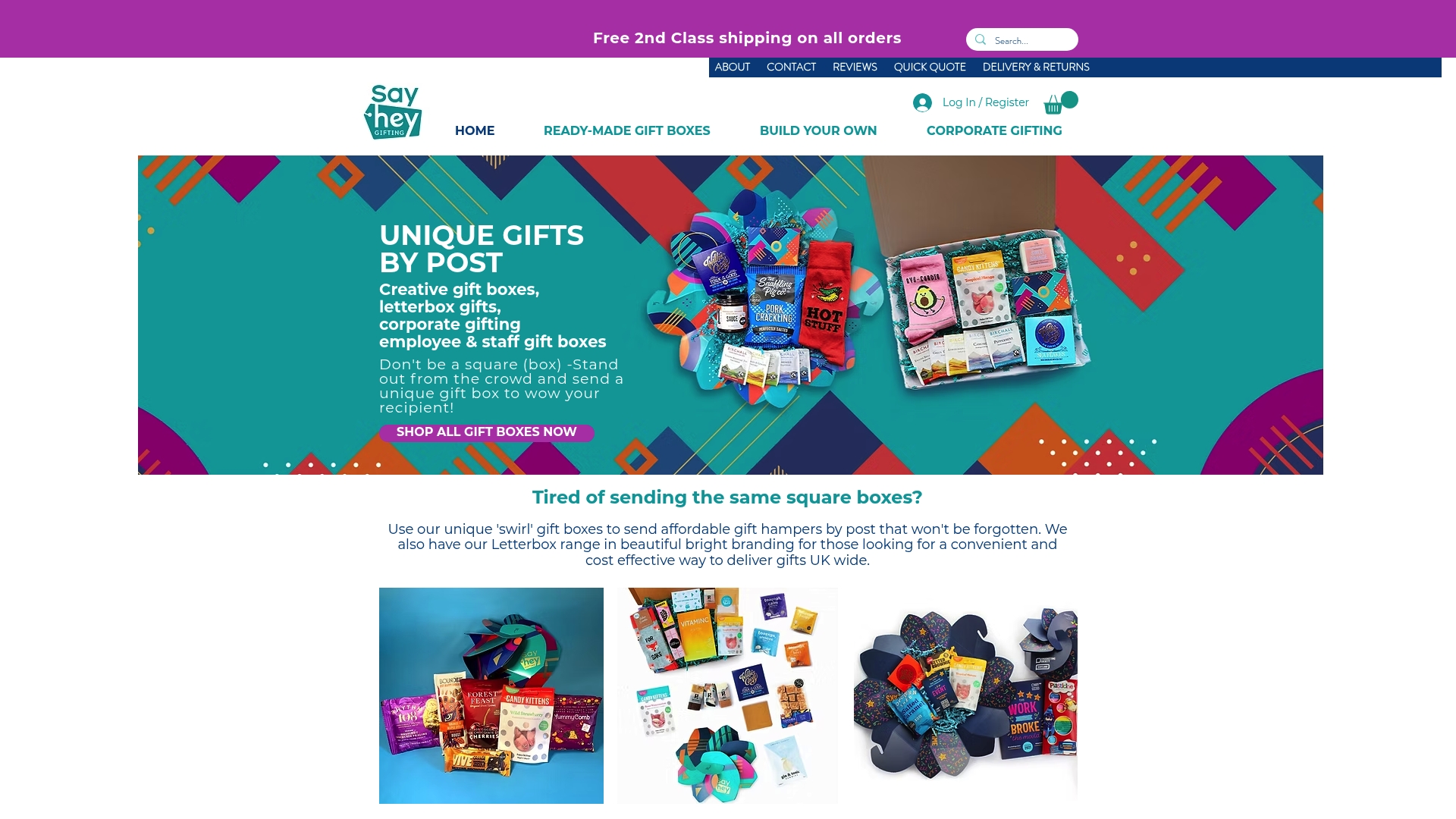
For mid-tier accounts and employee recognition, the employee gift box range covers most of what a tiered programme needs out of the box. For wide-list sends, prospect follow-ups, or remote teams, the build-your-own gift box option lets you keep costs controlled while still giving each recipient a genuinely personalised parcel rather than a generic freebie. If your top-tier accounts need something bespoke, it is possible to discuss custom hamper options and request a quote for a pilot run.
Sources
The frameworks and figures referenced throughout this article draw on current practitioner guidance and industry reporting on B2B gifting performance.
FAQ
What are some good ideas for corporate gifting?
Match the idea to the tier: bespoke hampers or experiences for top clients, curated boxes or useful branded items for mid-tier accounts and staff, and letterbox gifts or digital vouchers for wide-list sends where volume matters more than a single premium item.
What is a gifting strategy?
A gifting strategy is a structured, measurable programme that ties gift type, timing, and budget to recipient value and business goals, rather than a one-off holiday gesture with no tracked outcome.
Is corporate gifting profitable?
It can be, when it’s tiered and measured properly. Programmes that track renewal, expansion and influenced pipeline rather than just delivery numbers are far more likely to show a positive return.
What are the latest trends in corporate gifting?
The dominant shift in 2026 is towards smarter, CRM-integrated sending rather than higher volume, alongside growing recipient expectations around sustainable packaging and verified sourcing credentials in the gifts themselves.
Recommended

Comments