
Employee birthday gift ideas for UK HR teams
Updated: Aug 10

The ten best employee birthday gift ideas for UK workplaces are: a curated gift hamper, a personalised letterbox gift, a retailer gift voucher, a desk plant, a gourmet food and drink box, an experience voucher, a wellness gift set, a charity donation in their name, a personalised mug or notebook, and a team celebration lunch. Every one of these can be gifted tax-free under HMRC’s trivial benefits exemption, provided the gift costs £50 or less (including VAT), is non-cash, is not performance-related, is not contractual, and is not part of a salary sacrifice arrangement.
The HMRC trivial benefits rule in one line: gifts under £50 (including VAT) that meet all five conditions are exempt from income tax, employee National Insurance, and employer Class 1A National Insurance, with no P11D reporting required.
Ready-to-use ideas at a glance:
Curated gift hamper or gift box
Personalised letterbox gift
Retailer gift voucher (store-specific, not cashable)
Desk plant or succulent
Gourmet food and drink box
Experience voucher (spa, cookery class, cinema)
Wellness gift set (bath, aromatherapy, self-care)
Charity donation in the employee’s name
Personalised mug, notebook, or stationery set
Team celebration lunch (under £50 per head)
For a ready-made or build-your-own gift box that fits neatly within the £50 threshold, Sayheygifting is the simplest programme starter for UK HR teams.
Table of Contents
The best employee birthday gift ideas by category
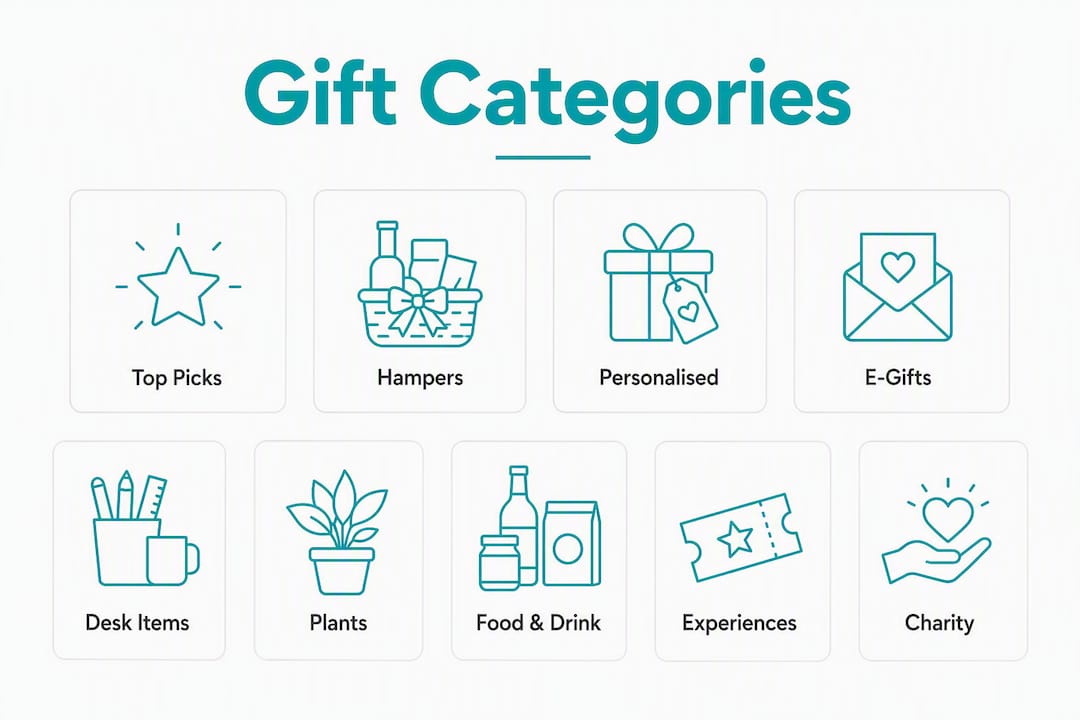
Choosing the right gift becomes much easier when you think in categories rather than individual items. Each category below suits a different budget, team culture, and working arrangement, so you can match the gift to the person rather than defaulting to the same box every time.
Hampers and gift boxes
A curated hamper or gift box is the most versatile option in any birthday gifting programme. It works for in-office, hybrid, and remote staff alike, and the presentation does a lot of the emotional heavy lifting before anyone opens a single item. Letterbox gifts and curated kits are particularly popular for remote and hybrid teams because they simplify logistics without sacrificing the unboxing moment. Budget: cheap (under twenty-five pounds for a letterbox treat box), mid (a moderate amount for a curated hamper within typical trivial-benefits limits), premium (above trivial-benefits limits, thus potentially taxable).
Personalised gifts
A monogrammed notebook, an engraved pen set, or a personalised mug with the employee’s name or a short message turns a modest item into something genuinely memorable. The personalisation does not need to be elaborate; a name and a short note of appreciation is enough to make the difference. Mid-range budget covers most personalised desk items comfortably within typical trivial-benefits limits. Suits in-office and hybrid staff best, though personalised letterbox gifts travel well too.

E-gifts and retailer vouchers
A gift card for a specific retailer — John Lewis, Amazon, a local restaurant, or a bookshop — is quick to arrange and easy to scale. The key tax point: the voucher must be store-specific and not exchangeable for cash. HMRC accepts retailer-specific vouchers as trivial benefits when they meet all five conditions. Budget: flexible starting from a low amount suitable for trivial benefits. Ideal for remote employees where physical delivery is impractical.
Desk and office items
Premium drinkware, a quality notebook, a cable organiser, or a small desk plant all sit comfortably in the £15–£45 range and are genuinely useful day-to-day. Mid-range budgets at moderate levels are widely cited as the sweet spot for everyday birthday gifting, with desk items fitting well within trivial-benefits limits. Best for in-office and hybrid employees.
Plants and flowers
A small potted plant, a succulent, or a seasonal arrangement is one of the most warmly received gifts in any workplace. HMRC’s own guidance cites flowers as a classic trivial-benefit example, and they suit almost any recipient. Budget: cheap to mid levels suitable for trivial benefits. Plants work well in-office; flowers can be delivered to a home address for remote staff.
Food and drink
A box of artisan chocolates, a bottle of wine or champagne, a gourmet snack selection, or a speciality coffee kit all make thoughtful, crowd-pleasing birthday gifts. Keep the total cost of the package within £50 including VAT and you are firmly within trivial-benefits territory. For dietary inclusivity, look at vegan hamper options or build a custom box around known preferences.

Experience-based gifts
Cinema tickets, a spa voucher, a cookery class, or a wine-tasting experience create lasting memories rather than another item on a shelf. These work especially well for longer-serving employees or those who are harder to buy for. Budget: mid level suitable for trivial benefits; above typical trivial-benefits limits, the gift may become taxable. Suits remote and in-office staff equally.
Charity donations
Donating to a cause the employee cares about, in their name, is a genuinely thoughtful option for staff who prefer not to receive physical gifts. It signals that you have listened, not just ticked a box. Budget: any amount, though a modest donation paired with a personalised card tends to land better than a large anonymous sum.
Practical picks by relationship and context
Not every birthday situation is the same. A new joiner’s first birthday at the company calls for something different from a ten-year milestone, and a manager gifting a direct report requires more care than a team whip-round. Here is a numbered guide to the most common scenarios.
New joiner’s first birthday at the company. Keep it warm but not overwhelming. A personalised letterbox gift with a handwritten note from their manager is ideal. Avoid anything too personal at this stage; a quality food or drink box, or a retailer voucher, strikes the right tone. Ensure delivery is confirmed to their home address if they are remote.
Long-serving staff milestone. A milestone birthday (five years, ten years) warrants something more considered. A premium curated hamper, an experience voucher, or a group gift funded by the team all signal genuine appreciation. Consider pairing the gift with a short team message or a card signed by colleagues.
Manager to direct report. Keep the gift professional and proportionate. A mid-range gift box, a personalised item, or a retailer voucher works well. Avoid anything that could be read as overly personal or that singles out one team member in a way that feels unequal. Consistency across the team matters here.
Cross-team or whole-company celebration. For larger teams, a standardised gift (the same curated box for everyone) is fairer and easier to manage. Remote-friendly gifts require logistics planning to preserve the moment of recognition, so schedule delivery for the morning of the employee’s birthday where possible.
Group gift from the team. A team whip-round for a premium hamper, a shared experience voucher, or a personalised keepsake works well when the team has a close relationship with the individual. Designate one person to coordinate, set a clear per-person contribution, and agree on the gift in advance to avoid last-minute scrambles.
Dos and don’ts across all scenarios:
Do keep a central record of each employee’s birthday and preferred gift categories.
Do insert a personalised note with every gift, even a brief one.
Don’t give cash or cash-equivalent vouchers — they are taxable and feel impersonal.
Don’t single out one employee with a significantly more expensive gift than colleagues receive, as this can create perceptions of favouritism.
Don’t store personal gift preferences without a clear data privacy policy in place (more on this below).
How to make a gift feel thoughtful: personalisation and presentation
The difference between a gift that creates a genuine moment of appreciation and one that feels like an admin task is almost always in the details. Personalisation does not require a large budget or a lengthy process; it requires attention.
The simplest and most effective personalisation is a handwritten note. A short, specific message from the employee’s manager, referencing something real about the person or their contribution, adds more perceived value than doubling the gift budget. A template to adapt:
Beyond the note, low-friction personalisation options include: capturing a few preference questions during onboarding (favourite snack, dietary requirements, preferred experience type), monogramming a notebook or mug, or choosing a gift box theme that reflects a known interest. None of these require significant effort, but each signals that the gift was chosen rather than dispatched.
On presentation: timing matters as much as wrapping. A gift that arrives on the employee’s actual birthday, rather than a week later, carries far more weight. For in-office staff, a small desk decoration or a team card alongside the gift adds to the moment. For remote employees, premium packaging and a scheduled delivery recreate the unboxing experience at home.
Pro Tip: Avoid over-branding the gift. A tasteful logo on the box or tissue paper is a nice touch; a gift that looks more like a marketing pack than a personal gesture undermines the warmth you are trying to convey.
Keep branding subtle, the note genuine, and the timing precise. Those three things, more than the gift itself, determine how the moment lands.
Budget brackets and HMRC trivial-benefits rules
Getting the tax treatment right is not complicated, but it does require attention to a few specific conditions. Here is what UK HR teams need to know.
The trivial-benefits exemption
Under HMRC’s trivial-benefits rules, a gift is exempt from income tax, employee National Insurance, and employer Class 1A National Insurance when all five conditions are met:
The gift costs £50 or less, including VAT.
It is not cash and not a cash-equivalent voucher.
It is not performance-related (a birthday gift qualifies; a reward for hitting a sales target does not).
It is not contractual (a gift promised in an employment contract becomes taxable pay).
It is not provided through salary sacrifice.
If even one condition fails, the entire gift becomes taxable, not just the amount above £50. Go a penny over and the whole value is reportable.
The £300 director cap
Directors of close companies face an annual cap of £300 on trivial benefits in total. Regular employees have no annual cap, provided each individual gift meets the five conditions above. Employers should keep records of trivial benefits for six years, even though qualifying gifts do not require P11D filing.
Example calculations
Hamper plus a bottle of wine: a curated hamper at £38 and a bottle of wine at £10 combined cost £48 including VAT. As a single package, the total is assessed together. At £48, it sits within the £50 threshold and qualifies, provided the other conditions are met.
Team celebration lunch: a birthday lunch for five people costing £220 in total is assessed at £44 per head. HMRC calculates per-head cost for group benefits, so each person’s share is what matters, not the total bill.
Repeated gift voucher top-ups: HMRC treats cumulative top-ups to the same voucher as a single benefit. A £30 top-up followed by a £25 top-up to the same card totals £55 and fails the threshold. Use separate, distinct gifts rather than topping up a single card.
Trivial-benefits threshold: £50 per gift (including VAT), with no annual cap for regular employees and a £300 annual cap for directors of close companies. Source: HMRC EIM21864 and GOV.UK trivial benefits guidance.
Tax treatment at a glance
Gift type | Likely tax treatment |
Curated gift hamper (≤£50 incl. VAT) | Tax-free if all five conditions met |
Retailer gift voucher (store-specific, ≤£50) | Tax-free if all five conditions met |
Cash or cashable voucher (any amount) | Always taxable |
Performance reward gift | Always taxable |
Birthday flowers or chocolates (≤£50) | Tax-free if all five conditions met |
Gift over £50 (any type) | Whole amount taxable |
Contractual gift (promised in contract) | Always taxable |
How to scale a consistent birthday-gifting programme
A birthday gifting programme only delivers its full value when it runs reliably. A gift that arrives two weeks late, or not at all, does more damage to morale than no gift would have done. The solution is a simple, repeatable process built around a few key steps.
Build a central birthday calendar. Collect employee birthdays during onboarding and store them in your HRIS or a shared HR calendar. Set automated reminders at 30 days and 7 days before each birthday so procurement has enough lead time.
Capture preferences early. Add two or three preference questions to your onboarding form: dietary requirements, preferred gift category (food, experience, wellness, voucher), and any strong dislikes. Store this data under a clear data privacy policy and limit access to the HR team.
Set approval thresholds. Define a standard per-employee budget (for example, £30–£45 for everyday birthdays, up to £50 for milestone years). Anything above the standard threshold requires line-manager approval. This prevents both underspend and accidental overspend past the trivial-benefits limit.
Establish a bulk ordering window. Batch orders monthly rather than individually. A single monthly order for all birthdays in the coming four weeks reduces admin, qualifies for bulk pricing, and gives suppliers enough lead time for personalisation.
Track delivery confirmation. For remote employees especially, confirm delivery rather than assuming it. A simple spreadsheet or your supplier’s order-tracking tool is sufficient. Log delivery date, recipient, and gift value for your six-year HMRC record.
Review every six months. Check participation rates, delivery success, and any employee feedback. A brief pulse question (“Did you receive your birthday gift on time?”) takes thirty seconds to answer and gives you the data to improve the programme.
Sustainability and dietary filtering are procurement requirements, not optional extras. Ensure your supplier can filter by dietary need (vegan, gluten-free, nut-free) and offers eco-friendly packaging as standard. Both factors matter for inclusivity and align with most corporate values statements.
How to choose the right gift supplier
The supplier you choose determines whether your gifting programme runs smoothly or becomes a source of HR headaches. These are the questions worth asking before you commit.
Questions to ask any supplier:
What are your standard lead times for single and bulk orders?
What is the minimum order quantity for customised or branded gifts?
Can you handle personalisation (notes, monogramming, branded packaging) at scale?
Do you ship to home addresses for remote employees across the UK?
What is your returns policy for damaged or incorrect items?
How do you handle dietary requirements and sustainability in your product range?
Is your preference data handling GDPR-compliant?
Red flags to watch for: opaque or variable pricing with no clear per-unit cost, no B2B billing or purchase order process, inconsistent packaging quality across orders, and no clear policy on how employee preference data is stored and used.
Trust signals that matter: clear B2B case studies or references, a demonstrable bulk-order fulfilment process, business invoicing, sample kits available before committing to a large order, and eco-friendly packaging as a standard option rather than an upsell.
Sayheygifting meets these criteria as a UK-based supplier offering employee gift boxes and staff gifts for single and bulk orders, with customisation, eco-friendly packaging, and letterbox options for remote teams. It is a practical starting point for HR teams building or scaling a birthday gifting programme.
Key takeaways
The most effective employee birthday gifting programmes combine a clear HMRC-compliant budget (under £50 per gift), a personalised touch, and a repeatable process that HR can run without significant overhead.
Point | Details |
HMRC trivial-benefits limit | Gifts of £50 or less (including VAT), non-cash and non-performance-related, are tax-free with no P11D required. |
Director cap | Directors of close companies have a £300 annual cap on trivial benefits; regular employees have no annual cap. |
Budget sweet spot | Mid-range gifts delivering strong perceived value for everyday birthdays without exceeding typical tax-free limits. |
Scaling essentials | A central birthday calendar, automated reminders, and monthly bulk ordering prevent last-minute, generic choices. |
Sayheygifting | Offers ready-made and build-your-own employee gift boxes for single and bulk orders, with eco-friendly packaging and UK-wide delivery. |
Why consistent gifting matters more than the gift itself
There is a tendency in HR circles to treat birthday gifting as a nice-to-have, something to sort out when there is budget and bandwidth. That framing misses the point. The value of a birthday gift is not in the item; it is in the signal it sends: that the organisation noticed, that someone took a moment, and that the employee is seen as a person rather than a headcount.
What I find genuinely underestimated is the power of predictability. A modest gift that arrives reliably every year builds more trust than an occasional generous gesture that employees cannot count on. Consistency tells people that recognition is part of the culture, not a function of whoever happens to remember. That distinction matters for retention, particularly among mid-tenure employees who are past the honeymoon period but not yet deeply rooted.
The practical implication is that the process matters as much as the product. A well-run programme with a £35 gift box and a genuine handwritten note will outperform a disorganised one with a £75 hamper that arrives late and unsigned. Build the system first, then refine the gift.
Sayheygifting makes birthday gifting simple for HR teams
Birthday gifting at scale does not have to mean hours of research, multiple suppliers, or a spreadsheet that nobody updates. Sayheygifting offers a single, straightforward source for employee gift boxes that are ready to order, easy to customise, and designed to arrive beautifully presented.
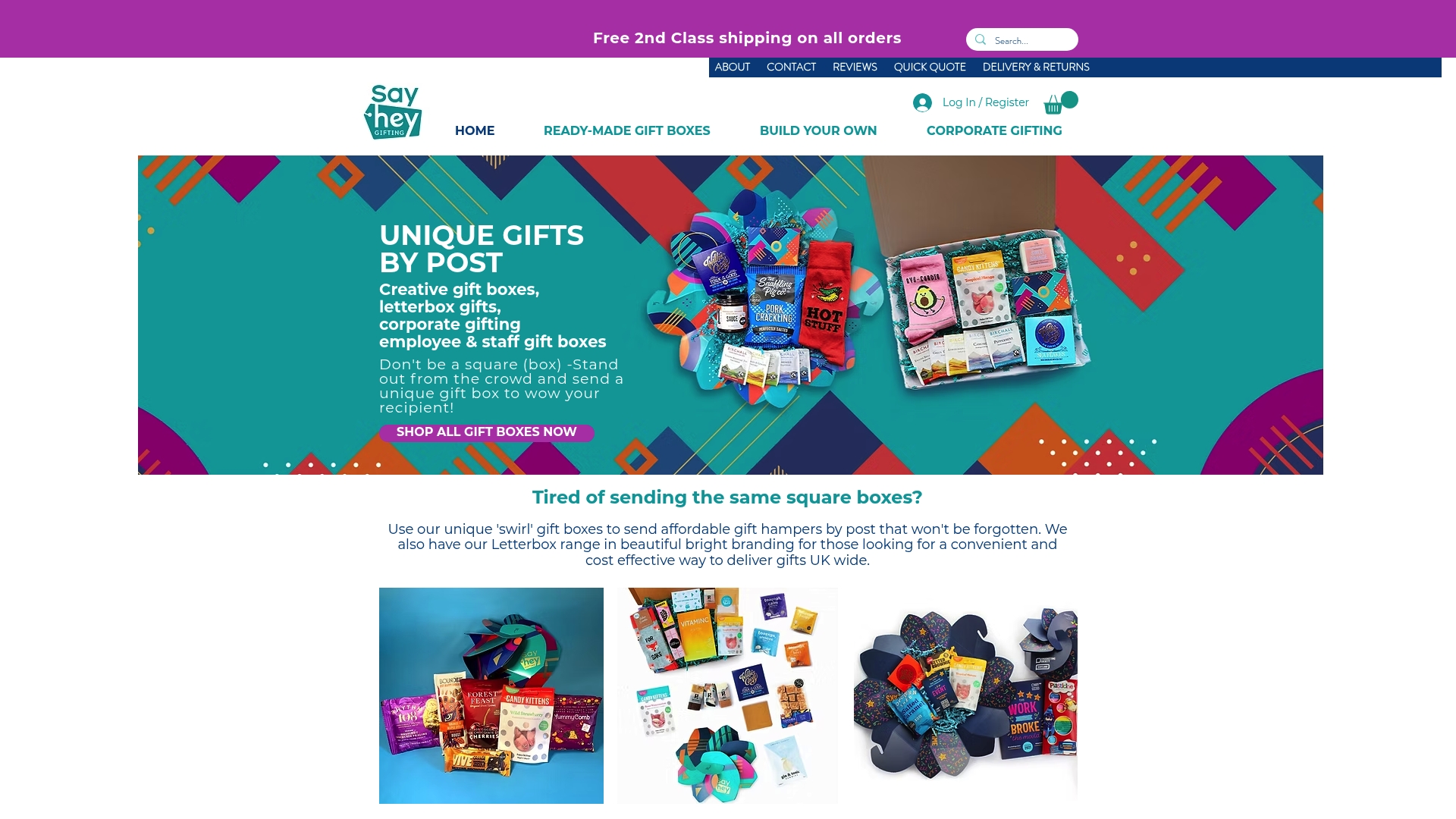
Whether you need a ready-made box for a single employee or a bulk order of personalised hampers for a team of fifty, Sayheygifting handles the fulfilment, the eco-friendly packaging, and the personalisation in one place. Options include curated ready-made boxes, a build-your-own gift box for tailored selections, letterbox gifts for remote employees, and vegan hamper options for dietary inclusivity. Every box is designed to feel like a genuine gesture, not a corporate dispatch.
Browse the full range and place your first order at sayheygifting.com/employee-gifts.
Useful sources and further reading
HMRC Employment Income Manual EIM21864 — The primary HMRC guidance on the trivial-benefits exemption: conditions, scope, and what qualifies.
HMRC EIM21865 — Particular benefits and calculations — How HMRC calculates per-head cost for group benefits such as team meals.
GOV.UK: Tax on trivial benefits — Plain-language GOV.UK summary including the £300 director cap and record-keeping guidance.
PKF Francis Clark: Understanding HMRC trivial benefits — Practical advisory overview of what qualifies, with worked examples including birthday gifts and seasonal hampers.
Sayheygifting: Employee gifting ideas — Inspiration and practical guidance for building a repeatable employee gifting programme.
Sayheygifting: Ultimate guide to employee gifting — Broader gifting occasions and ideas for HR teams managing recognition across the year.
This article provides general information about UK tax rules and gifting practices. It is not professional tax or legal advice. Confirm the current rules with HMRC or a qualified adviser for your specific circumstances.
Recommended
https://www.sayheygifting.com/post/what-is-a-staff-appreciation-gift-your-2026-guide
https://www.sayheygifting.com/post/employee-gift-box-ideas-top-picks-for-2026
https://www.sayheygifting.com/post/kinshipgift-com-alternatives-6
https://www.sayheygifting.com/post/examples-of-curated-gift-experiences-for-2026
https://www.sayheygifting.com/post/unwrap-joy-top-gift-hampers-for-men-in-2026
https://www.sayheygifting.com/post/what-is-a-curated-gift-box-a-complete-guide
Comments