
Stay HMRC Compliant: Non Food Corporate Gifts for UK Buyers Under £50

Choose thoughtful non-food items grouped by use-case (desk, wellbeing, tech, keepsakes), check HMRC’s £50 trivial-benefits rule before you place an order, and pick a fulfilment route that matches your team’s size and location. We work with corporate buyers on exactly this brief every week, and the right combination keeps gifting warm, compliant and genuinely well received.
TL;DR:
Most non-food gifts should be under £50 including VAT to qualify as tax-free trivial benefits for UK employees, with multi-item gifts counting as a total cost.
Practical gift options include desk accessories, wellbeing sets, tech gadgets, personalized keepsakes, and sustainable items, all chosen to be useful and frequently used.
Letterbox-friendly gifts and small curated sets offer affordable, compliant solutions for remote teams, with proper planning around lead times and delivery options.
Suppliers should provide clear lead times, sample options, and proper fulfillment policies; vague responses and added fees are red flags to watch for.
Personalization and sustainability add value but should match the occasion and recipient, with branding suitable for scale and visibility, and packaging aligned with delivery needs.
Table of Contents
Non-food gift categories that actually get used
The best non-food gifts share one quality: they earn a place on someone’s desk, in their bag or in their daily routine, rather than sitting in a drawer. Grouping ideas by use-case makes shortlisting faster than scrolling endless generic lists.
Desk and office accessories work well because hybrid teams still spend part of the week at a shared workstation, and home workers appreciate items that make their setup feel considered.
A personalised desk organiser or notebook with the recipient’s initials.
A quality pen set, ideally presented in a small branded box rather than loose.
A ceramic mug paired with a coaster for people working from a kitchen table.
A laptop stand or monitor riser for hybrid staff who split time between office and home.
A reusable water bottle in a colour or finish that feels personal rather than corporate.
Wellbeing and pamper sets sidestep food entirely while still landing as a genuine gesture of care, something that matters more than ever when teams are stretched.
A hand cream and lip balm duo in a compact tin.
A weighted eye mask or small heat pillow for desk-break relaxation.
A set of bath soaks or shower steamers for an evening unwind.
A scented candle, chosen in a neutral fragrance that suits most recipients.
A simple journal paired with a calming playlist card, useful for staff who value quiet reflection.
Our wellness gifts range leans into exactly this territory, built around rest and recognition rather than consumables.
Tech accessories sit in a sweet spot: genuinely useful, easy to brand, and welcome across almost any role or seniority. A portable phone charger, a set of braided charging cables, a webcam cover and microphone bundle for remote calls, or a compact Bluetooth speaker all tend to outperform novelty tech that gets used once and forgotten. The trick is restraint: pick one or two solid items rather than a gadget-stuffed box that feels like clutter.
Personal keepsakes and personalised stationery carry weight precisely because they cannot be bought for yourself without a moment’s thought. A engraved keyring, a photo print in a simple frame, a leather-bound notebook with a name or initials, or a handwritten card alongside a small trinket all create something that outlasts the gifting occasion itself. These work particularly well for long-service recognition or farewell gifts, where sentiment matters more than spend.
Sustainable gifts are increasingly expected rather than a nice extra. A bamboo cutlery set, a seed-paper card that grows into wildflowers, a reusable beeswax wrap set, or packaging made from recycled or FSC-certified card all signal that a business has thought beyond the gift itself to its footprint. Sustainability can be integrated into gifting without needing a separate line item on the brief, by choosing environmentally friendly packaging options.
Experience-style and letterbox-friendly ideas suit remote and distributed teams especially well, since they avoid the cost and complexity of courier delivery to a dozen different postcodes. A letterbox-sized gift, something slim enough to post through a standard UK letterbox without needing a signature, solves the practical problem of reaching people at home. Our letterbox gifts range and our build your own gift box tool both let you keep this format while still personalising the contents.

For smaller gestures that still feel complete, an affordable letterbox gift under £10 can cover a thank-you or a small milestone without needing sign-off from several layers of approval.
What does each budget tier actually buy you?
Spend per person is usually the first decision procurement asks about, and it shapes everything downstream, from which items are realistic to how much lead time you need to build and brand them properly.
Under £10: a single, well-chosen item such as a branded pen, a small notebook or a letterbox-friendly treat that still feels deliberate rather than an afterthought.
£10 to £30: a small curated set, perhaps a mug and coaster pair, a modest wellbeing kit, or a build-your-own selection of two or three items.
£30 to £50: a fuller gift box with several coordinated items, room for a branded card or custom message, and still comfortably inside the HMRC trivial-benefits threshold.
£50 and above: a premium hamper or fully branded box, suited to client gifting, senior recognition or milestone anniversaries, though this tier sits outside trivial-benefits treatment and needs separate tax consideration.
Per-unit pricing tends to fall as order volume rises, since fixed costs such as design setup and branding plates get spread across more units. A minimum order quantity (MOQ) is common for fully custom branding, while build-your-own or ready-made boxes usually have far more flexible minimums, sometimes as low as a single unit.
Lead times vary by item type. Printed or engraved items generally need the longest run-up, often several weeks once design proofs and approvals are factored in, while ready-made boxes and letterbox gifts can usually move from order to despatch far faster. Rushing a custom order close to a deadline is one of the most common ways budgets creep, since expedited production and courier fees both add cost.
Before approval, a short checklist helps:
Confirm the per-person spend limit, including VAT, that procurement has signed off.
Check whether branding or personalisation is required and, if so, the MOQ it triggers.
Build in at least two weeks beyond the supplier’s quoted lead time for approvals and delivery.
HMRC trivial benefits: what UK buyers need to get right
The rule that shapes most non-food gifting decisions for UK employers is HMRC’s trivial benefits exemption, and it is worth understanding properly rather than working from memory.
Under Gov, a gift to an employee is tax-free when the cost to the employer does not exceed £50 including VAT per gift, provided it is not cash or a cash voucher, is not part of a contractual entitlement, and is not given as a reward for performance. Directors of close companies face an additional yearly cap of £300 across all trivial benefits received.
The exemption applies where the cost of providing the benefit does not exceed £50, it is not cash or a cash voucher, the employee is not entitled to it as part of a contractual arrangement, and it is not provided in recognition of particular services performed.
£50 is the figure to anchor every gifting decision against, and it includes VAT, not just the pre-tax cost of the items, a detail that catches out buyers who price gifts ex-VAT during planning.
Multi-item gifts count in full towards that limit. HMRC’s internal manual confirms that where a gift contains several items, their combined cost is what matters, not each item individually. Repeated top-ups or a pattern of connected gifts across the year can also undo the exemption if HMRC views them as effectively one larger benefit split up to dodge the limit. A letterbox gift that starts at £35 but gains a bottle of something and a card can easily tip over £50 once postage and VAT are added, so it is worth checking the all-in cost before confirming an order, not after.

Gift vouchers need particular care too. Non-cash vouchers, those redeemable for goods rather than exchangeable for cash, can qualify for the exemption, but cash vouchers cannot, regardless of value. For a fuller breakdown of how these rules apply across a full gifting calendar, our trivial benefits gifts guide covers the detail, and our quick guide to trivial benefits rules is built for procurement teams preparing an approval pack.
How to choose a supplier: questions to ask and red flags to avoid
Selecting a non-food corporate gift is as much about the supplier relationship as the item itself. Consider recipient fit first: would this feel right for a graduate scheme joiner and for a retiring director, or does it only suit one end of that range? Presentation, durability and how well customisation is executed all affect whether the gift reads as considered or as an afterthought bought in bulk.
Before committing to an order, work through a short set of supplier questions:
What are your standard lead times, and how much longer does custom branding add?
Is there a minimum order quantity, and does it apply per design or per overall order?
Can you send a physical sample before we confirm the full run?
What is your returns and damages policy if items arrive faulty?
Do you offer direct-to-recipient fulfilment, or is delivery only to a single bulk address?
Will we receive a proper VAT invoice for procurement records?
How do you handle recipient address data, and is it deleted after dispatch?
What happens if we need to adjust quantities close to the deadline?
Red flags tend to cluster around vagueness: suppliers who will not confirm lead times in writing, who add fees only once you are deep into the order process, or who push cash gift vouchers as a simple alternative without mentioning that cash vouchers fall outside the trivial benefits exemption. Any of these should prompt a second look before you commit a budget line.
Pro Tip: Ask for photos of a genuinely finished, packed box rather than product shots of the individual items, since presentation is where many suppliers quietly cut corners.
A written fulfilment SLA, covering dispatch windows, what happens if stock runs low, and who is liable for lost parcels, is worth requesting even for a modest order. It takes a supplier ten minutes to provide and saves considerable frustration later.
Personalised, branded or sustainable: matching the gift to the recipient
Personalisation, branding and sustainability all add value, but not to the same recipients or occasions, so it helps to be deliberate about which lever you pull.
Personalisation (initials, a handwritten note, a bespoke message) lifts perceived value considerably for small groups, senior staff or long-service milestones, though it usually adds a few days to lead time and a modest per-unit cost.
Branded merchandise suits events, client retention gifts and onboarding, where visibility matters, but a logo stamped across every surface tends to read as corporate rather than considerate. A single, well-placed mark usually lands better than head-to-toe branding.
Sustainability credentials, such as FSC-certified packaging, recycled materials or plastic-free fillers, are worth asking suppliers to confirm in writing, since this detail is easy to present internally when procurement or sustainability teams review the spend.
The trade-off is straightforward: personalisation costs more and takes longer but feels most individual, branding is efficient at scale but risks feeling generic, and sustainable choices often cost comparably to standard options once you shop around.
Matching the treatment to the recipient group, rather than applying one approach across the whole gifting list, is usually what separates a gift people remember from one they forget by lunchtime.
Packaging, fulfilment and delivery: getting the logistics right
Letterbox-sized gifts avoid signature-required delivery and courier failures, which matters when you are posting to dozens of home addresses rather than one office. Boxed hampers look more generous but carry higher postage costs and a greater risk of damage in transit, so the format should match both the budget and the delivery footprint.
Confirm whether items fit a standard letterbox before committing to that format, since a few millimetres of extra depth forces a doorstep delivery instead.
Keep presentation premium with tissue paper, a branded sticker or a simple ribbon rather than inflating spend with extra items that push the total over £50.
Decide early between bulk delivery to one office and direct-to-recipient dispatch, since the latter needs a secure way to collect home addresses without breaching data protection obligations.
Build ordering around peak season: Christmas and year-end gifting windows fill supplier calendars fast, so confirm sample and final order deadlines well ahead of December.
Pro Tip: Request your sample at least six weeks before a peak-season deadline, since that is typically when supplier capacity tightens fastest.
Why our experience shapes this guide
We have spent years building corporate gifting for HR teams and office managers who need something that feels personal without becoming a logistics headache. A swirl box design, custom branding options, and a family-run approach support thoughtful, compliant, non-food gifting that actually gets used.
Craig, who leads our content on practical gifting guidance, writes from this same day-to-day experience of fulfilling corporate orders, handling sample requests and talking buyers through the HMRC rules that shape their decisions. For deeper reading on the gift ideas that pair well with specific occasions, our thoughtful employee gift box ideas guide and our corporate gift delivery guide both expand on the categories and fulfilment choices covered here.
Our editorial take on non-food corporate gifting
Most gifting advice treats the £50 trivial-benefits limit as a footnote. We think it should be the starting point of the brief, not an afterthought checked once the order is placed. Buyers who design around the limit from the outset, rather than retrofitting compliance onto a gift they have already fallen for, end up with better outcomes and fewer awkward tax conversations in March.
The conventional advice also overstates the value of novelty. A gadget nobody asked for rarely beats a well-made mug, a decent notebook or a genuinely useful desk accessory, and the CIPD’s own reward guidance treats non-financial recognition as most effective when it is consistent and well matched to the recipient, not when it is the most expensive thing on the list.
If we had to prioritise one thing: decide your per-person ceiling and your fulfilment route before you browse a single product, because both constraints narrow the field faster than any amount of scrolling.
— Craig
Ready to order? Here is how to get a quote
Whether you need a handful of letterbox gifts for a remote team or a fully branded hamper run for valued clients, we can scope it with you directly. Our corporate gifting service covers custom branding, design, product sourcing and fulfilment, so you are not juggling separate suppliers for each part of the job. Build your own selection through our build your own gift box tool if you want control over contents and spend, or ask us about sample orders before you commit to a full run.
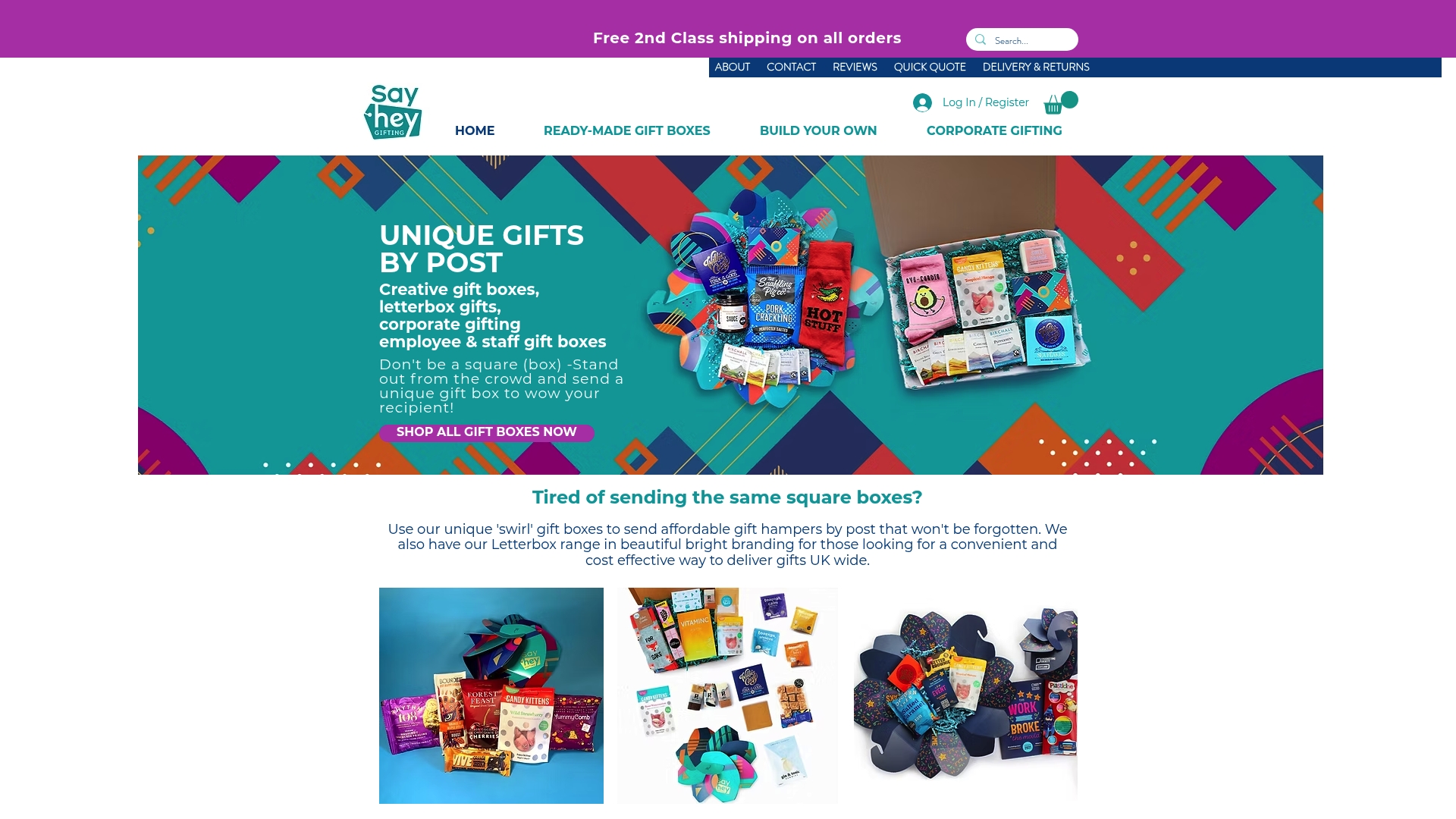
Request a quote for a custom-branded box through our corporate gifting page.
Order a sample before approving a bulk run, so your team can check quality and presentation first-hand.
Ask about letterbox fulfilment if your team is remote or hybrid, since it removes the need for signature-based delivery.
If you would rather explore complementary ways to recognise staff alongside gifting, Jeeves Vending’s employee recognition ideas cover tangible retail rewards that work well alongside a seasonal or milestone gift box.
FAQ
What are some unconventional corporate gifts?
Unconventional options include a seed-paper card that grows into wildflowers, a weighted eye mask for desk breaks, or a build-your-own box where recipients choose their own contents from a curated shortlist. These work well precisely because they break from the usual mug-and-pen formula while still staying genuinely useful.
What are some good non-food gifts?
Strong non-food choices include personalised stationery, tech accessories such as portable chargers, wellbeing sets like hand cream and bath soaks, and sustainable items such as bamboo cutlery or recycled-material notebooks. The best picks match the recipient’s role and work setup rather than defaulting to generic merchandise.
What are some good small corporate gift items?
For smaller budgets, a branded pen, a compact notebook, or an affordable letterbox gift under £10 all deliver a thoughtful gesture without a large spend. These items also tend to fit letterbox delivery, which keeps postage costs down for distributed teams.
What is the 7-gift rule?
There is no official HMRC or CIPD framework known as the “7-gift rule”; definitions of it vary across informal sources and it is not a recognised tax or reward standard. The rule that does matter for UK employers is HMRC’s trivial benefits exemption, which caps tax-free gifts at £50 including VAT per occasion.
Does Say Hey Gifting offer custom branding on corporate gift boxes?
Yes, we include custom branding with company logos at no extra charge across our corporate gifting range, alongside our exclusive swirl box design. We also offer build-your-own options for buyers who want to control contents and spend precisely.
Sources
Recommended
Comments