
Healthy office treats: low-mess ideas for your desk
Updated: Aug 10
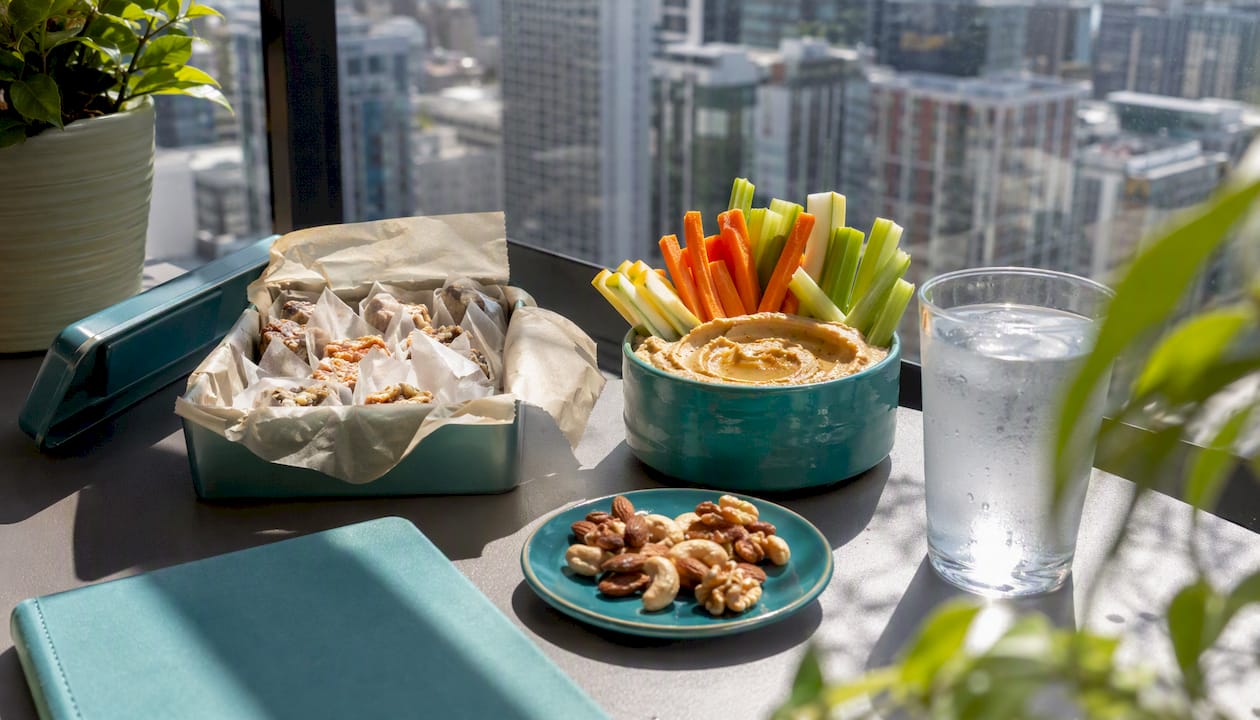
The best healthy office treats combine protein, fibre, and healthy fats, arrive in single-serve portions, and travel without creating a mess. If you need something to grab this afternoon, pick up a pot of Arla Skyr, a packet of Nakd bars, or a small bag of roasted chickpeas — all widely available in UK supermarkets and ready to eat at your desk.
Three desk-friendly starters to stock right now:
Arla Skyr pot (single-serve, high-protein, fridge-required)
Nakd bar (shelf-stable, whole-food ingredients, no added sugar)
Pre-shelled edamame snack pot (portable, protein-rich, low-mess)
Table of Contents
Desk-friendly healthy treats grouped by situation
Not every snack suits every setting. A hummus pot is perfect if your office has a fridge; a Nakd bar is better when you are commuting. Grouping nutritious snacks for work by situation makes choosing much faster.
Shelf-stable desk drawer options
These travel without refrigeration and keep for days or weeks, making them ideal for stocking your drawer on a Monday morning.
Air-popped popcorn — a whole-grain, fibre-rich option when lightly seasoned; avoid heavily buttered or sugary varieties
Sweet but healthy options
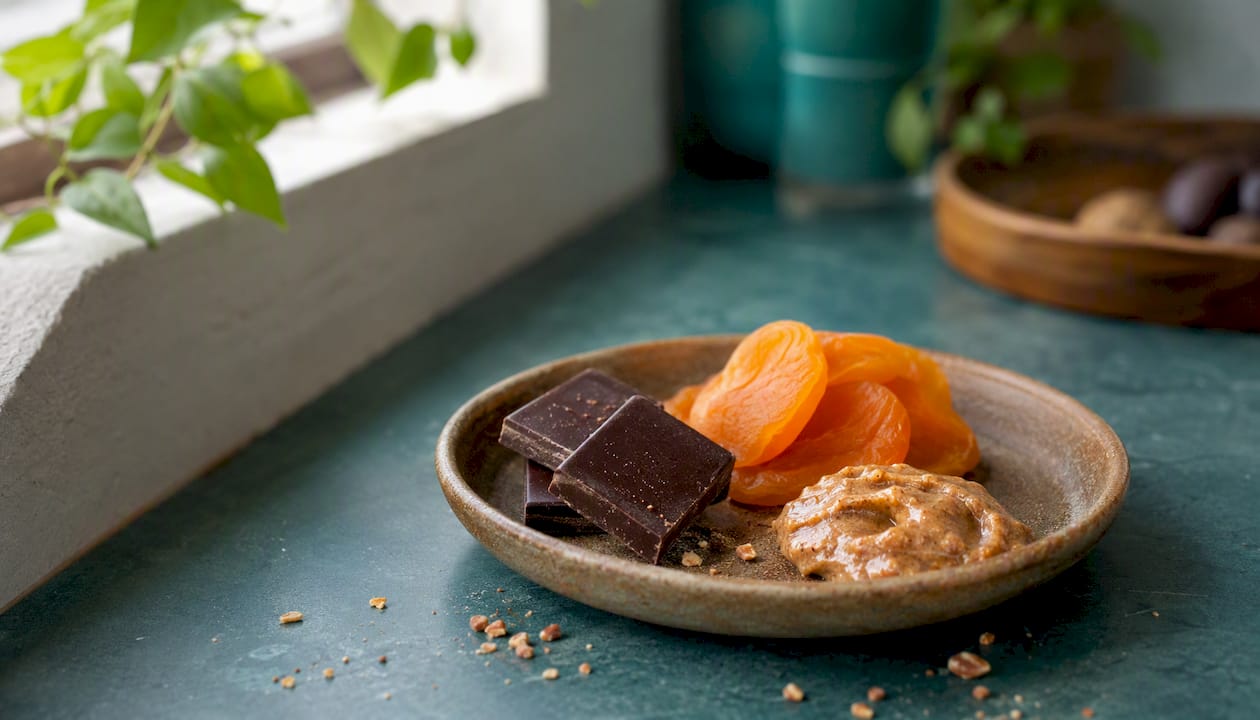
Dark chocolate with 70% cocoa or above offers antioxidant compounds and noticeably less sugar than milk chocolate, which food chemistry research supports as a meaningful difference. Two or three squares alongside a small handful of dried fruit and a teaspoon of almond butter gives you sweetness, fibre, and healthy fats in one tidy portion. BAM Chocolate’s better-for-you confectionery range is worth exploring if you want a ready-made option that fits this profile.
Three make-ahead recipes that travel well
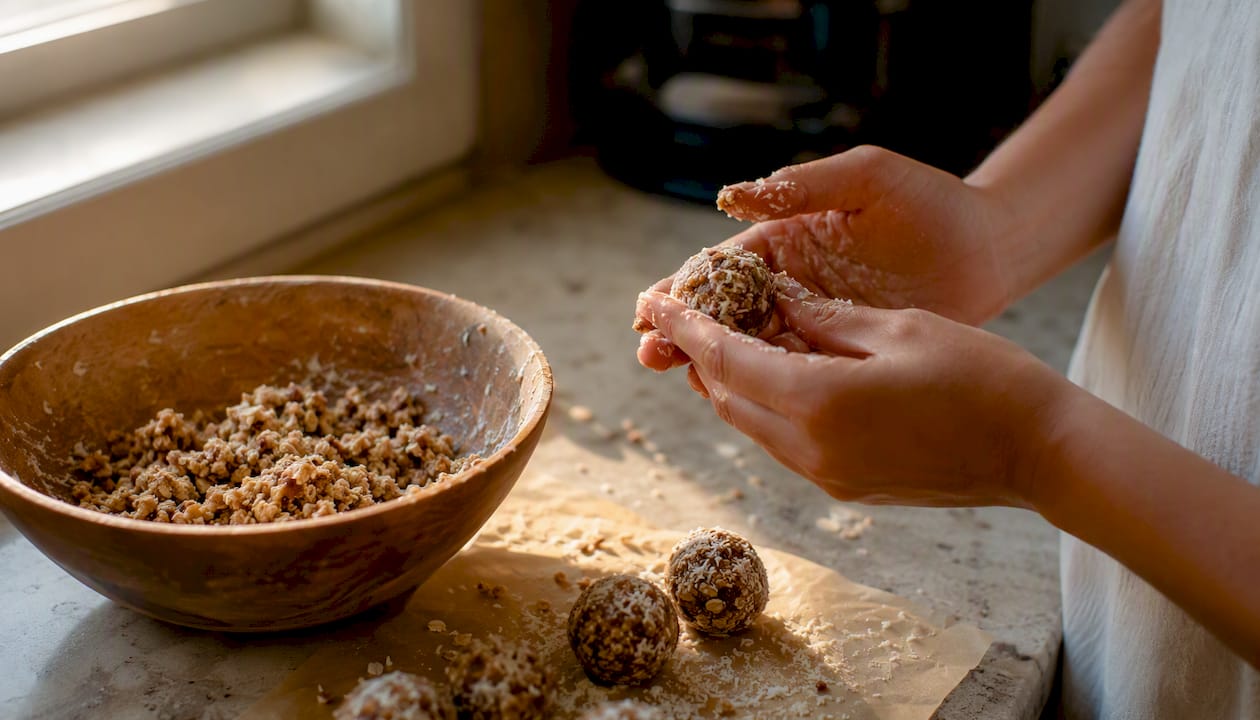
Recipe 1: Protein energy bites
Prep time: 15 minutes | Cook time: None | Yield: 16–18 balls | Vegan, gluten-free option
Ingredients:
200g rolled oats (use certified gluten-free oats if needed)
4 tbsp peanut butter or almond butter
3 tbsp honey or maple syrup (maple syrup keeps it vegan)
2 tbsp chia seeds
2 tbsp dark chocolate chips (70%+)
1 tsp vanilla extract
Method:
Mix all ingredients in a large bowl until fully combined.
Refrigerate the mixture for 30 minutes so it firms up.
Roll into balls roughly the size of a large marble (about 25g each).
Store in an airtight container.
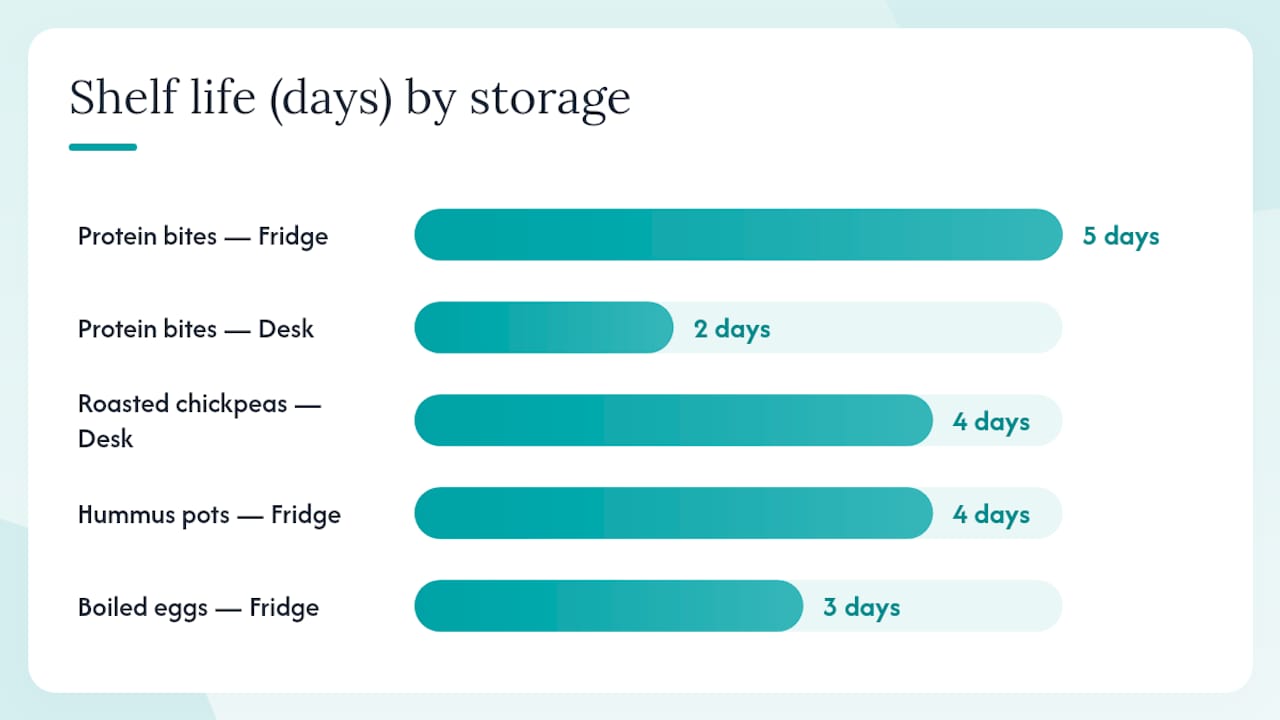
Storage: Up to 5 days in the fridge; 2 days at room temperature in a cool office.
Transport: Pack in a small lidded container lined with baking paper to prevent sticking.
Pro Tip: Chill your hands under cold water before rolling — the mixture sticks far less and you get neater balls in half the time.
Recipe 2: Spiced roasted chickpeas
Prep time: 5 minutes | Cook time: 30–35 minutes | Yield: 4 portions | Vegan, gluten-free, nut-free
Ingredients:
2 × 400g tins of chickpeas, drained and rinsed
1 tbsp olive oil
1 tsp smoked paprika
½ tsp cumin
½ tsp garlic powder
Salt to taste
Method:
Preheat oven to 200°C (fan 180°C).
Pat chickpeas completely dry with kitchen paper — this is the key to crunch.
Toss with olive oil and spices, spread in a single layer on a baking tray.
Roast for 30–35 minutes, shaking the tray halfway through.
Cool fully before portioning.
Storage: Up to 4 days in an airtight container at room temperature; they soften in the fridge, so keep them on the desk.
Pro Tip: Try za’atar or curry powder instead of paprika for a completely different flavour — one batch, two varieties, zero extra effort.
Recipe 3: Simple hummus pots with vegetable sticks
Prep time: 10 minutes | Cook time: None | Yield: 4 portions | Vegan, gluten-free, nut-free
Ingredients:
1 × 400g tin of chickpeas, drained (reserve the liquid)
2 tbsp tahini
1 lemon, juiced
1 garlic clove
2 tbsp olive oil
Salt to taste
Vegetable sticks: carrot, cucumber, celery
Method:
Blend chickpeas, tahini, lemon juice, garlic, and olive oil until smooth.
Add a tablespoon of the reserved chickpea liquid if the texture is too thick.
Divide into four small jars or pots (roughly 80g each).
Pack vegetable sticks separately in a sealed bag to keep them crisp.
Storage: Hummus keeps for 4 days in the fridge; vegetable sticks stay fresh for 24 hours once cut.
Pro Tip: A pinch of smoked paprika and a drizzle of olive oil on top transforms a plain hummus pot into something that genuinely sparks conversation at the shared table.
How to choose snacks that keep your energy steady
The single most useful rule when selecting healthy workplace treats is to combine protein, fibre, and healthy fats in every portion. Protein slows digestion, fibre adds bulk and feeds gut bacteria, and healthy fats extend satiety. Together, they prevent the sharp blood sugar rise and crash that follows a sugary biscuit.
Portion size matters as much as ingredients. A sensible office snack sits in the recommended portion range of 150–250 kcal — enough to bridge a gap without replacing a meal. Nuts are a good example of where portion control is non-trivial: a a moderate almond serving is a balanced snack; a 100g handful is closer to a second lunch.
Quick decision flow
Ask three questions before choosing: Is there a fridge available? Will this be shared? Does it need to be low-mess? Match your answer to the relevant category above and you will rarely go wrong.
Statistic callout: Registered dietitians recommend snacks in the snacks in the range recommended for satiating between meals as the sweet spot between satisfying hunger and avoiding excess calorie intake between meals.
Practical prep, packing, and storage for office snacks
Good intentions fall apart at 8 AM when you are rushing out the door. A simple packing routine on Sunday evening removes that friction entirely.
Packing checklist for commuting with snacks:
Small airtight containers (glass or BPA-free plastic) for hummus, yoghurt, and energy bites
A reusable ice pack or insulated lunch bag for fridge-required items
Pre-portioned zip-lock or reusable silicone bags for nuts, chickpeas, and dried fruit
Labels with your name and any allergen notes for shared kitchen storage
A small cutlery set if your snack requires it (yoghurt, hummus)
Transport tips: Stack jars upright and place them in the centre of your bag, surrounded by softer items. Hummus pots with lids sealed with a small piece of cling film travel without leaking. Energy bites packed in a single layer rather than piled up arrive intact.
Shared kitchen etiquette: Label everything with your name and the date prepared. For meeting snacks, use individually wrapped or single-serve portions so colleagues can see the allergen information clearly.
Item | Fridge shelf life | Desk drawer shelf life |
Protein energy bites | 5 days | 2 days |
Roasted chickpeas | Not recommended | 4 days |
Hummus pots | 4 days | Not suitable |
Boiled eggs | 3 days | Not suitable |
Nakd bars | Not required | Up to best-before date |
Arla Skyr | Up to best-before date | Not suitable |
Air-popped popcorn | Not required | 3 days (sealed) |
Your weekly snack shopping list and 5-day plan
A focused shopping list and a simple rotation mean you spend under an hour on Sunday and eat well all week.
Shopping checklist
Shelf-stable:
Rolled oats
Mixed nuts (almonds, cashews, walnuts)
Nakd bars (multipack)
Tinned chickpeas (×4)
Rice cakes
Dark chocolate (70%+)
Dried fruit (apricots, raisins)
Air-popped popcorn (plain)
Fridge: 9. Arla Skyr pots (×5) 10. Hummus (or ingredients to make your own) 11. Eggs (×6) 12. Carrot, cucumber, celery
Condiments and spices: 13. Peanut or almond butter 14. Tahini 15. Smoked paprika, cumin, garlic powder 16. Olive oil, honey or maple syrup
5-day snack rotation
Day | Morning snack | Afternoon snack | Prep needed |
Monday | Arla Skyr pot + handful of berries | Nakd bar | None (buy ready) |
Tuesday | Boiled eggs (×2) + rice cake | Roasted chickpeas (30g) | Boil eggs Sunday |
Wednesday | Protein energy bite (×2) | Hummus pot + vegetable sticks | Make Sunday |
Thursday | Arla Skyr pot | Air-popped popcorn (small bag) | None |
Friday | Protein energy bite (×2) | Dark chocolate (2 squares) + dried apricots | None |
Sunday prep schedule: Make one batch of energy bites (15 minutes), roast two tins of chickpeas (35 minutes), and prepare four hummus pots (10 minutes). That covers the whole week. Midweek, boil a fresh batch of eggs on Wednesday evening to replace Tuesday’s supply.
Bulk-buying note: Buying nuts, oats, and dried fruit in larger quantities reduces cost per portion, but only if you portion them immediately into single-serve bags. Large communal containers tend to encourage unintentional overeating, so the extra step of pre-portioning pays off both financially and nutritionally.
Why protein, fibre, and healthy fats work together
Clinical nutrition research shows that protein and fibre each independently slow gastric emptying and reduce appetite hormones, and that combining them produces a more sustained satiety effect than either alone. Healthy fats extend that effect further by slowing the absorption of carbohydrates.
A practical formula: pair a protein source (Skyr, boiled egg, nut butter) with a fibre source (oats, chickpeas, vegetable sticks) and add a small amount of healthy fat (olive oil, nuts, dark chocolate). That combination, kept within the 150–250 kcal snack range recommended by nutrition clinicians, supports steady energy across a working day without the mid-afternoon slump.
One often-overlooked point: hunger at the desk is sometimes thirst. Drinking a glass of water and waiting five minutes before reaching for a snack is a simple check worth building into your routine.
Key takeaways
The most effective healthy office treats combine protein, fibre, and healthy fats in a sensible calorie portion, travel without mess, and accommodate common dietary needs with clear labelling.
Point | Details |
Use the protein + fibre + fat rule | Every snack should include all three to sustain energy and avoid mid-afternoon dips. |
Keep portions to 150–250 kcal | Pre-portion nuts, bites, and dips at home; large communal containers lead to overeating. |
Label allergens for shared settings | Mark vegan, nut-free, and gluten-free options clearly so every colleague can participate. |
Prep on Sunday, refresh midweek | Energy bites, roasted chickpeas, and hummus take under an hour and cover a full week. |
Sayheygifting for ready-made options | Curated employee wellness gift boxes offer a ready-made, dietary-labelled alternative to DIY snack prep. |
A note on snacks, care, and the bigger picture
There is a tendency to treat office snacking as a purely logistical problem — calories in, energy out, mess minimised. That framing misses something worth saying plainly: the snacks you choose for yourself or your team are a small but genuine act of care. A well-stocked desk drawer or a thoughtfully assembled snack box tells colleagues that their well-being has been considered, not just their productivity.
The conventional wisdom on healthy workplace treats tends to focus on individual discipline — portion control, reading labels, resisting the biscuit tin. That is useful, but it puts the entire burden on the individual. The more effective approach is to make the healthy option the easy option: pre-portioned, clearly labelled, and already on the desk or in the fridge before hunger strikes. Planning removes willpower from the equation entirely.
Inclusivity deserves more attention than it usually gets in snack guides. A team where one person cannot eat nuts, another avoids dairy, and a third is vegan needs more than a single bowl of mixed nuts on the table. Offering two or three clearly labelled alternatives is not complicated — it just requires thinking about it in advance. The wellness gift box design principles Sayheygifting applies to its curated boxes — dietary labelling, sustainable packaging, individual portions — translate directly to how you might approach a weekly snack plan for a mixed team.
The snack is small. The message it sends is not.
Sayheygifting’s healthy employee gift boxes
When you want the benefits of thoughtful, healthy office treats without the Sunday prep, Sayheygifting’s curated employee gift boxes offer a genuinely considered alternative. Each box is designed with well-being in mind: individually portioned, clearly labelled for dietary requirements, and packed in environmentally friendly packaging that arrives ready to share.
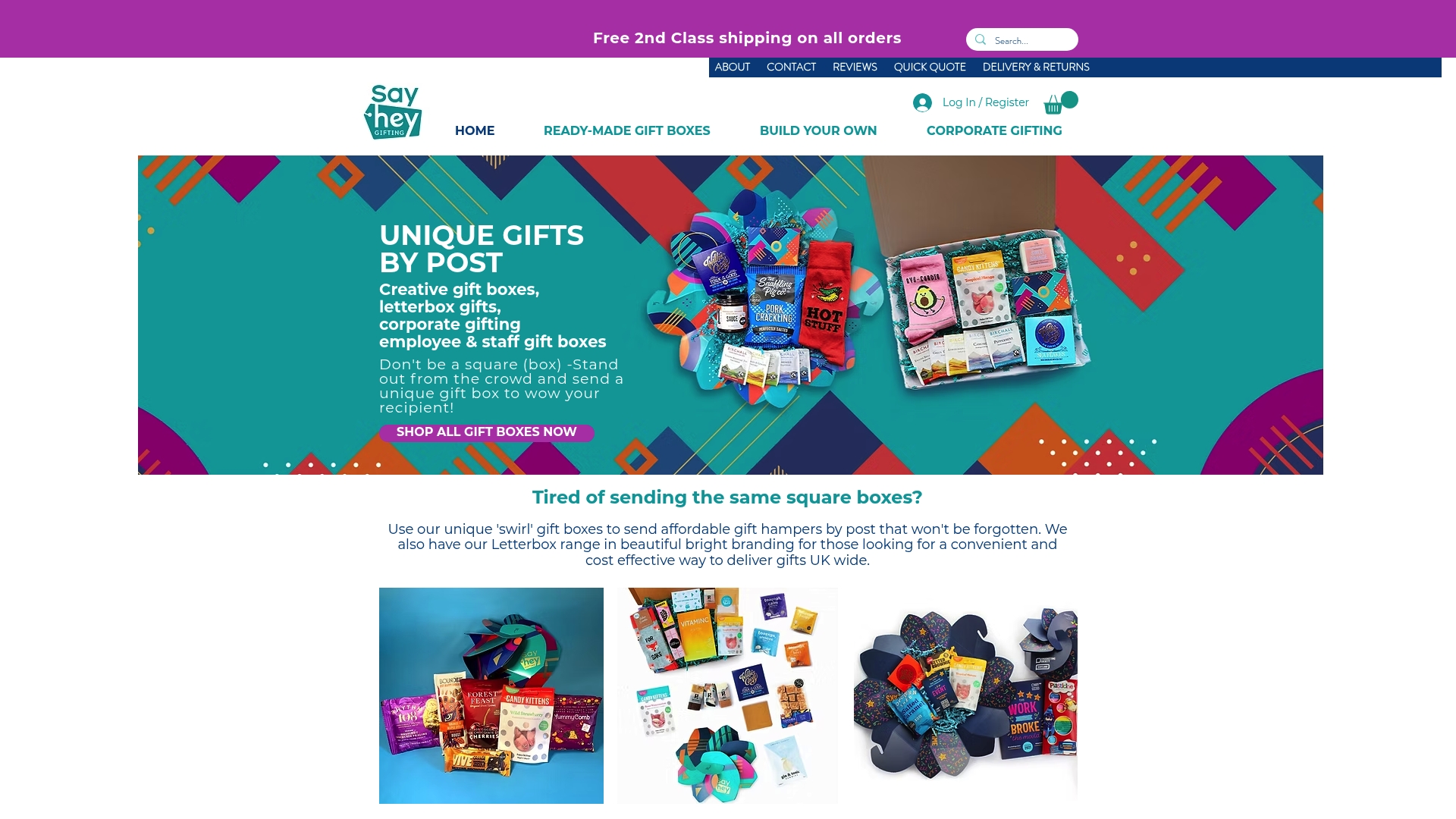
For HR teams and managers, the practical advantages are real. Dietary labelling means no awkward allergen conversations before a meeting. Single-serve packing means no mess and no communal container to manage. And because Sayheygifting handles bulk orders with customisation options, you can send a personalised wellness box to every member of a remote or hybrid team without coordinating a single shopping trip.
The wellness gift box for employees is a strong starting point for teams new to healthy gifting. For those who want full control over contents and branding, the build-your-own gift box option lets you select snacks, dietary preferences, and packaging to match your team’s needs exactly. Allow a few working days for bulk or branded orders. Browse the full range and place your order at sayheygifting.com.
Useful sources and further reading
30 healthy snack ideas from registered dietitians | AICR
Healthy snacks for work | Healthline
7 Healthy Snacks for Work to Keep at Your Desk | Scripps Health
Healthy office snacks: best foods to stop cravings at work | Living360
Health benefits of popcorn | Cleveland Clinic
Office snacks: what to order to keep your team fueled | DoorDash for Business
PMC3257681 | NCBI
Recommended
Top Gifts for Employees: Show Your Appreciation with Thoughtful Ideas
https://www.sayheygifting.com/post/why-staff-gifts-boost-morale-a-guide-for-hr-leaders
https://www.sayheygifting.com/post/gifts-for-corporate-events-your-2026-planning-guide
https://www.sayheygifting.com/post/staff-gift-delivery-options-explained-for-hr-teams
https://www.sayheygifting.com/post/gifting-staff-at-christmas-your-complete-hr-guide
Comments