
Plan 8–10 weeks: UK Earth Day corporate gifts with verified impact
The best Earth Day corporate gifts share one quality: they create an outcome you can point to, not just a logo you’ll forget. Planting and restoration gifts, seed and grow-at-home kits, and reusable items that replace something disposable consistently outperform novelty merchandise because they either produce a measurable result or earn their place in someone’s daily routine. The details on ordering, packaging, and choosing the right supplier follow below.
TL;DR:
Tree-planting gifts should include verification methods and impact reporting to demonstrate real environmental outcomes.
Reusable items like drinkware, cutlery, or desk accessories perform better when paired with a nature-connection element, boosting engagement.
Sustainable packaging must use certified, recycled, or compostable materials, with messaging backed by evidence to prevent greenwashing.
Digital or donation-based gifts are ideal for large or distributed teams due to ease of scaling and absence of shipping delays.
Working with a single supplier who manages sourcing, packaging, and reporting simplifies logistics and enhances campaign credibility.
Table of Contents
How to choose Earth Day corporate gifts (criteria that matter)
Idea catalogue: Earth Day gift ideas with implementation notes
Bulk ordering, lead times and budgeting for Earth Day campaigns
Sustainable packaging and on-brand messaging for Earth Day gifts
Legal and compliance considerations for sustainable corporate gifting
Communication strategies to maximise the message and perception of Earth Day gifts
What counts as an Earth Day corporate gift, exactly?
Before the shortlist, it’s worth separating genuine Earth Day gifting from the seasonal merchandise dump that floods procurement inboxes every March. Earth Day itself is a global observance built around environmental awareness and action, which is exactly why the gifts tied to it get scrutinised harder than a standard staff thank-you. A branded tote with a leaf motif printed on it isn’t a sustainability gesture. A gift that funds verified planting, replaces single-use plastic in someone’s routine, or comes with evidence of its own impact is a different proposition entirely, and it’s the one your recipients and your CSR report will both remember.
Quick shortlist: practical Earth Day gift types to consider
If you need to brief a supplier or narrow options for a board sign-off, start here. These categories cover the range from near-zero-cost digital gestures to premium client hampers.
Digital tree-planting gifts — a certificate or personalised landing page confirming a tree planted on the recipient’s behalf; scales effortlessly across distributed teams and costs from around £2 to £8 per person.
Physical tree-planting kits — a small potted sapling or planting card with a QR code to impact tracking; typically £5 to £15, strongest for client gifts where a tangible object matters.
Seed and grow-at-home kits — herb, wildflower, or vegetable seed sets in recyclable packaging; usually £4 to £12 and popular for whole-office distribution.
Reusable drinkware — insulated bottles or cups made from recycled steel or bamboo fibre; £8 to £20 depending on branding method.
Recycled notebooks and stationery — FSC-certified or post-consumer waste paper products; £3 to £10, a safe, low-fuss option for large headcounts.
Upcycled desk items — organisers or coasters made from reclaimed materials; £6 to £18, good for a premium feel without excess cost.
Reusable cutlery and food-storage sets — bamboo or stainless steel travel sets that displace daily single-use plastic; £10 to £25.
Donation-linked gifts — a card confirming a contribution to a verified environmental cause via a framework such as One Percent for the Planet; flexible pricing from £5 upwards.
Local and seasonal food hampers — coffee, tea, or snack bundles sourced sustainably; £15 to £40, best suited to client gifting rather than mass staff rollouts.
Digital gifts, vouchers, and tree-planting certificates scale best for hybrid or international teams, since there’s nothing to ship and no customs delay to manage.
How to choose Earth Day corporate gifts (criteria that matter)
Most procurement teams default to price and appearance first. That’s backwards for Earth Day gifting, where the wrong choice can look worse than no gift at all. Run every shortlisted product through this sequence instead:
Environmental outcome versus material claim. Ask what actually happens because of the purchase. Does a tree get planted, tracked, and reported, or does the packaging just say “eco” with nothing behind it?
Certification checks. Look for FSC on paper and packaging, GRS on recycled textile or plastic content, GOTS on organic cotton, and Rainforest Alliance on coffee, cocoa, or tea. Each certifies a specific input or process, not the whole product’s footprint, so read the scope before quoting it in your own comms.
Lifecycle thinking. A gift that lasts years (a good bottle) beats one that’s technically recyclable but disposable in practice (a printed card).
Recipient usefulness. The most sustainable gift in the world fails if it sits in a drawer. Match the item to how the recipient actually works and lives.
Storytelling and personalisation. A named tree or a personalised impact card turns a transaction into something worth mentioning to a colleague.
Reporting capability. Can the supplier give you batch-level evidence for your own sustainability disclosures, not just a marketing PDF?
Supplier transparency on materials, origin, and recyclability is one of the clearest trust signals worth requesting before you sign a purchase order, and certified materials such as FSC, GRS, and GOTS each tell you something narrow and specific, not a blanket guarantee of sustainability.
Pro Tip: Ask any supplier claiming a “tree planted” gift to show you the verification method, not just a photo of a sapling. Standards from bodies like the Open Forest Protocol exist precisely so buyers can check planting claims against something more rigorous than a marketing page.
Red flags are usually easy to spot once you’re looking: vague language like “eco-friendly” with no certification attached, single-use plastic wrapping around a “sustainable” product, or a supplier who can’t answer a direct question about material origin.
Idea catalogue: Earth Day gift ideas with implementation notes
Planting and restoration gifts
Digital tree gifts work well as a company-wide gesture because there’s no fulfilment logistics involved. A managed planting programme, where a supplier tracks and reports on trees planted against your order, adds credibility for internal comms and external reporting alike. Package the digital version as a simple email or personalised card; physical versions do better in kraft card packaging with a QR code linking to a live impact page.
Seed and grow-at-home kits
These land particularly well with hybrid teams because they’re light, cheap to post, and give the recipient something to actually tend. Herb kits for kitchen windowsills perform better than ornamental flower kits in employee feedback, since usefulness beats novelty. Budget £4 to £12 per kit including compostable packaging.

Reusable daily items
Tumblers, cutlery sets, and tote bags replace something disposable in someone’s week, which is the whole point. The Conscious Impact research on engagement backs this up directly: campaign kits that pair a daily-use replacement item with a nature-connection element — a tumbler bundled with a seed kit, for instance — outperform single-item giveaways for employee engagement. That combination is worth building into your brief rather than treating as an either/or choice.
Upcycled and recycled deskware
Organisers, coasters, and notepads made from reclaimed wood or recycled card suit client gifting where you want a premium finish without straying from the sustainability message. Keep branding minimal (an engraved logo beats a printed one) and lean on FSC-certified card for any paper elements.
Local and seasonal food and coffee bundles
For client-facing gifts, a coffee or tea hamper sourced through a supplier with clear traceability adds a sensory, memorable element that a notebook can’t match. If coffee features in your brief, this sustainable coffee buying guide is a useful reference for sourcing questions around origin and packaging before you commit to a supplier.

Donation and experience gifts
Where a physical item doesn’t fit the budget or the recipient, a donation made through a recognised framework such as One Percent for the Planet gives you a verifiable, reportable outcome without any shipping involved. Pair it with a short card explaining exactly where the money goes.
Across every category, personalisation is what moves a gift from “nice” to “remembered.” A named tree, a batch-specific impact card, or a QR code linking to a live tracking page all cost little to add and significantly increase how much the gesture actually registers with the recipient.
Bulk ordering, lead times and budgeting for Earth Day campaigns
Earth Day falls on a fixed date every year, which means your supplier’s calendar fills up fast in the preceding weeks. Plan against this timeline rather than around it:
Eight to ten weeks out: confirm gift categories, request samples, and get certifications in writing from any supplier claiming FSC, GRS, or GOTS credentials.
Six weeks out: lock artwork and branding specifications; this is the stage most campaigns lose time at, because sign-off chains involve marketing, HR, and sometimes legal.
Four weeks out: confirm production run and get a firm delivery window, especially for multi-item kits that combine several suppliers’ components.
Two weeks out: build in a buffer for shipping delays, particularly for anything crossing borders or needing customs paperwork.
Digital gifts: can be finalised much closer to the date since there’s no physical production or shipping to schedule around.
Budget bands vary widely by category. Giveaway-tier gifts typically cost less. Mid-tier gifts such as reusable drinkware and branded desk items cost more. Premium client gifts like curated hampers and multi-item kits with personalised impact reporting can cost significantly more. Price moves most on packaging complexity, certification sourcing, and personalisation, not on the base product itself.
Working with a single supplier who can manage multiple gift components under one order simplifies the whole process and removes the risk of one missing element holding up an entire distribution.
Sustainable packaging and on-brand messaging for Earth Day gifts
Packaging is where a lot of otherwise good Earth Day gifting falls apart, because a genuinely sustainable product wrapped in glossy plastic film undercuts its own message instantly. Check for:
FSC-certified paper or card for boxes and inserts.
Recycled or kraft card with minimal, water-based inks.
Compostable or paper-based wraps instead of plastic film.
No unnecessary void-fill; right-sized boxes reduce both material and shipping emissions.
Messaging matters just as much as materials. Vague claims (“eco-friendly gift!”) invite scepticism. Specific ones don’t: “a tree planted in Kent as part of our 2026 sustainability pledge” gives the recipient something concrete to trust. Where possible, back the claim with evidence: a QR code linking to a personalised impact page, a batch-level impact card, or a certificate PDF your recipient’s own procurement or CSR team can file for reporting.
Pro Tip: Before sign-off, have both procurement and marketing check the packaging together. Procurement checks the certification paperwork exists; marketing checks the on-pack claim matches it exactly. Mismatches here are the single most common cause of greenwashing complaints.
Practical expertise from Sayheygifting
Buyers who combine a useful reusable item with a nature-connection element (a seed kit alongside a tumbler, for example) see noticeably better uptake than single-item giveaways. The most common brief error is choosing appearance over usefulness, then wondering why engagement is flat. For real-world combinations that work, these sustainable corporate gift examples and employee gifting ideas are worth a look before you finalise a brief.
Legal and compliance considerations for sustainable corporate gifting
Environmental claims on gifts fall under the same general advertising and consumer protection standards that govern any marketing claim in the UK, meaning a claim like “carbon neutral” or “sustainably sourced” needs to be substantiated, not just asserted. If your gift campaign includes any public-facing claim (a press release, a LinkedIn post, packaging copy), that claim needs to be accurate and evidenced at the point you make it, not retrofitted later.
Gifts to clients also sit inside your organisation’s own gifts and hospitality policy, and many public sector or regulated-industry clients have strict value thresholds on what they can accept. Check the recipient’s own policy before sending anything with a retail value above a nominal threshold, particularly for anything donation-linked where the “value” of the gift might be interpreted as the size of the underlying contribution.
If a gift is linked to a charitable donation, keep a paper trail: the receiving organisation’s registration status, the amount contributed, and confirmation the funds reached their stated purpose. This matters twice over: once for your own due diligence, and once if the gift ever needs to support a sustainability disclosure or an audit. Frameworks like One Percent for the Planet exist partly to give buyers this kind of accountable structure rather than an informal handshake donation.
None of this needs to slow a campaign down if it’s built into the supplier brief from the start rather than checked retrospectively.
Communication strategies to maximise the message and perception of Earth Day gifts
How you talk about the gift matters almost as much as the gift itself. A tree-planting card handed over with no context reads as a token gesture; the same card, framed with a sentence about why your organisation chose it and what happens next, reads as intent.
Internally, pair the gift with a short explanation of the environmental outcome it funds and, where possible, a personal touch, such as the recipient’s name on a planting certificate or a note on which project their contribution supports. Externally, if the campaign is part of a wider sustainability story, keep the claim specific and dated rather than generic: naming the year, the project, and the verification method builds more credibility than a broad statement about caring for the planet.
Timing the announcement around Earth Day itself, rather than weeks later, keeps the message anchored to something recipients already recognise and take seriously. A short follow-up, once impact data comes through (trees confirmed planted, funds confirmed received), closes the loop and turns a one-off gift into an ongoing story worth revisiting next year.
Why most Earth Day gifting advice misses the point
Most guidance on this topic treats certification as the finish line: get an FSC stamp on the packaging, tick the box, move on. That’s not wrong, but it’s incomplete. Certifications tell you about one input or process, not the whole product’s footprint, and treating them as a blanket guarantee is exactly the kind of overclaiming that invites scrutiny later.
What the evidence on engagement actually supports is less about the certificate and more about the outcome. A gift that funds a verified tree, replaces a disposable item in someone’s daily routine, or comes with evidence the recipient can check does more for genuine sustainability perception than a perfectly certified item with no story attached. The conventional advice underweights reporting almost entirely, treating it as a nice-to-have rather than the thing that separates a credible gift from a marketing exercise.
If you’re planning a UK-wide Earth Day campaign, prioritise the supplier relationship over the individual product spec. A single accountable partner who can manage sourcing, packaging, timelines, and reporting under one order saves more stress than chasing the cheapest per-unit price across three separate vendors.
— Craig
How Sayheygifting handles Earth Day gifting for you
Sayheygifting is a practical alternative to piecing a campaign together across multiple suppliers, especially when you need one point of accountability for sourcing, packaging, and delivery. Rather than chasing separate quotes for seed kits, drinkware, and packaging, you brief once and get a managed result: custom gift box options built around your Earth Day theme, ready-made ranges you can adapt quickly, and bulk fulfilment sized for anything from a small client list to a full staff rollout.
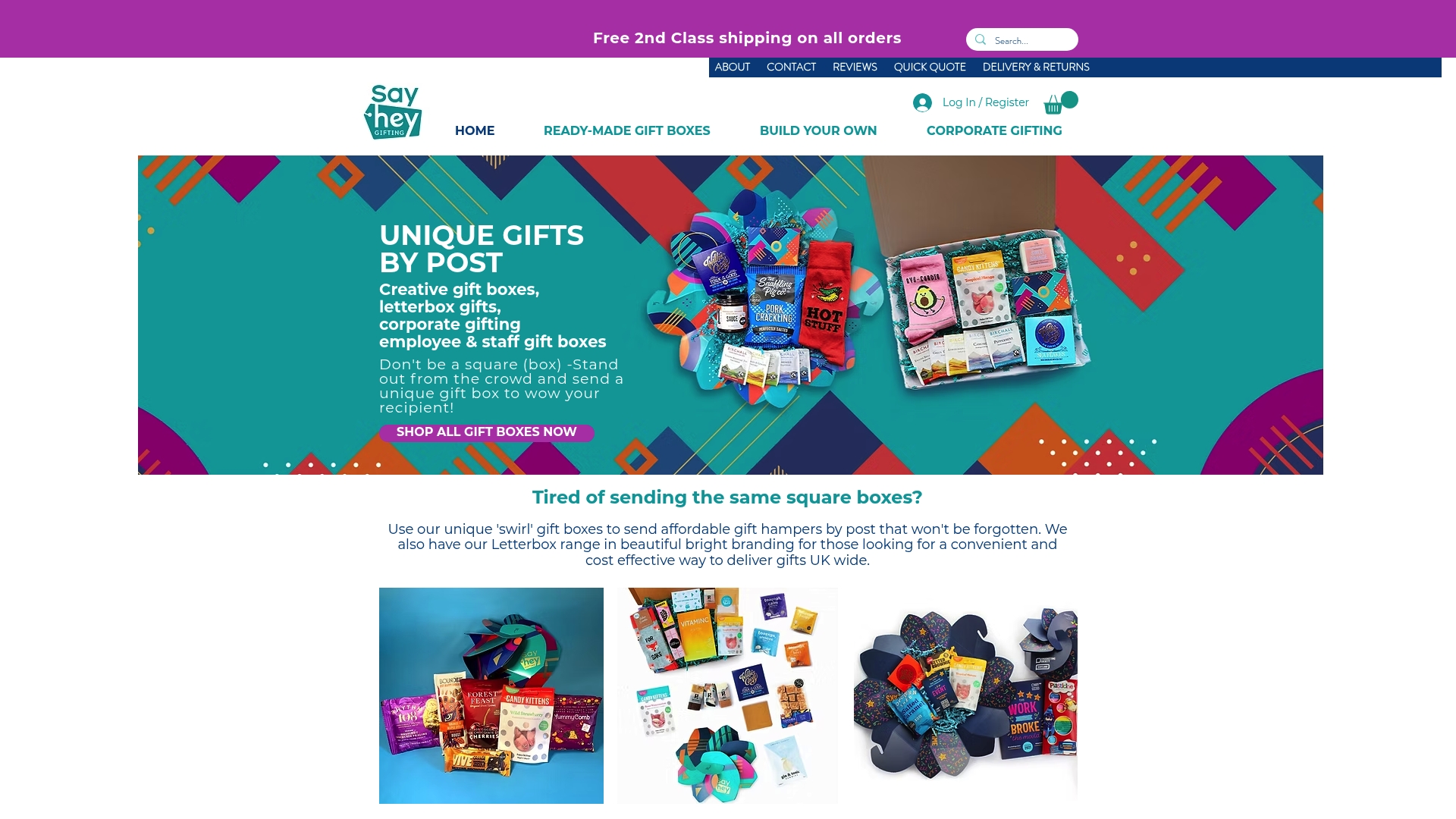
A single supplier also means a single reporting conversation. Rather than gathering evidence from three vendors, you get one point of contact who can confirm what went into each box and when it landed. For staff-wide Earth Day gifting, the employee gift boxes and staff gifts range covers everything from letterbox-friendly formats to fuller hampers, and the build your own gift box tool lets you assemble a bespoke Earth Day kit around the categories that matter most to your organisation. If client gifting is the priority instead, the corporate gifting page covers bulk ordering for that use case directly. Get in touch to request a quote or view sample sustainable boxes before you brief your campaign.
Sources
FAQ
What are some amazing corporate gifts for Earth Day?
Tree-planting gifts with trackable impact, seed kits, and reusable drinkware paired with a personalised impact card tend to stand out most, because each gives the recipient something to actually use or watch grow.
What are some useful corporate gift ideas that aren’t just novelty items?
Reusable cutlery sets, insulated bottles, and recycled notebooks work well because they replace something the recipient already buys or uses daily, rather than adding another item that sits unused.
What are some ideas for Earth Day giveaways at scale?
Digital tree-planting certificates and donation-linked cards scale easily across large or distributed teams, since there’s no shipping involved and cost per person can stay under £8.
What are some environmentally friendly corporate gifts with verifiable credentials?
Look for FSC-certified paper products, GRS-certified recycled textiles, and GOTS-certified organic cotton items, and ask the supplier for documentation rather than taking a packaging claim at face value. Sayheygifting’s ready-made gift boxes can be built around these certified materials on request.
Recommended
Comments