
Save Up to 70% on Postage: Letterbox Size Guide UK for Gifting Teams
Royal Mail’s Large Letter category tops out at 353 × 250 × 25 mm and 750 g, with the outer packaging measured in full. Design to a finished height of 23 mm rather than the full 25 mm, since tape, labels and slight crushing eat into that margin fast. Check both dimensions and weight before you commit to postage, because going even a millimetre over shifts the parcel into a pricier band.
TL;DR:
Ensuring the sealed gift box remains under 23 mm in finished height and 353 mm by 250 mm in external dimensions is crucial to stay within Royal Mail’s Large Letter category.
Internal footprint design should include a 3–5 mm headroom to accommodate tape, labels, and slight compression, reducing the risk of moving into the Small Parcel band.
Using a 25 mm slot gauge to test finishted packages before dispatch helps confirm the gift will pass through a typical UK letterbox without force.
Sending gifts as Large Letters can reduce postage costs by up to 70 percent compared to Small Parcels, especially for lighter items under 750 g.
Variations in letterbox sizes across regions and materials, plus weatherproofing or design features, can affect whether a gift actually fits without forcing, making proper measurement and testing essential.
Table of Contents
Letterbox size guide UK: what the Royal Mail rules actually mean for gift senders
How do you pack a premium-feeling gift within letterbox limits?
Does staying letterbox-friendly actually save money on postage?
Does weatherproofing affect whether a gift fits through a letterbox?
Sayhey Gifting’s view: why flat design beats bulky packaging every time
Letterbox size guide UK: what the Royal Mail rules actually mean for gift senders
Royal Mail defines the Large Letter category by exact external limits: 353 mm long, 250 mm wide, 25 mm thick, and no heavier than 750 g. That figure includes everything the postal worker handles, not just the product inside. Royal Mail’s own guidance is explicit that the whole outer package, tape and label included, counts towards the measurement.
This is where a lot of gifting businesses trip up. A box that measures 24 mm before it goes to the packing bench can easily hit 26 or 27 mm once it’s taped shut and a shipping label is stuck on top. Once that happens, the item drops out of Large Letter and into Small Parcel, which usually means a steeper postage cost and a different handling path through the sorting network. Royal Mail’s size and weight guidance for businesses reinforces the same rule: measure the finished, sealed article, not the empty box.
Before dispatch, four measurements deserve a proper check every time:
External length, confirmed at 353 mm or under.
External width, confirmed at 250 mm or under.
External thickness at the fattest point, ideally 23 mm or less.
Gross weight of the sealed, labelled item, under 750 g.
Skip any one of these and you risk a returned item, a surcharge, or a gift that simply won’t go through the door.
Which internal box sizes reliably pass a UK letterbox?
Getting the external maxima right starts with choosing the correct internal footprint, since board thickness, lids and any internal padding all add height. Trade guidance consistently points to an internal height of 18–22 mm as the safest working range, which leaves enough allowance for card thickness to bring the finished external height in under 25 mm.
For UK gift boxes, three standard footprints, often described in the trade as PIP (Packet in Postbox) sizes, cover most use cases:
PIP A6 Slim — compact enough for a single treat, a card and a small accessory; ideal for budget-friendly or thank-you gifts.
PIP A5 Slim — the most versatile option, commonly cited as the reliable all-rounder for mixed gift kits with two or three flat items.
PIP A4 Slim — the largest letterbox-safe footprint, suited to hampers with several flat components, such as snacks, a printed card and a small accessory laid side by side.
Whichever footprint you choose, build in 3–5 mm of headroom above your target internal height. That margin absorbs the thickness of tape, a printed label, and the small amount of compression that happens when items shift in transit, which packaging specialists flag as the difference between a box that always fits and one that fits most of the time.
How do you pack a premium-feeling gift within letterbox limits?
Presentation and postage compliance don’t have to fight each other, but they do demand different instincts to protecting fragile items. The biggest mistake is reaching for loose fill, tissue paper crumpled to fill space, or foam chips, because loose material migrates during transit and can push a lid into a bulge that fails the slot test. Thin E-flute corrugate pads placed top and bottom do the same protective job while adding almost no height, and a die-cut card cradle or honeycomb insert holds items in place without the bulk of shredded fill.
Layer your contents like you’re building a flat lasagne, not stacking a tower. Follow this sequence:
Place the flattest, sturdiest item as the base layer, such as a wrapped biscuit tin lid or a flat tin of treats.
Add a thin divider or card cradle to separate layers and stop shifting.
Position delicate or irregularly shaped items on top, never underneath heavier stock.
Avoid tall bottles, pump dispensers or anything with a protruding cap, since these create a single height hotspot that can push the whole pack over the limit.
Slide in the greeting card or insert last, ideally as a flat sheet rather than a folded booklet.
Every millimetre matters once you add tape and a label, so build your packing spec around a finished thickness target of 23 mm or less, deliberately leaving headroom below the 25 mm ceiling. For presentation, lean into the flat format instead of fighting it. Dual-side printed inserts, a branded belly band wrapped around the box, and a flat fold-out card can all create a genuine unboxing moment without adding a single millimetre of height.
Pro Tip: Test your packing sequence with the exact tape and label you’ll use in production, not a placeholder. A different tape roll or a thicker label sticker can be the reason a box passes on the bench but fails on the line.
How do you fit test a letterbox gift before dispatch?
The industry-standard check is a 25 mm slot gauge, a simple physical tool that mimics the tightest UK letterbox opening. Run every finished, sealed pack through it exactly as it will leave the building, tape, label and all. If the box needs any force to pass through, it fails, full stop, and the packaging needs redesigning rather than squeezing through by hand on the day.
A few checks turn this from a one-off test into a repeatable quality process:
Record the passing external size and gross weight for every SKU, so anyone on the packing line can check against a known standard rather than guessing.
Run batch spot checks before a large dispatch run, pulling a handful of finished boxes at random rather than trusting the first sample.
Visually inspect for bulges, uneven lids, or any sign of loose fill shifting to one corner.
Weigh a sample of finished packs on a proper set of postal scales rather than estimating, since gross weight creeps up faster than most teams expect once cards, ribbon and inserts are added.
Royal Mail’s own parcels user guide notes that items failing to pass through a standard letterbox are typically larger than 250 mm × 38 mm, which is a useful sanity check if your slot gauge isn’t to hand.
Does staying letterbox-friendly actually save money on postage?
Yes, and the gap is significant enough to shape pricing decisions. Royal Mail’s own published examples show Large Letter postage starting from around £1.55 for items up to 750 g, while Small Parcel rates typically start from roughly £3.65, meaning a gift that slips into the wrong band can cost well over double to send.
The cost of a few extra millimetres: industry pricing comparisons suggest staying within Large Letter limits can cut postage costs by as much as 70% compared with the equivalent item sent as a Small Parcel.
The 750 g ceiling is the other lever to watch. A gift box packed with glass jars, tins or anything heavy can blow past that limit even while staying comfortably within the size maxima, which forces the whole order into Small Parcel banding regardless of thickness. If your product range includes anything genuinely fragile or weighty, it’s worth factoring the postage band into your pricing structure from the outset, or offering a paid upgrade to protective parcel packaging for customers who want the heavier, more breakable option.
Do letterbox size rules vary across the UK?
The physical rules don’t change by region, since Royal Mail’s Large Letter maxima apply uniformly across England, Scotland, Wales and Northern Ireland. What does vary is the letterbox itself. British Standard BS EN 13724 sets out guidance for letterbox aperture dimensions on new-build properties, but it’s a recommendation for manufacturers and developers, not a legal requirement retrofitted to every existing door.
That gap between standard and reality matters more than most gifting teams realise. Victorian and Edwardian terraces, common across cities like Manchester, Bristol and much of London, often have narrower or lower-set letterboxes than the flush-fitted units found on newer housing estates. Rural properties and older cottages sometimes have letterboxes mounted at unusual heights or angles, which can affect how easily a flat, rigid box slides through even when it technically meets the 25 mm thickness rule.
Blocks of flats and shared entrances add another layer of variation. Many use a bank of individual letterboxes or a communal mail room, and the aperture size on these can be smaller than a standard front-door slot because manufacturers design them to save space across a full panel. None of this changes the postal specification you’re packing to, but it’s worth knowing that “fits Royal Mail’s Large Letter slot” and “fits every UK letterbox without a squeeze” aren’t always the same guarantee, particularly for older housing stock.
What other letterbox sizes might a gift encounter?
Not every letterbox a gift meets belongs to Royal Mail’s delivery network, and that’s an important distinction for gifting businesses to understand. Courier companies, private mail rooms and internal office post systems sometimes use their own slot dimensions, which can be tighter or looser than the postal standard.
Common variations include:
Communal flat letterboxes — often narrower than a standard front door slot because they’re built into a shared panel with multiple compartments.
Commercial or office mail slots — frequently set into a security door and sometimes smaller in height than a domestic letterbox, since office post tends to be predominantly paper.
Older period-property slots — narrower apertures found on doors predating modern building standards, sometimes as tight as 30 to 35 mm high rather than the more generous 40mm-plus openings common today.
New-build letterboxes — typically closer to the BS EN 13724 recommended dimensions, giving more consistent clearance for a 25 mm-thick pack.
For a gifting business sending to a mix of home and office addresses, this variation is exactly why designing to Royal Mail’s 25 mm limit with a safety margin, rather than to the absolute maximum, gives the best chance of a smooth delivery regardless of which letterbox the postal worker is dealing with on the day.
What materials and letterbox design affect what fits?
The letterbox itself isn’t a single standard object, and its construction genuinely affects what a gift box needs to survive. Most UK letterboxes use a flap made from plastic, brush bristles, or a simple metal or uPVC hinge, and each style behaves differently when a rigid parcel is pushed through.
Bristle-draught-excluder letterboxes, now common on newer and renovated doors for energy efficiency, add resistance that a stiff, well-sealed box handles better than a flimsy one, since the box needs enough structural rigidity to push through the bristles without buckling. Simple flap-style letterboxes with a single hinge tend to be more forgiving on thickness but can have a narrower vertical opening, particularly on older doors. Double-flap designs, which add an inner flap for extra insulation, effectively double the resistance a package meets on its way through, meaning thickness genuinely matters more than length or width here.
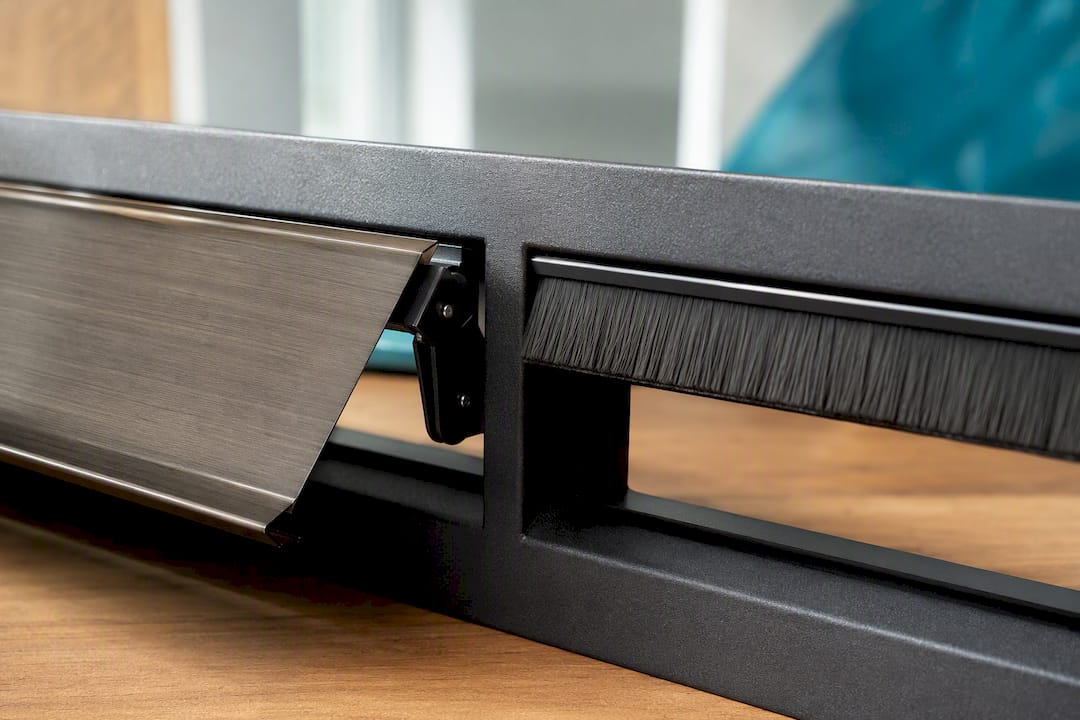
This is part of why packaging experts recommend a rigid PIP-style box with a full corrugate wall rather than a soft padded envelope for gift items. A stiff structure holds its shape against bristle resistance and double flaps, whereas a soft mailer can crumple, catch, or force delicate contents into an awkward angle. The material of your own packaging, not just its dimensions, shapes whether it glides through cleanly or gets stuck halfway.
How do you measure your own letterbox correctly?
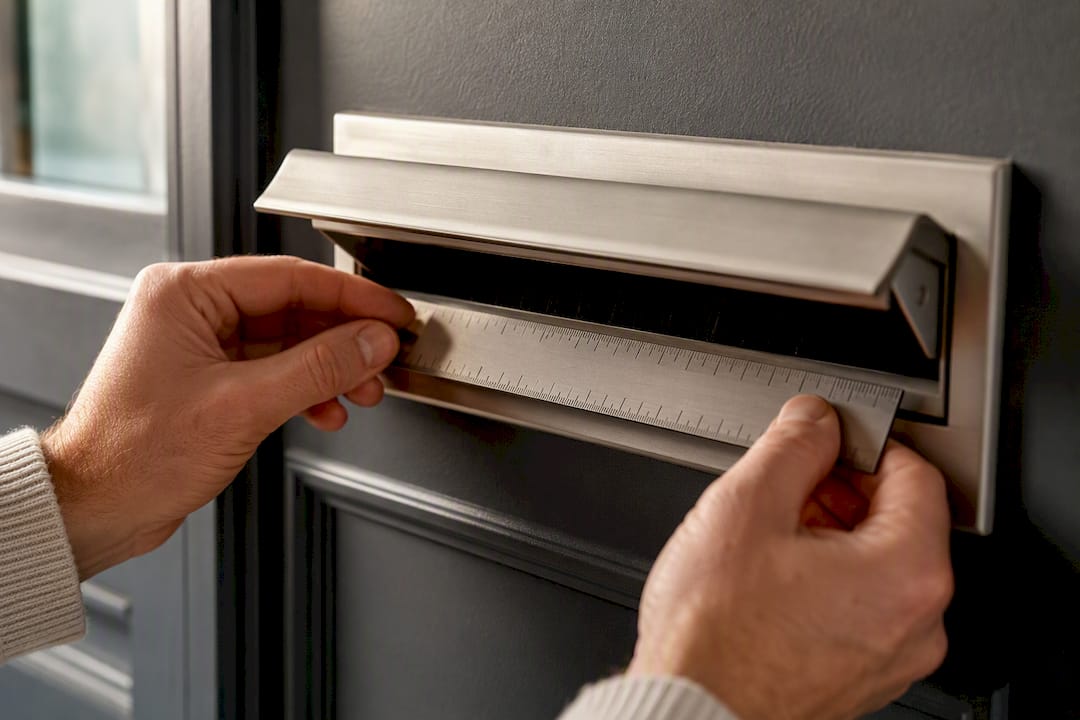
If you’re the one receiving letterbox gifts, whether for personal use or checking what a corporate delivery will fit, measuring properly takes two minutes and avoids a wasted delivery attempt. Use a flexible tape measure or a rigid ruler rather than guessing by eye, since letterbox apertures are easy to misjudge.
Measure the internal opening at its narrowest point, not the visible flap size, because the flap itself and any internal bristle brush reduce the usable gap. Take three measurements: the horizontal width, the vertical height at the tightest point, and the depth of the letterbox tunnel through the door, since some doors are considerably thicker than others and a long parcel can jam partway through a deep aperture. Test with a sheet of card cut to your suspected limits before assuming a gift will fit, particularly if the letterbox has a bristle brush or double flap that visually looks wider than it functionally is.
For flats and shared buildings, check whether deliveries go through an individual letterbox or a shared mail room slot, since the two often have different practical limits. If you’re ordering a letterbox gift for someone else, whether a client, a remote employee or a family member, a quick message asking them to check their letterbox depth and height before you place the order can save a wasted delivery and a frustrating trip to a sorting office.
What if a gift is too big for letterbox delivery?
When a gift genuinely can’t be packed within the 353 × 250 × 25 mm envelope, whether because of fragile glass, a bulky item, or a design that simply won’t compress flat, Small Parcel postage is the natural next step rather than a compromise. It comes with a higher price point, but it also allows for proper protective packaging, cradles, and bubble wrap that a slim letterbox box simply can’t accommodate.
For heavier or higher-value gifts, options include:
Small Parcel or Medium Parcel services, which allow far more generous dimensions and weight allowances for hampers, boxed sets or anything with glass components.
Tracked delivery upgrades, worth considering for corporate orders where a business needs delivery confirmation for HR or procurement records.
Named-day or timed delivery, useful for gifts tied to a specific occasion like a work anniversary or a client thank-you that needs to land on an exact date.
For businesses running gifting programmes at volume, the smarter approach is often to offer both formats side by side: a letterbox-friendly range for cost-conscious or high-volume sends, and a parcel-based hamper range for occasions where presentation and protection matter more than postage cost. That way, the packaging decision follows the occasion rather than forcing every gift into one box size.
Does weatherproofing affect whether a gift fits through a letterbox?
Weatherproofing adds a variable that’s easy to overlook until a gift arrives damp or the packaging has swollen slightly in transit. Many UK letterboxes include a weather seal, a rubber gasket or an internal flap designed to keep rain and draughts out, and these features can reduce the effective opening height by a millimetre or two compared with the letterbox’s stated dimensions.
Envelope and padded mailer thickness standards matter here too. A standard C5 envelope sits comfortably under any letterbox limit, but a bubble-lined mailer, even one marketed as “letterbox-safe,” can measure anywhere from 15 mm to over 25 mm depending on the bubble wrap grade used inside, and that variation is exactly why testing the finished, sealed item matters more than trusting a supplier’s product description. Moisture is a secondary but real concern: if a gift box sits in a weatherproofed letterbox cage or an exposed external slot during wet weather, cardboard that’s already at the edge of its thickness tolerance can absorb a small amount of moisture and swell just enough to jam on a second delivery attempt.
The practical takeaway is to build your safety margin with weather variability in mind, not just tape and labels. A pack designed to a firm 23 mm rather than a razor-thin 25 mm has enough tolerance to handle both a snug bristle seal and a slightly swollen card lid without failing on the doorstep.
Sayhey Gifting’s view: why flat design beats bulky packaging every time
The instinct in gifting is to add more, bigger tins, thicker ribbon, taller bottles, because it feels generous. In practice, the gifts that land best through a letterbox are the ones designed flat from the start, using printed inserts, belly bands and card cradles to create a proper unboxing moment without a single wasted millimetre. Sayhey Gifting offers a build-your-own letterbox range and under-£10 options designed to provide reliable gifting solutions for volume orders. Reorders and recipient feedback tell the real story: when a flat gift arrives intact and looks considered rather than compressed, that’s the format doing its job.
— Craig
Try Sayhey Gifting’s letterbox-ready ranges today
If you’ve been weighing up whether to risk a taller box for the sake of presentation, there’s a simpler route: choose packaging that’s already built to pass. Some gifting companies offer letterbox collections designed with flat footprints, protective inserts and finished dimensions that respect Royal Mail’s limits, helping ensure gifts can clear letterbox slots.
For teams ordering at volume, the build-your-own letterbox gift option lets you configure contents around a proven footprint rather than starting from scratch, while the under-£10 letterbox range covers budget-conscious thank-you gifts with free UK delivery included. Both are worth checking against your own letterbox measurements before a bulk order goes out, and requesting a sample pack first is the easiest way to confirm fit and finish before committing to hundreds of units. Browse the full employee gift box range to see what fits your next appreciation programme, and get in touch to request a sample or a quote for your team.
Sources
FAQ
What is the maximum size for a letterbox-friendly gift in the UK?
Royal Mail’s Large Letter category allows up to 353 × 250 × 25 mm and 750 g, with the whole outer packaging, tape and label included, counted in that measurement.
What internal box height should I design to for a letterbox gift?
Aim for an internal height of 18–22 mm, leaving 3–5 mm of headroom so the finished, taped and labelled box stays comfortably under the 25 mm external limit.
How do I test if a gift box will fit through a letterbox?
Push the finished, sealed pack through a 25 mm slot gauge; if it needs any force to pass, redesign the packaging rather than trying to force it through.
Does staying letterbox-friendly actually save on postage?
Yes, Large Letter postage typically starts from around £1.55, while Small Parcel rates start from roughly £3.65, so staying within the size limits can meaningfully cut delivery costs.
What should I do if my gift is too big for a letterbox?
Move to Small Parcel or Medium Parcel postage, which allows more generous dimensions and proper protective packaging for fragile or bulky items like glass jars or boxed hampers.
Does Sayhey Gifting offer letterbox-sized gift options?
Yes, Sayhey Gifting stocks a build-your-own letterbox gift range alongside an affordable under-£10 letterbox option, both designed to fit standard UK letterbox limits with free UK delivery.
Recommended
https://www.sayheygifting.com/post/types-of-client-appreciation-gifts
https://www.sayheygifting.com/post/corporate-gift-fulfilment
https://www.sayheygifting.com/post/role-of-gifting-in-event-follow-up
https://www.sayheygifting.com/post/10-thoughtful-employee-appreciation-day-gifts-to-send-by-post
https://www.sayheygifting.com/post/why-inclusion-matters-in-staff-gifting
https://www.sayheygifting.com/post/what-is-a-self-care-gift-set-your-guide-to-giving-well
https://www.sayheygifting.com/post/why-gifts-should-reflect-company-values

Comments